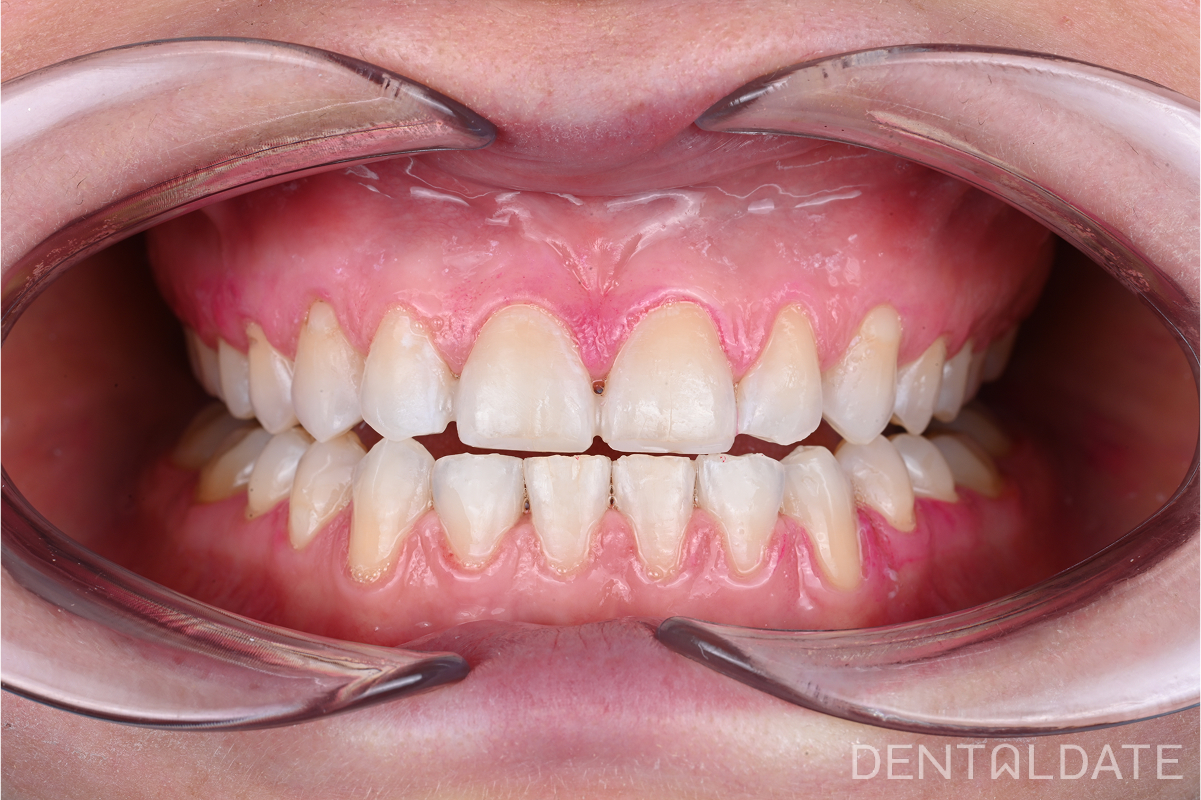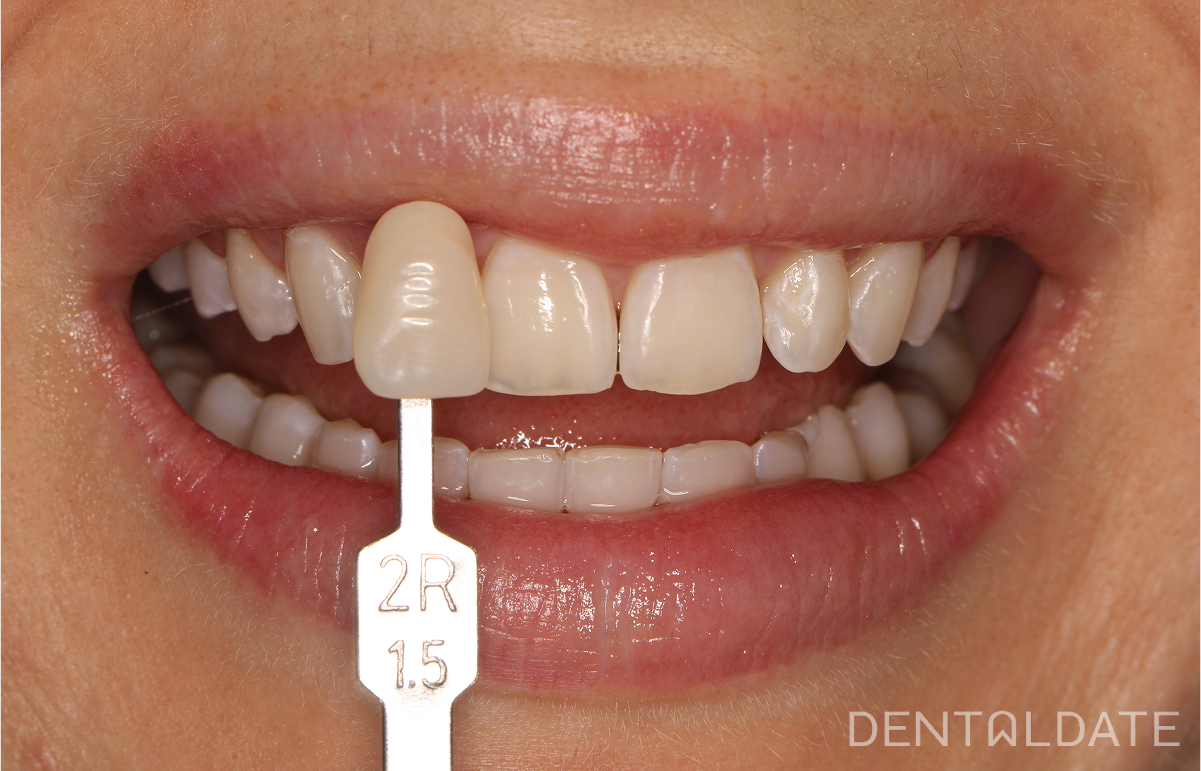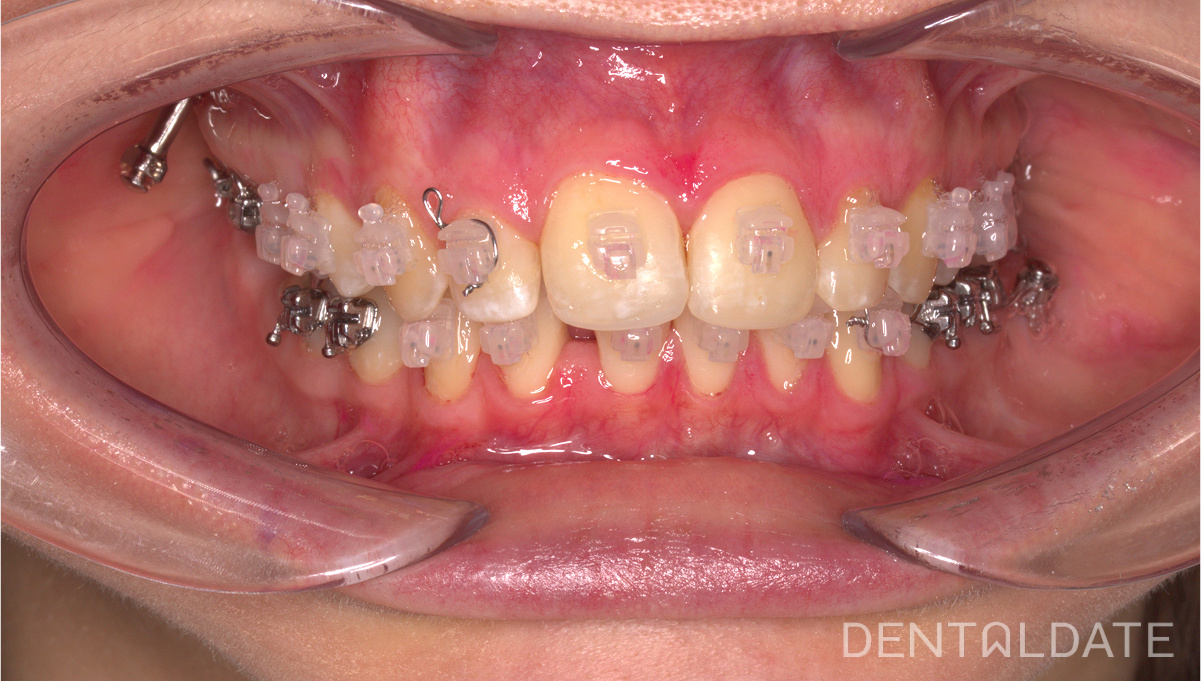
Chief Complaint
The patient attended a consultation prior to planned orthodontic treatment.
Diagnostic evaluation revealed several factors requiring surgical intervention:
- four impacted wisdom teeth;
- two impacted supernumerary teeth, completely covered by gingival tissue and dense bone;
- severe root curvature of up to 90°, significantly complicating extraction;
- bone density classified as D1–D2, typical of highly complex surgical cases.
Such teeth cannot be incorporated into occlusion and instead become a mechanical and biological obstacle to orthodontic treatment. They may also cause inflammation, displacement of the dental arch, and cyst formation.
Surgical Procedure
All extractions were performed in a single visit, in a staged manner, using microsurgical instruments.
An atraumatic extraction technique was applied to minimize tissue trauma, preserve surrounding structures, and accelerate healing.
The procedure included:
- precise surgical access to impacted teeth through minimal incisions;
- work under magnification to avoid damage to adjacent anatomical structures;
- controlled bone removal considering D1–D2 bone density;
- careful exposure of teeth with pronounced root curvature;
- complete removal of each tooth without fragmentation or complications;
- thorough control of hemostasis and healing stages.
Despite the high level of complexity, the procedure was performed calmly and without pain under local anesthesia.
Treatment Outcome
- all six impacted teeth were removed — four wisdom teeth and two supernumerary teeth;
- complete extraction was achieved despite atypical root anatomy;
- gingival and bone structures were preserved, promoting faster healing;
- optimal conditions were created for subsequent orthodontic treatment;
- the patient received a clear postoperative plan and benefited from a minimal recovery period due to the gentle surgical approach.
Why Timely Removal Is Important
When impacted wisdom teeth and supernumerary teeth remain deep in the bone and continue to develop:
- roots become longer and more curved;
- the risk of surgical complications increases;
- cystic or inflammatory processes may develop;
- pressure on adjacent teeth can alter dental arch alignment;
- orthodontic treatment becomes difficult or impossible.
Removal at earlier stages – before complex root formation – is always safer, faster, and more predictable.
What Patients Should Know
- impacted teeth often remain asymptomatic, but this does not make them safe;
- supernumerary teeth may pose the same level of risk as impacted wisdom teeth;
- modern microsurgical techniques allow complex extractions to be performed gently and safely;
- early diagnostics significantly simplify surgical intervention;
- removal of impacted and supernumerary teeth improves predictability and effectiveness of orthodontic treatment.
How It Is Performed at DentalDate
At DentalDate, removal of impacted wisdom teeth and supernumerary teeth is performed using minimally traumatic techniques with mandatory preoperative diagnostics, including CT imaging. This allows accurate assessment of root anatomy, bone density, and selection of the safest surgical approach.
Such a protocol makes it possible to manage even the most complex cases, preserve anatomical structures, shorten recovery time, and create ideal conditions for successful orthodontic treatment.