Treatment planning and coordination
Before the procedure, a final dental treatment plan is confirmed. The scope of care, oral condition, and individual considerations are reviewed, and parents are informed about the treatment structure and sequence.

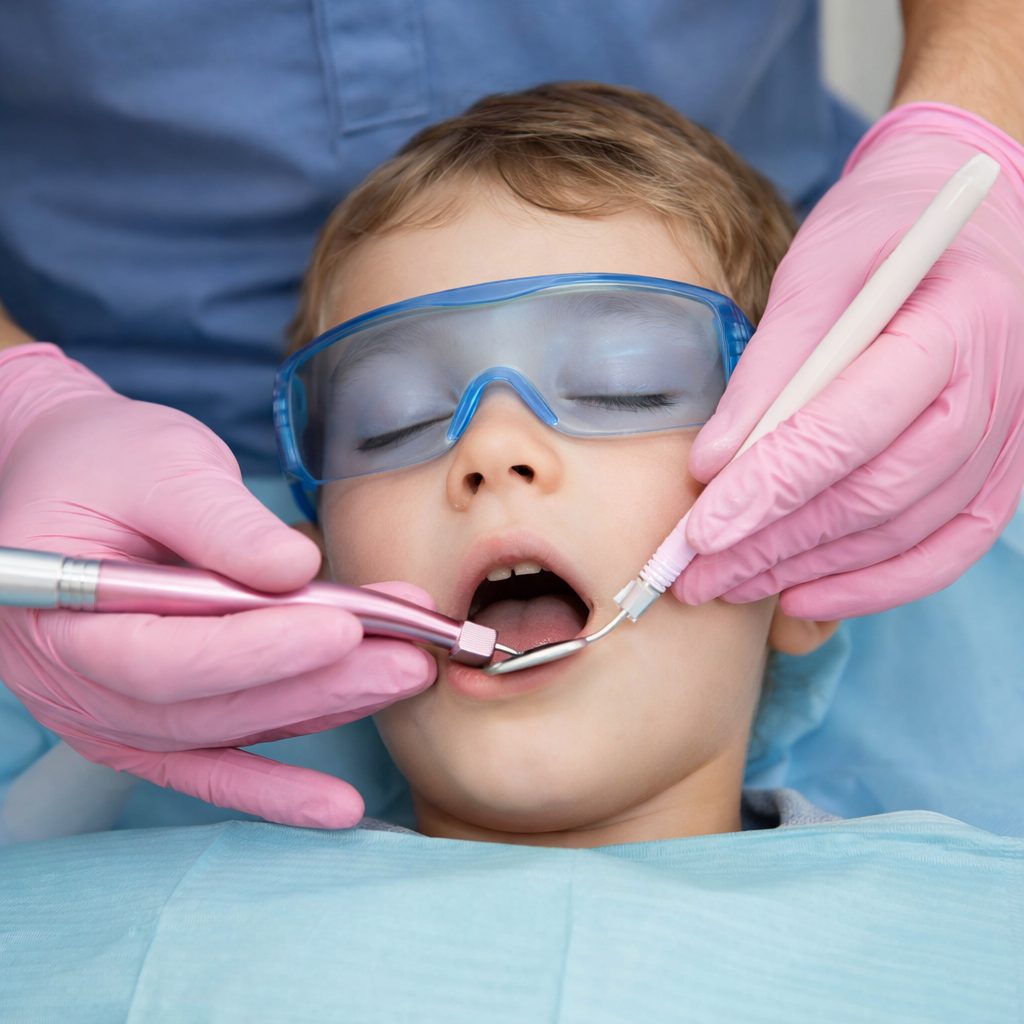
General anesthesia is performed exclusively in a hospital setting, where the required level of medical safety, continuous monitoring, and the presence of a qualified anesthesiology team are ensured.
General anesthesia in pediatric dentistry is used when dental treatment cannot be safely or effectively performed while a child is awake. It provides a controlled state of medical sleep, eliminating pain, stress, and involuntary movement during the procedure.
Treatment is carried out in a medical setting with an anesthesiology team and is recommended strictly based on clinical indications, taking into account the child’s age, health condition, and the required scope of dental care.
General anesthesia in pediatric dentistry is a medical approach in which a child is placed into a controlled state of sleep for the entire duration of dental treatment. During this state, the child does not perceive pain, external stimuli, or emotional stress, and involuntary movements are fully eliminated.
While under general anesthesia, all vital functions are continuously monitored, and the depth of sleep is carefully maintained by medical professionals. The child remains completely unaware of the dental procedure, allowing treatment to be performed in a calm, stable, and controlled environment.
In pediatric dental care, general anesthesia is considered a clinical solution rather than a routine option. It is used only when specific conditions require it, ensuring both procedural safety and psychological comfort for the child when treatment cannot be carried out while awake.

General anesthesia is not considered a routine option in pediatric dentistry. It is recommended only in situations where dental treatment cannot be safely or effectively performed while the child is awake. Each decision is based on an individual clinical assessment.
The child is unable to remain still or follow instructions during treatment.
Multiple treatments or extensive care that cannot be completed comfortably in one session while awake.
Even when behavioral techniques or milder sedation methods are ineffective.
Conditions that require a controlled medical environment for safe dental care.
Due to inflammation, anatomical factors, or individual sensitivity.
Including trauma, acute infection, or significant pain requiring immediate intervention.
Choosing dental treatment under general anesthesia is a significant decision for any parent. This approach is selected not for convenience, but to ensure the child’s safety, comfort, and the quality of dental care.
Before treatment, parents receive detailed information about the planned procedures, preparation requirements, and post-treatment observation. Every decision is made individually, taking into account the child’s age, medical history, and clinical needs.
General anesthesia eliminates pain, stress, and awareness during dental treatment. This is particularly important for children with high anxiety levels or previous negative dental experiences, helping to reduce emotional strain and prevent long-term dental fear.
Parents should also understand that treatment is carried out under continuous medical supervision by qualified specialists. The child’s condition is carefully monitored throughout all stages, from preparation to recovery.
This comprehensive approach allows dental care to be completed safely and efficiently, often within a single visit, while providing reassurance and clarity for parents.

Before the procedure, a final dental treatment plan is confirmed. The scope of care, oral condition, and individual considerations are reviewed, and parents are informed about the treatment structure and sequence.
On the day of treatment, the child’s general condition is checked to confirm readiness for anesthesia and compliance with pre-procedure guidelines.
General anesthesia is administered in a controlled medical setting by a qualified specialist. The child falls asleep calmly, without stress or discomfort, allowing dental treatment to begin.
All planned dental procedures are performed during a single session. The absence of movement and pain enables precise, uninterrupted treatment in accordance with clinical standards.
Once dental care is completed, anesthesia is discontinued. The child wakes up under medical supervision in a calm and controlled environment.
Preparation, anesthesia, dental care, and recovery are organized as a single clinical process with continuous monitoring of the child’s condition.
General anesthesia is administered and managed by a licensed anesthesiologist responsible for induction, maintenance, and recovery.
During treatment, medical-grade monitoring equipment is used to track vital signs in real time.
All procedures follow established medical protocols commonly applied in international pediatric anesthesia practice.
The child wakes up in a calm, supervised environment and remains under observation until full stabilization.
Parents are kept informed about the treatment process, recovery, and post-procedure guidance, ensuring clarity and reassurance.
The child’s safety is the primary consideration; therefore, dental treatment under general anesthesia is only performed when no medical contraindications are present. In certain situations, anesthesia may need to be postponed until the child’s condition is stabilized.
General anesthesia may be delayed or not recommended in the following cases:
The decision to proceed with dental treatment under general anesthesia is made individually following a comprehensive medical review and, when necessary, consultation with other healthcare professionals.










Video Reviews