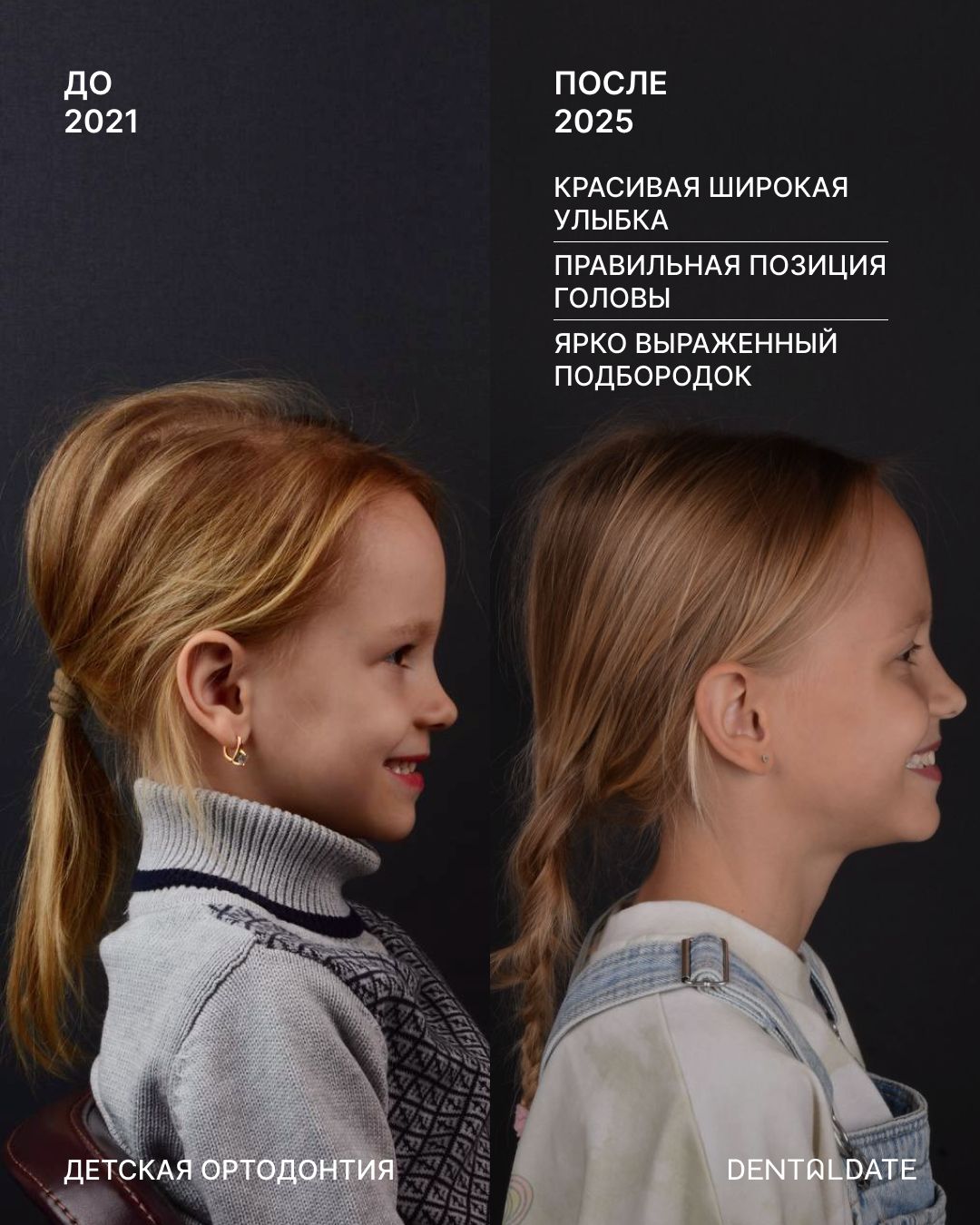
Why Early Bite Correction Is Important
Many parents believe that orthodontic treatment should only begin after the replacement of primary teeth.
In reality, early intervention allows clinicians to:
- guide jaw growth in the correct direction;
- prevent facial asymmetry;
- make subsequent orthodontic treatment simpler and shorter;
- prevent future problems with speech and chewing.
Diagnostics
Clinical examination revealed the following findings:
- mesial bite, with the mandible overlapping the maxilla;
- absence of interdental spaces (physiological spacing) between primary teeth, indicating a risk of crowding in the permanent dentition;
- restrained development of the maxilla.
These signs indicate the need for intervention at the preschool age to prevent stabilization and progression of the malocclusion.
Treatment
- An individualized treatment plan was developed, taking into account the child’s age and anatomical characteristics.
- Gentle orthopedic and orthodontic methods were used to stimulate proper maxillary growth.
- Parents were provided with recommendations on habit control and maintenance of treatment results.
Results After Two Weeks
- The bite began to correct, with the jaw relationship moving closer to normal.
- Growth restriction of the maxilla was eliminated.
- The risk of developing pronounced facial asymmetry was reduced.
After achieving the initial effect, treatment was transitioned to a monitoring phase: regular follow-up visits allow for control of growth dynamics and timely intervention if necessary.
What Parents Should Know
Early intervention for mesial bite can help avoid prolonged and complex orthodontic treatment in the future.
Modern orthodontic techniques make it possible to correct jaw relationships without pain or stress for the child.
At DentalDate, we use advanced diagnostic technologies and gentle bite correction methods for children.
The earlier parents seek professional help, the easier it is to achieve harmonious jaw development and a beautiful smile for their child.