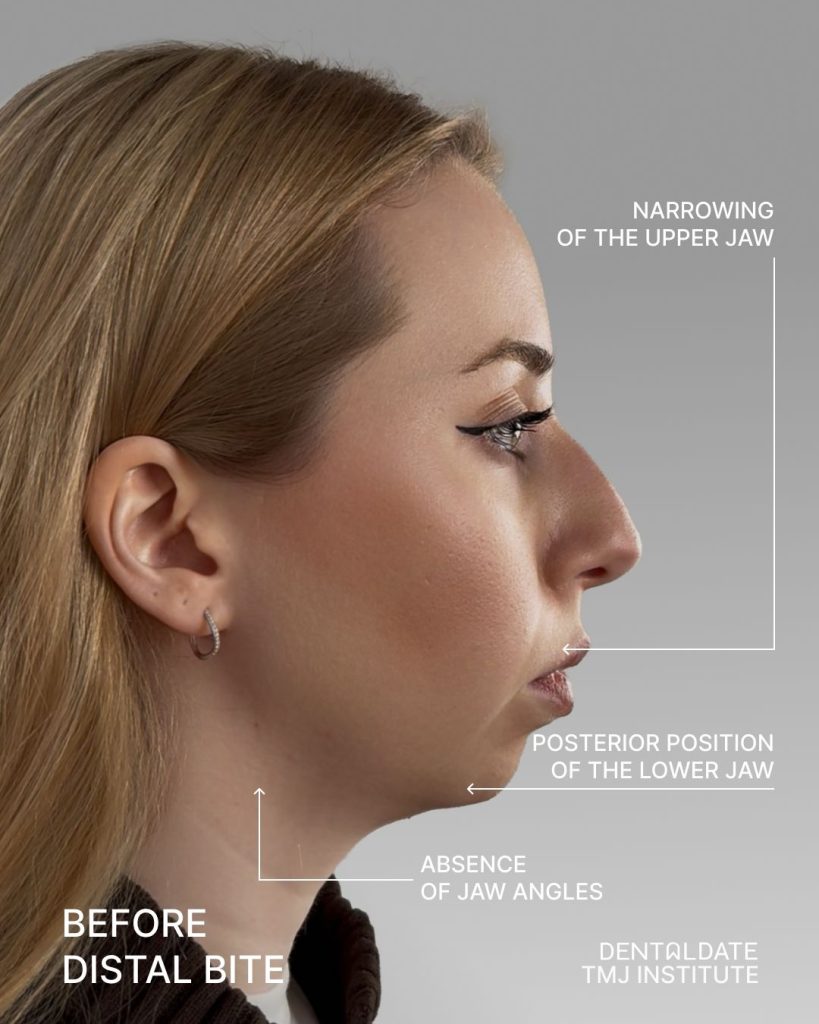
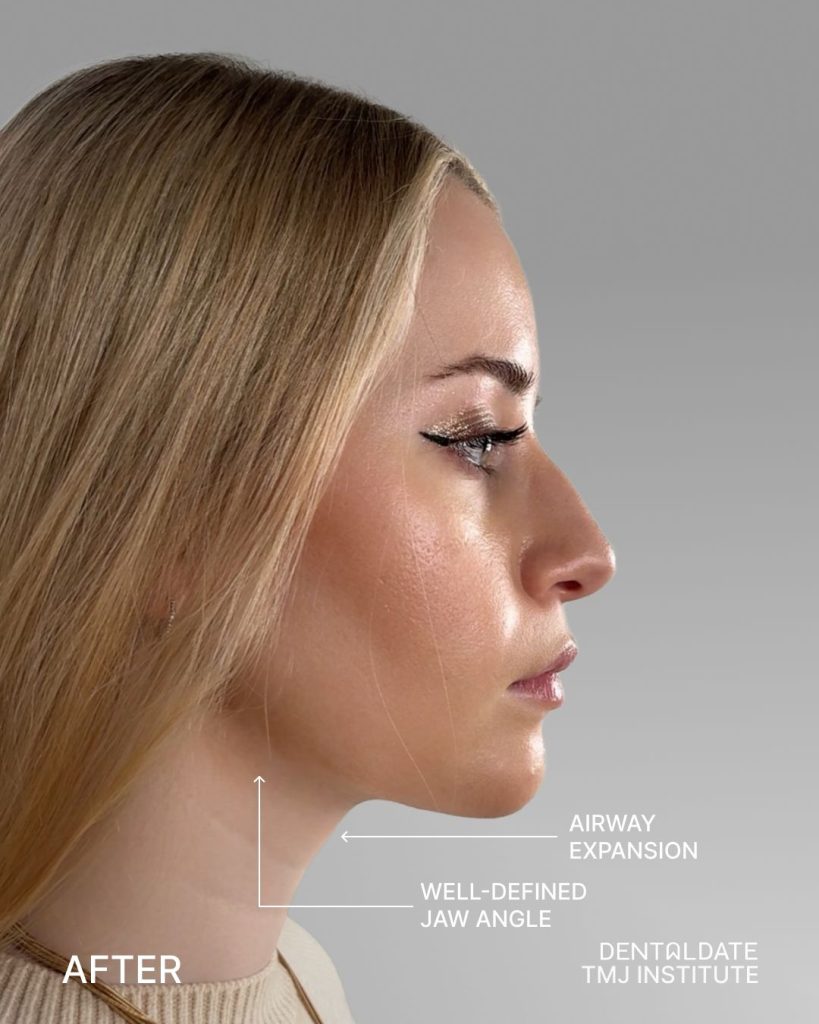
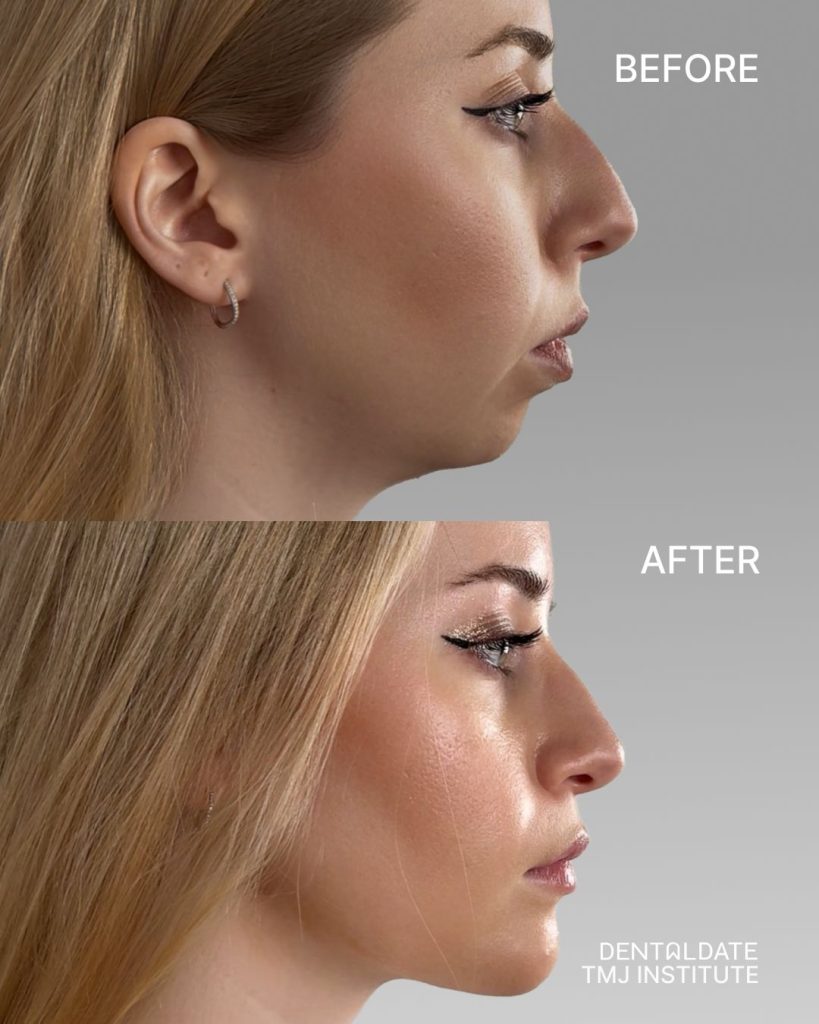
The underlying cause was a pronounced skeletal Class II malocclusion (distal bite) with jaw discrepancy that could not be corrected by orthodontics alone.
A comprehensive treatment plan was chosen, including:
- orthodontic preparation with fixed appliances,
- surgically assisted maxillary expansion,
- orthognathic surgery with mandibular advancement.
Following surgery, the patient continues orthodontic treatment.
At this stage, we observe significant improvements not only in facial aesthetics but also in function, including:
- reduced TMJ pain,
- decreased muscle overload,
- improved occlusal stability.
This case demonstrates that in patients with severe distal bite and chronic TMJ-related symptoms, predictable and long-term results can only be achieved through a multidisciplinary approach involving both an orthodontist and a maxillofacial surgeon.