When Orthodontic Mini-Implants Are Required
Mini-implants are used in situations where the standard capabilities of a braces system are not sufficient.
They help to:
- create a precise anchorage point for targeted tooth movement;
- accelerate bite correction processes;
- prevent unwanted movement of adjacent teeth;
- effectively treat complex cases of crowding and deep bite.
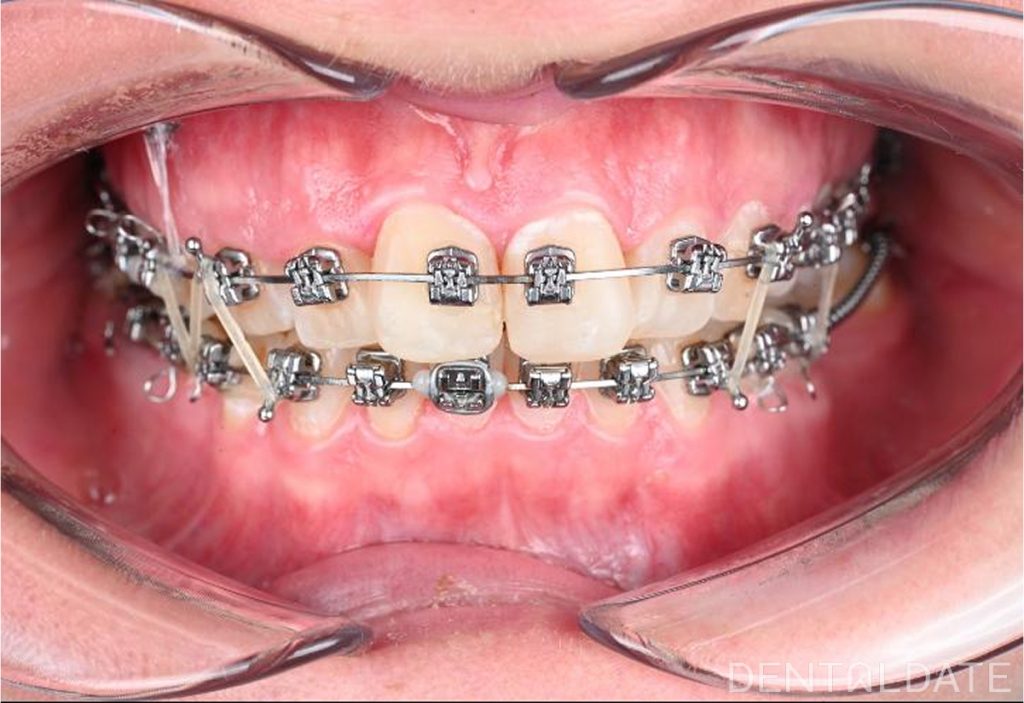
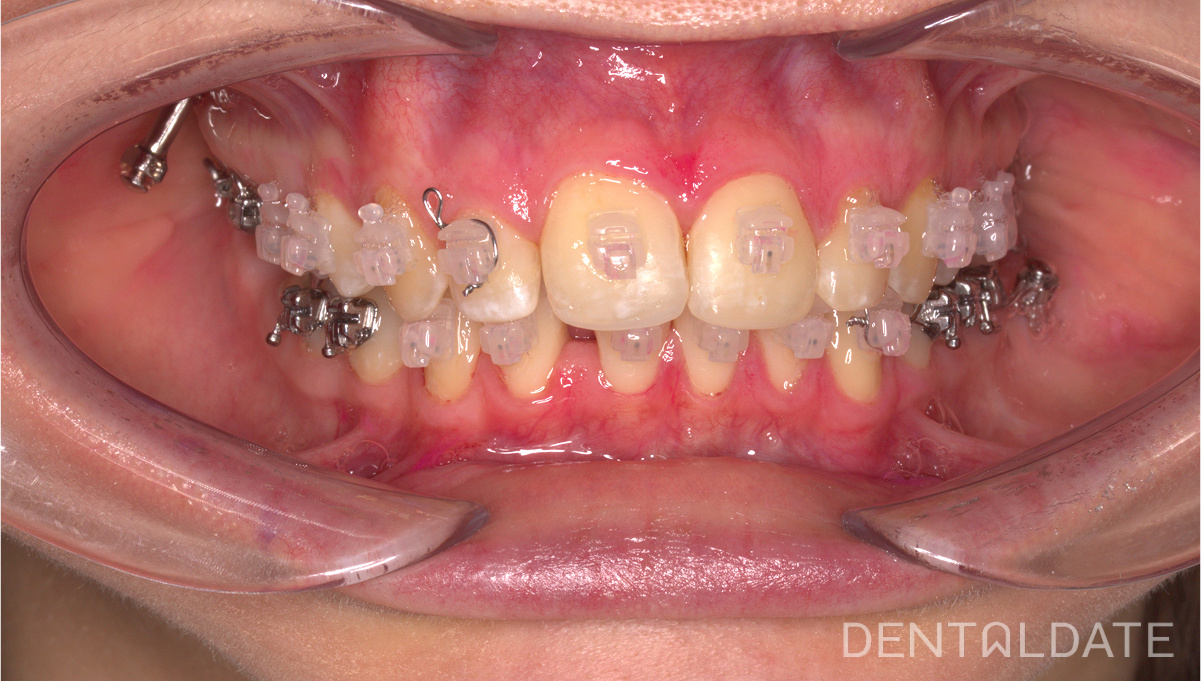
In this clinical case, placement of an interradicular mini-implant was required – a safe and modern anchorage solution.
How the Mini-Implant Placement Is Performed
The procedure is carried out under local anesthesia, so the patient does not experience pain. The entire process takes about 10 minutes, from anesthesia to the final control scan.
Main stages:
- Preparation and anesthesia of the insertion area;
- Careful placement of the mini-implant into the interradicular space;
- Verification of the implant’s stability;
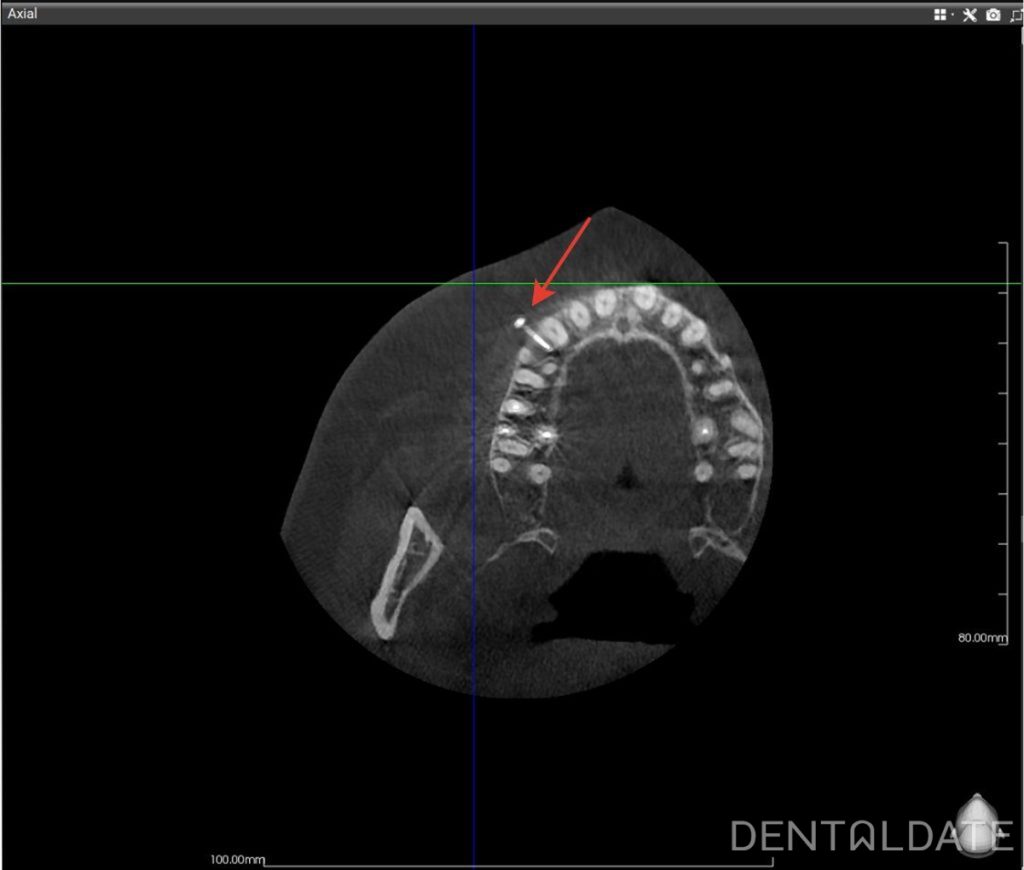
- Result confirmation using CT imaging.
Despite appearing complex, the procedure is minimally invasive and well tolerated – the sensations are comparable to a routine dental procedure.
Why Computed Tomography Is Used
The position of a mini-implant must be extremely precise, as this directly affects both the effectiveness of orthodontic treatment and patient safety.
CT-guided control allows the clinician to:
- select the optimal insertion point;
- assess the position of adjacent tooth roots;
- eliminate the risk of damage to anatomical structures;
- ensure long-term stability of the mini-implant.
Today, CT imaging is considered the gold standard for orthodontic mini-implant placement, as it provides comprehensive information for maximum accuracy.
Outcome for the Patient
After mini-implant placement:
- reliable anchorage for orthodontic treatment was achieved;
- the procedure was quick and painless;
- the patient was able to return to normal daily activities immediately;
- ideal implant positioning was achieved thanks to CT guidance.
The mini-implant is incorporated into orthodontic treatment immediately, helping to speed up correction and deliver a predictable result.
Why This Matters
Mini-implants allow orthodontists to work with greater precision and control, making treatment outcomes more stable and predictable. They often help avoid more complex and lengthy correction methods and accelerate treatment without excessive load on the teeth.
What Patients Should Know
- mini-implant placement is fast and painless;
- the appliance does not interfere with daily life and is not felt during routine activities;
- CT guidance makes the procedure максимально safe;
- mini-implants help accelerate and improve orthodontic results;
- post-placement care is minimal — regular oral hygiene is sufficient.
At DentalDate, orthodontic mini-implants are placed as part of a carefully planned treatment strategy. Our goal is not simply technical placement – we model the direction of future tooth movement in advance, assess anatomy using CT imaging, and select the insertion point so that the mini-implant works effectively throughout the entire course of treatment.
This approach gives patients two key advantages:
- predictable results, with every millimeter of movement fully controlled;
- minimal intervention, thanks to precise placement and avoidance of unnecessary procedures.
Patients note that the placement is quick, calm, and allows them to return to normal activities the same day. Most importantly, mini-implants significantly speed up orthodontic treatment stages and make it possible to achieve results that cannot be obtained using conventional methods.