Orthodontic consultation
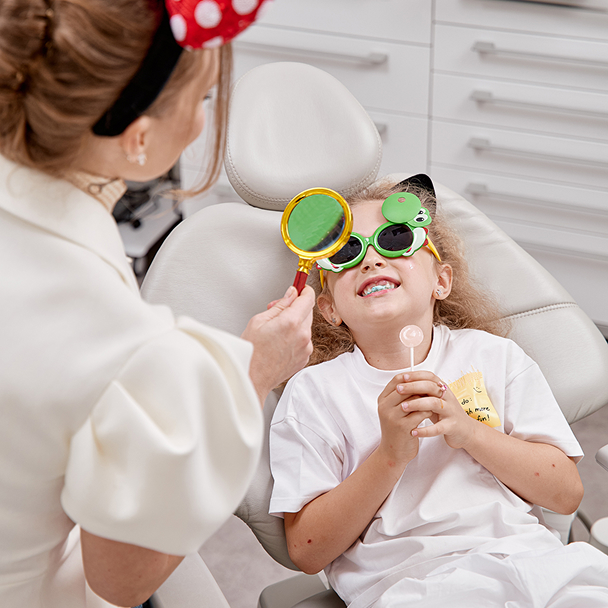
During the first visit, the orthodontist evaluates the child’s teeth, bite, and overall dental development to determine whether aligner therapy is appropriate.

At DentalDate, we use advanced Invisalign First clear aligners to provide early orthodontic treatment for children.
This approach gently guides tooth alignment while supporting proper jaw growth and bite development during the formative years. With digital treatment planning and a functional orthodontic approach, we deliver predictable, comfortable care without traditional metal braces.
Invisalign First is a clear aligner system designed specifically for orthodontic treatment in children during the mixed dentition stage, when both baby teeth and newly erupting permanent teeth are present. This stage of care is commonly referred to as Phase 1 orthodontic treatment.
Instead of traditional metal braces, treatment is performed using a series of custom-made clear aligners that gradually guide the teeth into their desired positions. The aligners are transparent and discreet, making them comfortable and visually subtle for young patients.
Each aligner is individually designed based on a digital model of the child’s teeth. The treatment progresses through a sequence of aligners, with every set responsible for small, controlled tooth movements that gradually improve alignment.
Using advanced digital treatment planning, orthodontists can map the entire course of treatment before it begins. This allows the aligners to be produced with high precision and ensures predictable, carefully controlled orthodontic correction.

During the growth and development of a child’s teeth and jaws, certain signs may indicate the need for an orthodontic assessment. An early consultation allows specialists to evaluate dental development and determine whether monitoring or early orthodontic guidance may be beneficial.
Parents may consider an orthodontic evaluation if they notice the following signs:
Childhood is a crucial period for the development of the teeth, jaws, and overall bite structure. During these years, the jaws are still growing, dental arches are forming, and permanent teeth are gradually erupting. Because the dental system is still developing, early orthodontic evaluation can help guide this process and support balanced bite formation.
Addressing orthodontic concerns during growth allows specialists to work with the natural developmental processes of the child. Rather than correcting problems only after the jaws have fully developed, early guidance can help create better conditions for the proper alignment of permanent teeth and the balanced formation of dental arches.
Early orthodontic assessment can also help identify developmental patterns that may influence the future bite. These may include changes in jaw growth, irregular positioning of teeth, or variations in the shape and structure of the dental arches. Recognizing such patterns at an early stage allows orthodontists to monitor development carefully and intervene at the most appropriate time.
It is important to note that early orthodontic care does not always mean immediate treatment. In many cases, the first step is careful observation and periodic evaluation to determine the best timing for correction. This approach allows orthodontists to plan treatment in harmony with the child’s natural growth, supporting a more predictable and balanced outcome.
Leave your contacts — we will call you back shortly and help you choose the right specialist.
Orthodontic treatment with clear aligners is based on a sequence of controlled and gradual tooth movements. Each aligner is carefully designed to create small adjustments in tooth position, guiding them step by step toward their planned alignment.
Treatment progresses through a series of aligners that are worn in a specific order. Each set of aligners represents a new stage of correction, allowing the teeth to move gradually according to the digital treatment plan created by the orthodontist.
The aligners fit closely over the teeth and apply gentle, targeted pressure that encourages gradual movement. Because every aligner is designed based on precise digital modeling, the process of tooth alignment can be carefully planned and monitored throughout the course of treatment.
By following a structured sequence of aligners, orthodontists are able to guide tooth movement in a controlled and predictable manner, allowing the treatment to progress step by step while maintaining continuous supervision of the child’s dental development.
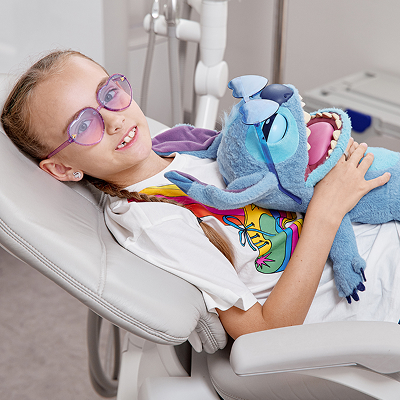
Orthodontic treatment for children at DentalDate begins with comprehensive diagnostics. Our specialists evaluate not only the alignment of the teeth but also the overall development of the child’s dental and jaw structures in order to design an accurate and individualized treatment plan.
Modern scanning technology creates a precise digital model of the teeth without traditional impressions.
Imaging allows orthodontists to assess tooth position, the development of permanent teeth, and eruption patterns.
Orthodontists analyze how the jaws are developing and how this may influence the future bite.
Understanding joint function helps ensure that treatment planning considers the functional balance of the bite.
Specialists evaluate how the bite and facial structures may change as the child grows.
Based on the diagnostic findings, a customized orthodontic plan is created to guide treatment with precision and predictability.
Modern orthodontic aligners for children are not used solely for aligning teeth. During periods of growth, they can also support functional orthodontic goals by helping guide bite development and supporting balanced jaw relationships as the child grows.
Functional capabilities of children’s aligners may include:
In certain cases, aligners may incorporate bite-supporting elements that help gently modify the vertical relationship of the teeth and distribute bite forces more evenly.
Functional components within the aligners may assist in guiding the lower jaw toward a more balanced position during growth.
Treatment planning can consider the direction and pattern of jaw growth, allowing orthodontists to monitor bite changes over time.
When specific growth patterns are present, aligners may help manage jaw positioning and reduce the progression of bite imbalance.
The design of the aligners allows bite pressure to be distributed more evenly across the dental arches during treatment.
Digital treatment planning enables orthodontists to monitor tooth movement step by step and adjust the course of treatment when necessary.
Clear aligner therapy offers an orthodontic solution that combines effective bite correction with a high level of comfort for children. Modern aligner technology allows treatment to be carried out gently while minimizing disruption to a child’s daily routine.
The transparent aligners are barely noticeable, allowing children to smile and interact confidently in school and social environments.
Aligners can be temporarily removed during meals and oral hygiene routines, making daily use more convenient compared to fixed orthodontic appliances.
Because the aligners can be taken out, children can brush and floss normally, helping maintain healthy teeth and gums throughout treatment.
Aligners are individually manufactured and have smooth edges without metal components, reducing the risk of irritation inside the mouth.
Each aligner in the series is designed to perform small, planned adjustments in tooth position.
Children can continue their normal activities such as school, sports, and social events without major restrictions.
Digital orthodontic planning allows specialists to map the entire course of treatment and monitor progress throughout each stage.

Invisalign First is based on advanced digital orthodontic technology that allows treatment to be planned and carried out with a high level of precision. Each series of aligners is individually designed using digital models of the child’s teeth, making the treatment process predictable and carefully controlled.
Key technological features of Invisalign First include:
These technologies allow orthodontists to design a precise treatment plan and monitor the progress of orthodontic correction throughout the development of the child’s smile.

Orthodontic treatment for children using clear aligners at DentalDate follows a structured process that begins with a comprehensive evaluation of the child’s dental development. Each stage is designed to ensure accurate planning, careful monitoring, and comfortable treatment.
The treatment process typically includes the following steps:
During the first visit, the orthodontist evaluates the child’s teeth, bite, and overall dental development to determine whether aligner therapy is appropriate.
Digital scanning of the dental arches, radiographic analysis, and evaluation of jaw development are performed to gather detailed diagnostic information.
Based on the diagnostic data, a personalized treatment plan is created using digital orthodontic planning technology to map the movement of teeth throughout treatment.
A series of clear aligners is produced according to the treatment plan, with each aligner designed for a specific stage of correction.
The child wears the aligners according to the prescribed schedule, progressing through the series as the teeth gradually shift into their planned positions.
Periodic visits allow the orthodontist to evaluate treatment progress and ensure that tooth movement is proceeding according to plan.
Each treatment plan is developed according to the child’s stage of development, bite characteristics, and anticipated jaw growth.
Treatment focuses not only on aligning teeth but also on establishing balanced relationships between the dental arches and the bite.
Modern digital technologies allow orthodontists to plan tooth movement in advance and monitor treatment progress accurately.
Clear aligners provide a comfortable orthodontic solution that allows children to adapt easily to treatment.
Digital planning and a sequence of aligners make it possible to forecast the stages of correction and expected results.
Regular follow-up visits allow orthodontists to evaluate progress and adjust treatment when necessary.


Modern pediatric orthodontics offers different approaches to correcting bite and alignment problems. Two of the most common options are clear aligners and traditional braces. The choice between these methods depends on the child’s dental condition, stage of development, and the overall treatment goals.
Key differences between aligners and braces include:
Clear aligners are nearly invisible when worn, while braces remain a visible orthodontic appliance.
Aligners are custom-made and have smooth surfaces, which generally makes them comfortable to wear.
Because aligners can be removed, children can brush and floss their teeth normally throughout treatment.
Aligners are removed during meals, allowing children to continue eating their usual foods without the restrictions often associated with braces.
Clear aligner therapy is based on digital treatment planning, allowing orthodontists to map and monitor tooth movement throughout the treatment process.
Video Reviews