


Many patients with temporomandibular joint dysfunction spend years searching for the cause of their symptoms without realizing that the source of the problem may be the TMJ. During this time, they may undergo numerous examinations, visit different specialists, and try various treatment methods, yet their complaints continue to return.
The situation is complicated by the fact that temporomandibular joint disorders rarely manifest only as pain in the joint itself. Much more often, the symptoms resemble ear disorders, neurological problems, the effects of chronic stress, or issues with the muscles of the neck and shoulder area. This is why many patients spend a long time treating the wrong problem — one that is not actually causing their discomfort.
One of the specific features of TMJ dysfunction is its ability to mimic completely different conditions. As long as the underlying cause remains unidentified, treatment may provide only temporary relief without eliminating the true source of the problem.
Why TMJ Symptoms Can Be Misleading
When a person experiences headaches, tinnitus, or pain near the ear, they rarely associate these symptoms with the joint of the lower jaw. Most patients turn to the specialists whose field seems most obviously related to their complaints.
If there is noise or a feeling of fullness in the ear, they book an appointment with an ENT doctor. If headaches and muscle tension are present, they consult a neurologist. If discomfort in the neck or shoulders is the main concern, they may visit an osteopath or manual therapist.
This path may seem completely logical. However, the problem is that the symptoms may actually be caused by TMJ dysfunction rather than by diseases of the organs they appear to involve.
As a result, the patient receives treatment aimed at reducing the symptoms, but not at eliminating their true cause. After some time, the symptoms return, and the search for a diagnosis begins again.
Symptoms That May Be Related to TMJ Dysfunction
Temporomandibular joint dysfunction can manifest through dozens of different signs. Some of them are directly related to the joint itself, while others develop as a result of muscle overload and changes in the position of the lower jaw.
The most common complaints include:
- clicking or popping in the jaw;
- pain near the ear;
- ringing or noise in the ears;
- a feeling of ear fullness;
- headaches;
- tension in the neck and shoulders;
- pain while chewing;
- limited mouth opening;
- facial asymmetry;
- increased tooth wear;
- tension in the chewing muscles;
- discomfort when speaking or keeping the mouth open for a long time.
It is important to understand that these symptoms rarely appear all at once. One patient may have only jaw clicking, another may mainly experience headaches, while a third may visit a doctor because of tinnitus. This is exactly why TMJ dysfunction often remains unnoticed in its early stages.
If several of these symptoms occur at the same time and persist for a long period, functional disorders of the temporomandibular joint should be considered.
Why an ENT Doctor May Not Find the Problem
One of the most common reasons for misdiagnosis is the anatomical location of the joint itself.
The TMJ is located directly next to the ear. When the joint begins to function incorrectly, the patient may feel pain, pressure, noise, ringing, or fullness specifically in this area. Naturally, ear disease is often the first suspected cause.
In many cases, an ENT examination shows completely normal results. The eardrum, ear canal, and internal ear structures may have no pathological changes. However, the symptoms continue to persist.
The reason is that the source of the symptoms is not inside the ear, but next to it. Nerve structures and muscles connected with the joint can create sensations that the patient perceives as a typical ENT problem.
That is why, when ear-related symptoms are combined with jaw clicking, limited mouth opening, or discomfort while chewing, the condition of the TMJ should also be assessed.
Why Headaches and Neck Tension Occur
The function of the temporomandibular joint is closely connected with the chewing muscles and the muscles of the cervical region.
When the position of the lower jaw is disturbed, the muscles begin to work in a constant compensatory mode. The body attempts to preserve normal chewing and jaw movement by redistributing the load between different muscle groups.
Over time, this leads to chronic overstrain. The muscles of the face, temple area, neck, and shoulder girdle may gradually become involved.
As a result, the following symptoms may appear:
- chronic headaches;
- tension in the neck area;
- soreness of the facial muscles;
- a feeling of fatigue by the end of the day;
- discomfort during prolonged speaking;
- tension in the shoulder girdle.
Such symptoms are often interpreted as consequences of sedentary work, stress, or spinal problems. However, in some cases, their primary cause is related specifically to TMJ dysfunction.
Why Symptoms May Worsen Over Time
In the early stages of dysfunction, the body can often compensate for the disturbance quite successfully.
Many patients live for years with only mild clicking in the joint and do not experience serious discomfort. However, the body’s compensatory abilities are not unlimited.
As the load increases, the articular disc begins to function less effectively, the muscles become overstrained, and the joint structures are exposed to constant stress.
That is why symptoms rarely remain unchanged. Over time, clicking may be joined by pain, limited mouth opening, tinnitus, and other signs of impaired joint function.
The longer the problem persists, the higher the risk of structural changes inside the joint and the more difficult treatment may become.
When to See a Gnathologist
A consultation with a gnathologist is necessary not only for patients with severe pain.
Any symptoms that persist for a long time and have no clear explanation after visits to other specialists may be a reason for evaluation.
TMJ diagnosis is especially important in the following situations:
- an ENT examination has not revealed any pathology;
- neurological treatment has not provided stable results;
- jaw clicking persists;
- there is pain in the jaw joint near the ear;
- tinnitus is present;
- there are difficulties opening the mouth;
- increased tooth wear is observed;
- symptoms appeared after orthodontic treatment.
Timely consultation with a specialist helps detect problems at an early stage and prevent more serious changes from developing.
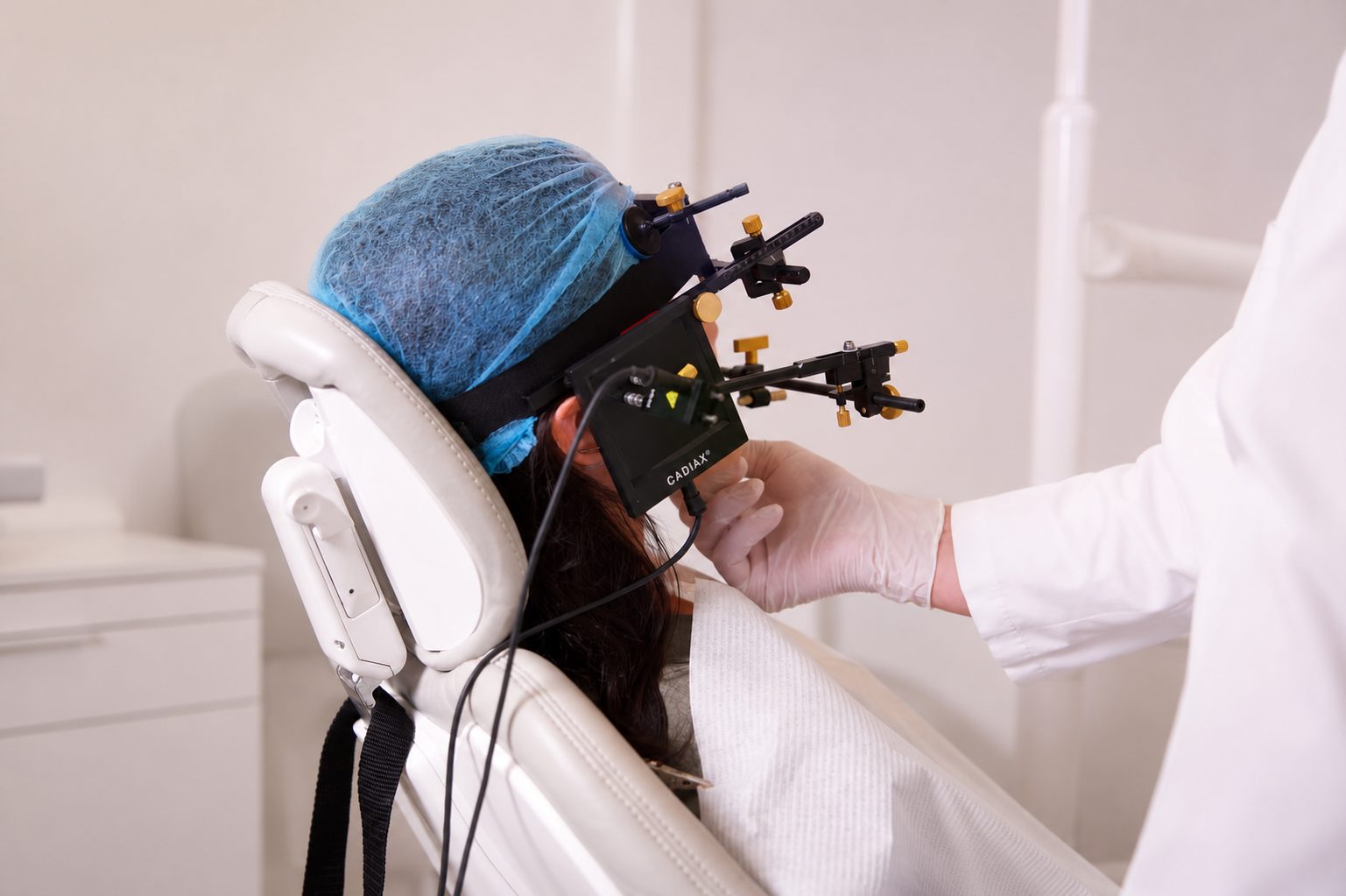
How TMJ Diagnosis Is Performed
Modern TMJ diagnosis differs significantly from a standard dental examination.
The doctor’s main task is not only to identify symptoms, but also to determine the mechanism behind their development. For this purpose, a comprehensive functional analysis is used.
The examination may include:
- analysis of lower jaw movements;
- TMJ condylography;
- computed tomography;
- photo protocol;
- assessment of chewing muscle function;
- bite analysis;
- magnetic resonance imaging if necessary.
Comprehensive diagnostics make it possible to assess the position of the articular disc, the condition of the joint structures, and the way the lower jaw functions during movement.
Only after obtaining a complete clinical picture can the doctor identify the true cause of the complaints and choose the most effective treatment strategy.
Conclusion
TMJ dysfunction can often cause symptoms that at first glance seem completely unrelated to dentistry. Jaw clicking, tinnitus, headaches, neck tension, and pain near the ear may all be manifestations of the same problem — impaired function of the temporomandibular joint.
If examinations by an ENT doctor, neurologist, or other specialists do not help identify the cause of your complaints, functional TMJ diagnostics should be considered. This approach makes it possible to detect the source of the problem, establish an accurate diagnosis, and choose treatment aimed not at temporary symptom relief, but at restoring normal joint function.
