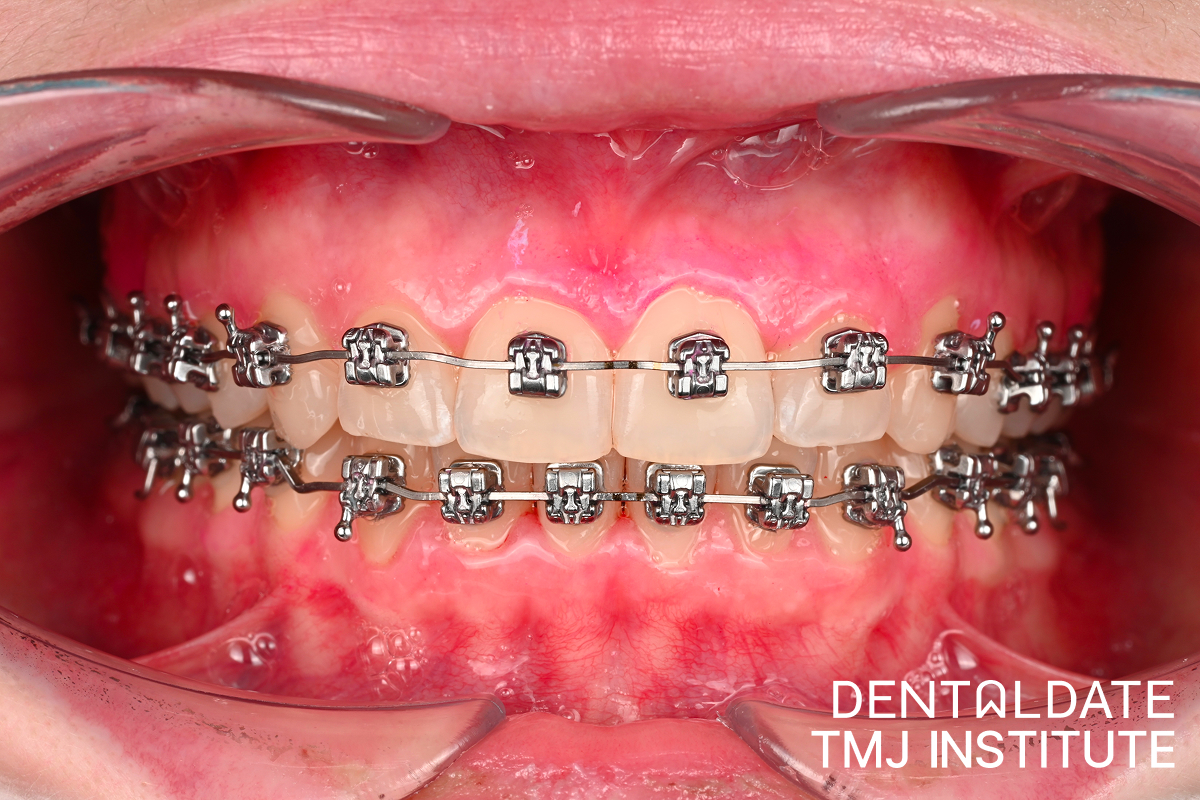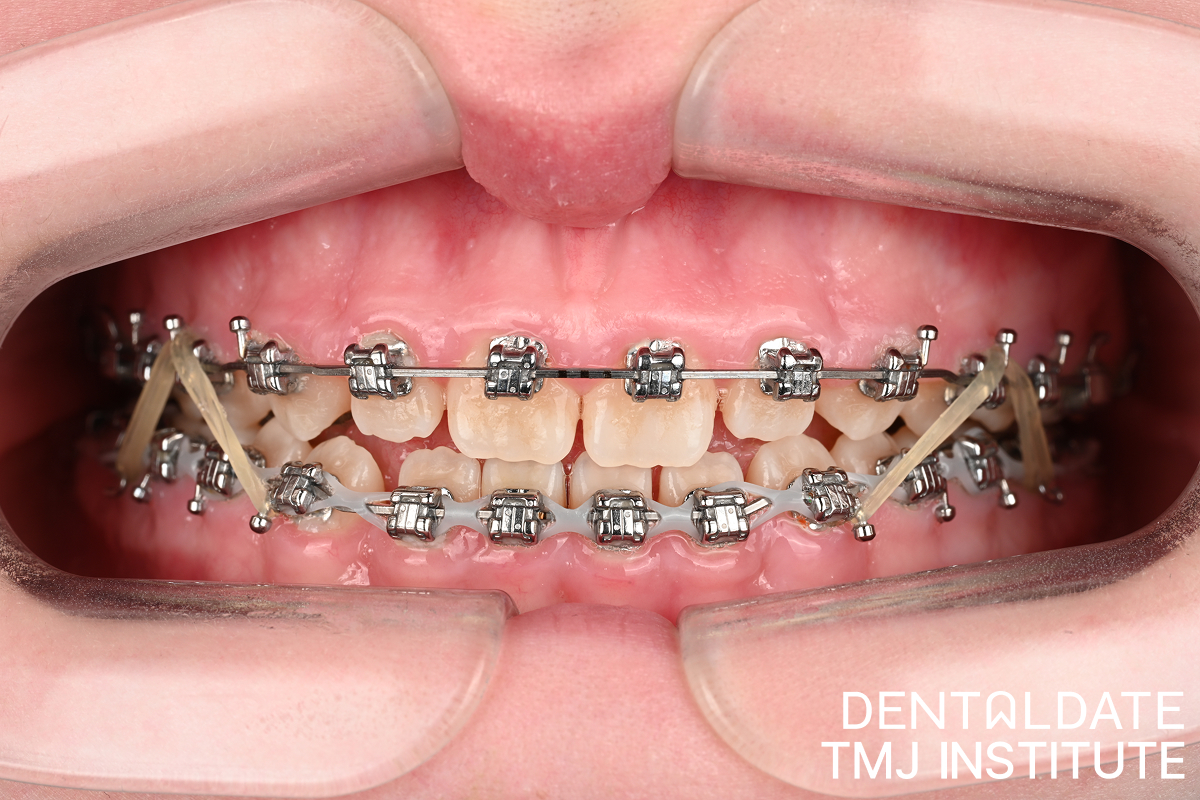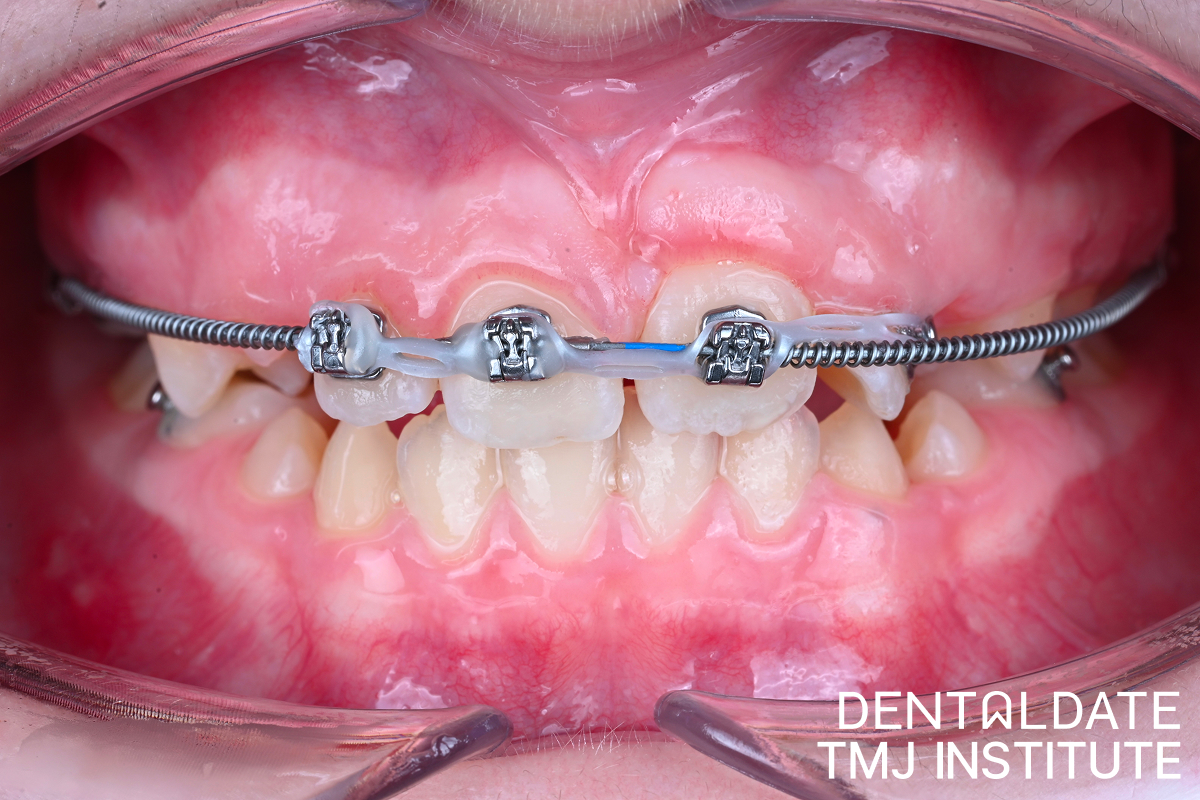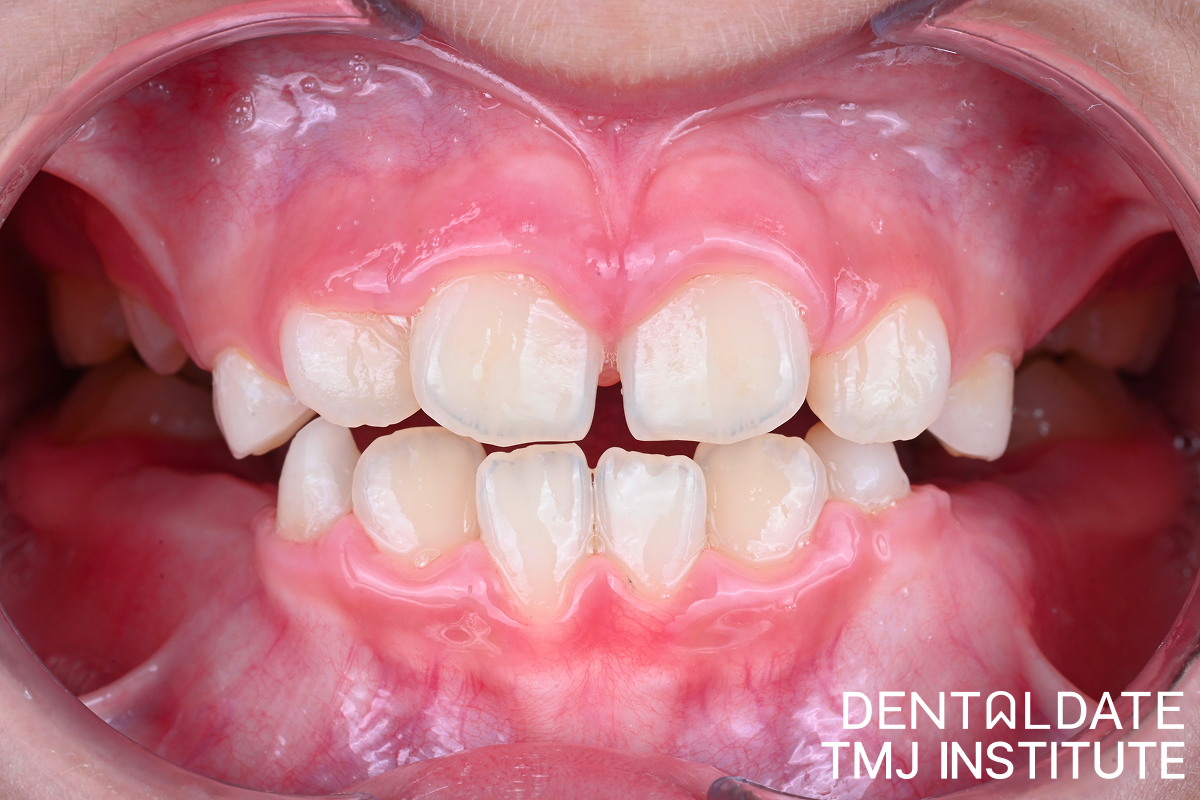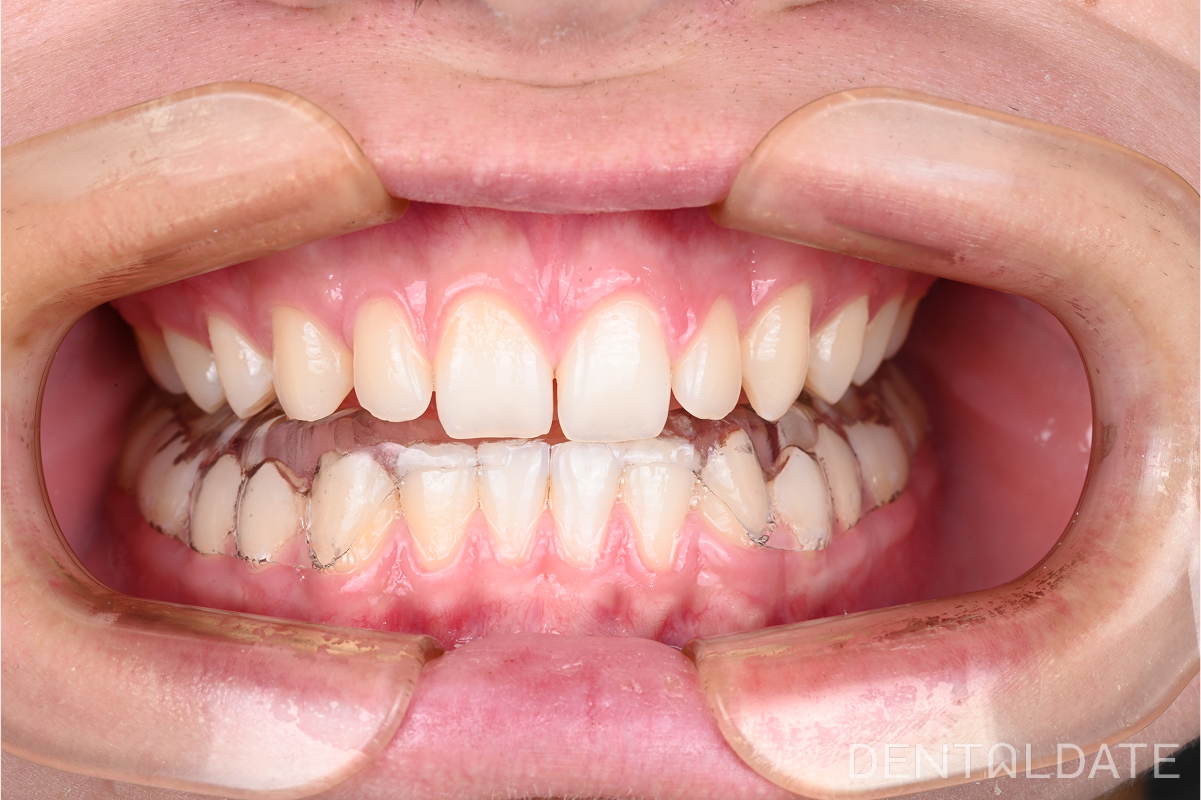

The patient was concerned about clicking sounds when opening the mouth, periodic joint pain, and a sensation of mandibular deviation. In addition, he experienced discomfort while chewing and muscle tension during prolonged functional load.
Diagnostics
- A detailed consultation was conducted with Dr. Oleg (prosthodontist-gnathologist).
- Condylography was performed to assess the position of the condyles and the range of mandibular movements.
- The diagnostics revealed TMJ functional disorders and improper occlusal relationships.
Treatment Plan
- Splint therapy: an individualized splint was fabricated to position the joint correctly. Under its guidance, the patient wore the appliance, which helped relieve overload from the joint and masticatory muscles.
- Orthodontic phase: after TMJ stabilization, bite correction began using a bracket system.
- Combined approach: occlusal overlays and interarch elastics were used to precisely transfer the therapeutic mandibular position. This allowed simultaneous correction of bite height and occlusion.
Treatment Stages
- First weeks: adaptation to the splint, reduction of pain symptoms, normalization of joint function.
- After stabilization: placement of braces in the mandibular position established by the splint.
- In parallel: interarch elastics were prescribed to accelerate occlusal correction.
The patient followed the instructions for wearing the elastics perfectly, which allowed us to achieve tooth closure at the new height (the height of the overlays) within just one month.
After the removal of the bracket system, the position of the joints and teeth will remain stable.
At this stage, we continue to work on improving the bite and aesthetics by correcting the rotations and tilts of the teeth.
Why This Matters
Many patients delay treatment of TMJ dysfunction, assuming that “joint clicking” doesn’t require attention. However, without therapy, the condition typically worsens, leading to headaches, impaired muscle function, and excessive tooth wear. Comprehensive treatment supervised by a gnathologist and orthodontist eliminates the underlying cause—not just the symptoms.
At DentalDate, we pay special attention to patients with TMJ dysfunction. Our gnathology specialists use advanced diagnostic methods and combined treatment protocols to restore the joint to a physiologically correct position and achieve a stable, long-term result.