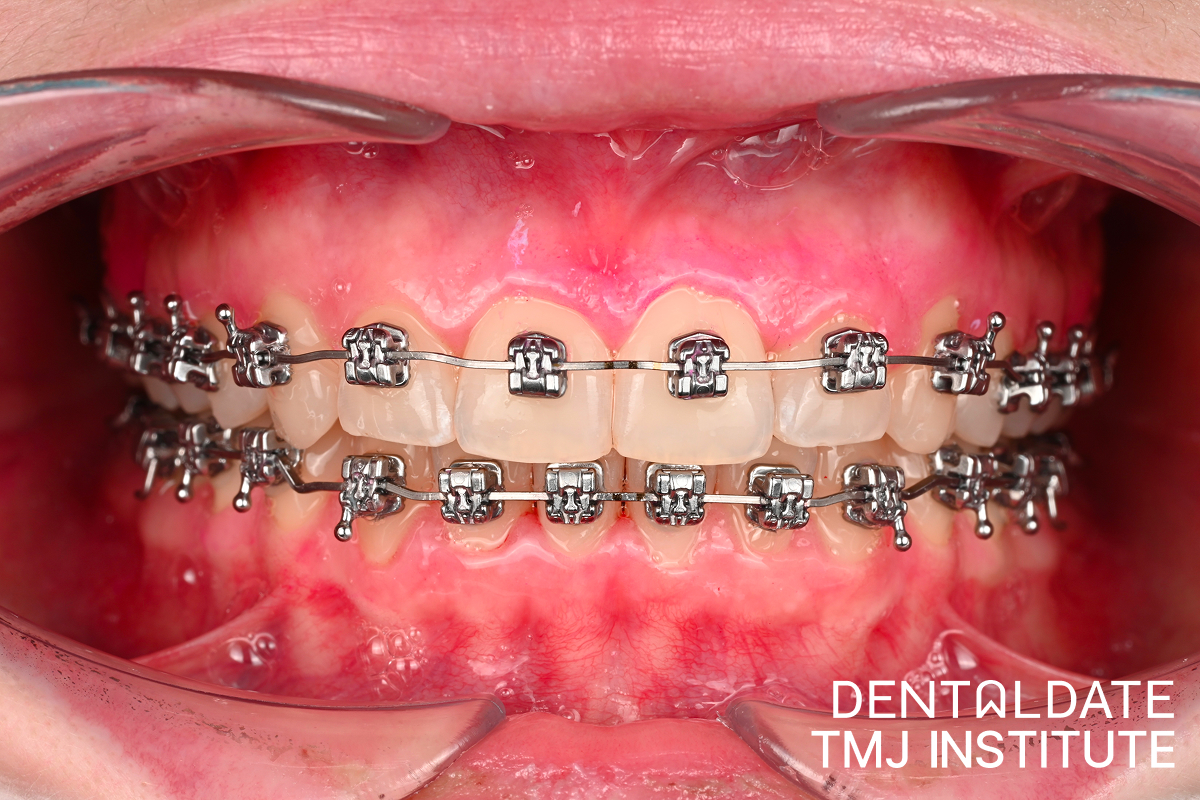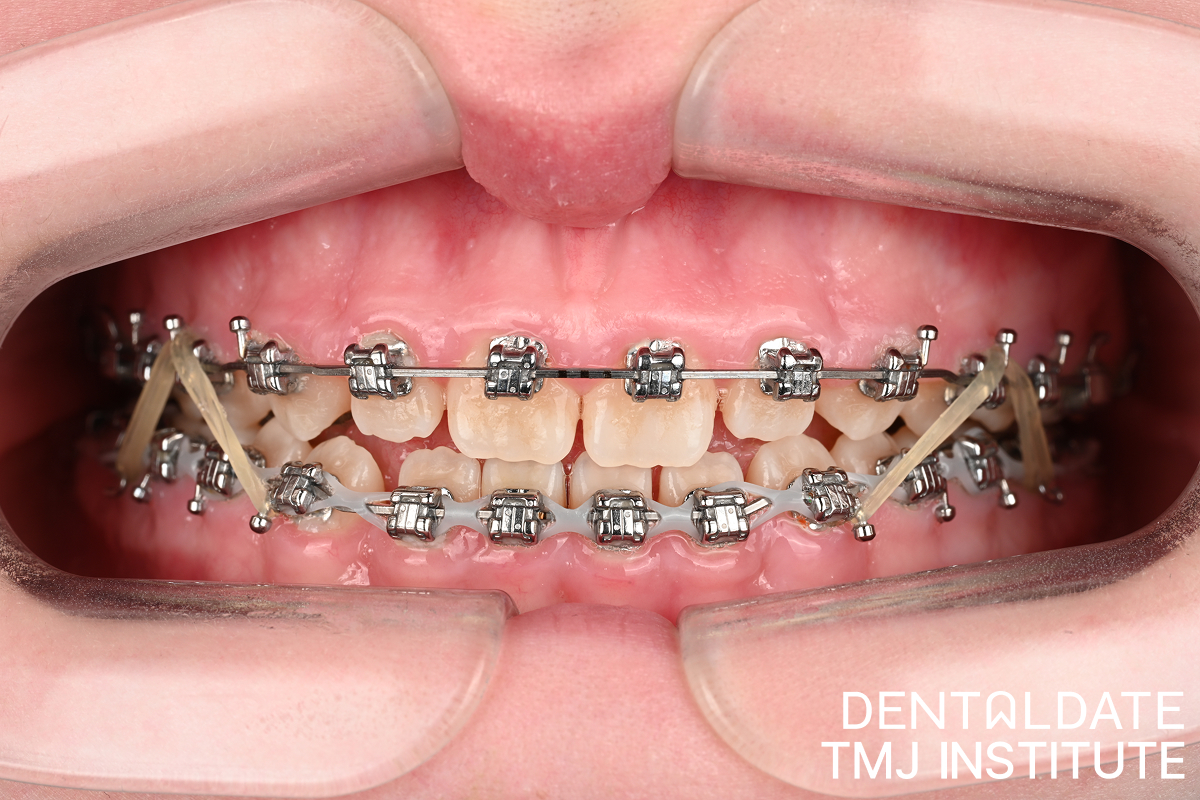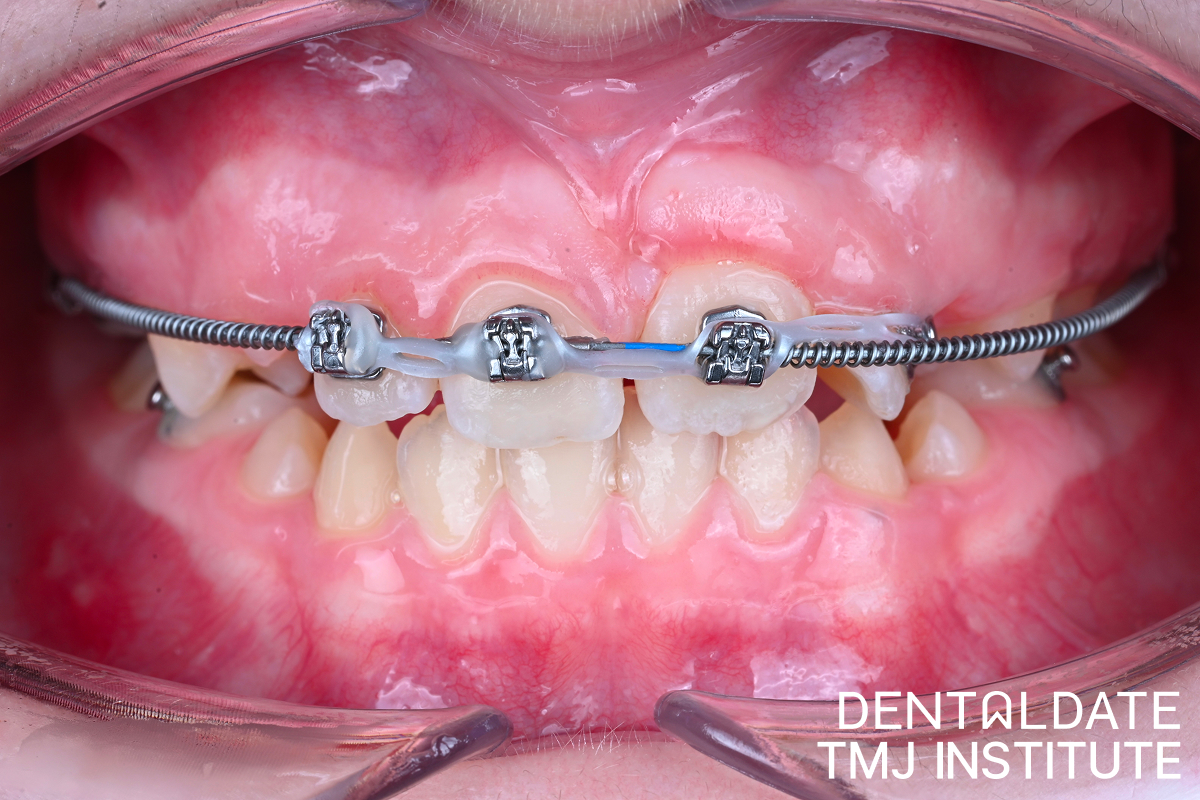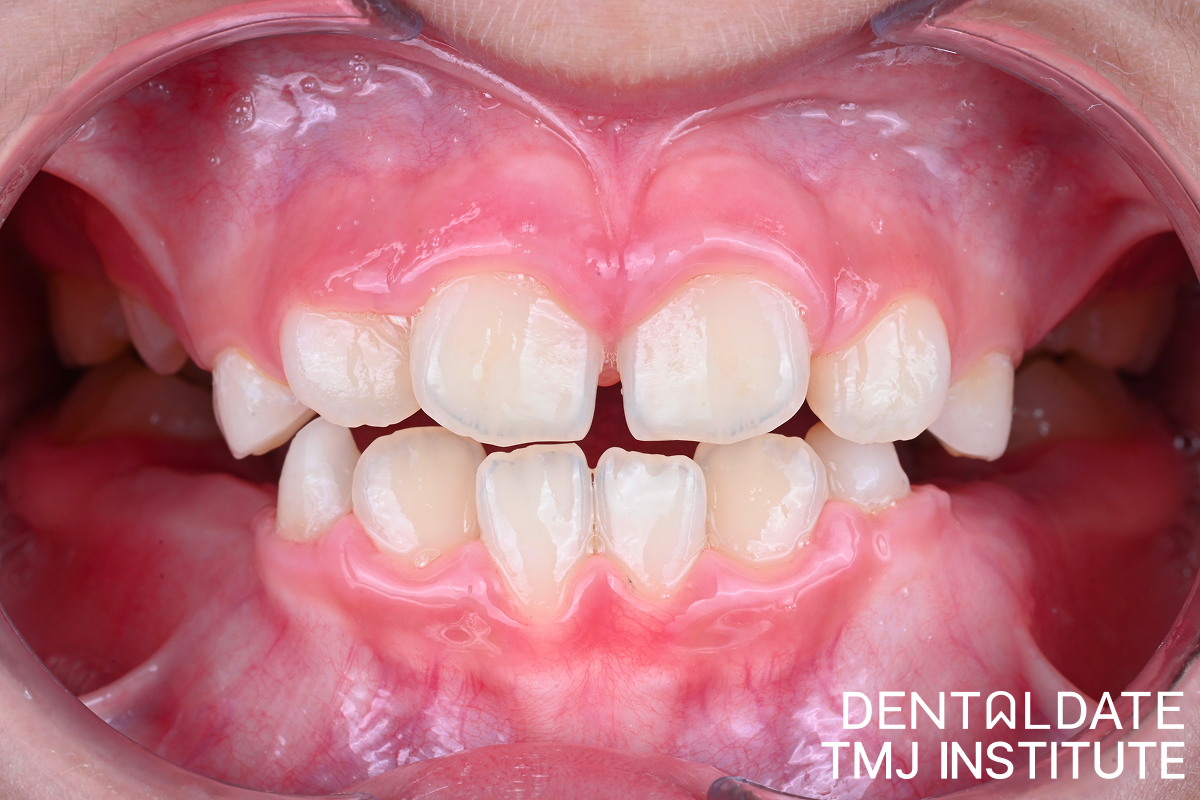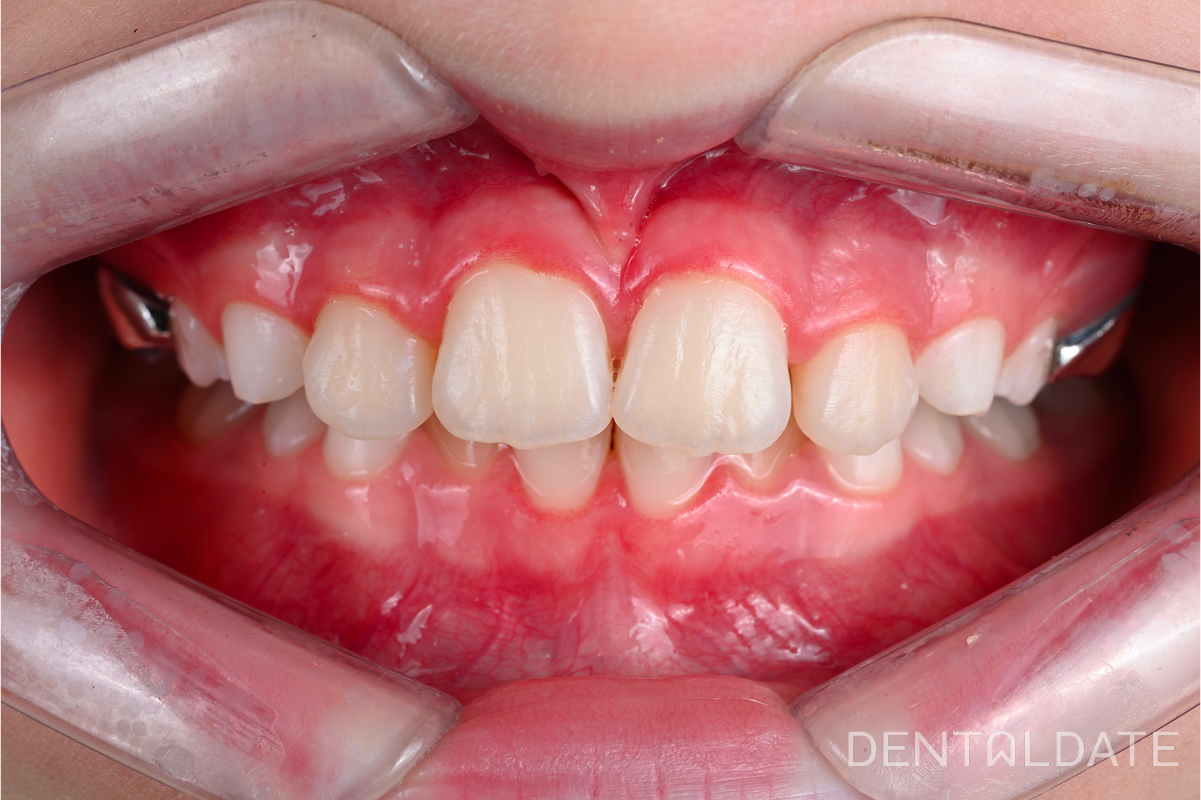

The child presented with a noticeably constricted upper jaw. The front teeth were significantly crowded, causing discomfort and increasing the risk of caries due to difficulty maintaining oral hygiene.
Why This Problem Is Dangerous if Left Untreated
Ignoring dental crowding and a narrow jaw can lead to a crossbite, facial asymmetry, impaired chewing function, and even breathing issues. In adolescence, correction is simpler and more effective than in adulthood.
Diagnostics and Treatment Plan
- Clinical examination and analysis of the orthopantomogram confirmed insufficient width of the upper jaw.
- It was decided to use a Haas (Marco-Ross) appliance to expand the upper jaw.
Treatment Stages
- Placement of the Haas appliance on the upper jaw.
- Regular activations to gradually widen the arch.
- Follow-up visits to monitor changes in tooth position.
- Optimal width was achieved after one month.
- The stabilization phase began to secure the achieved result.
Results
- The upper jaw was expanded, creating proper conditions for the correct position of the mandible.
- Dental crowding decreased as more space became available for the formation of a straight arch.
- Smile aesthetics and overall facial harmony improved.
Why This Matters
The Haas appliance allows correction of upper jaw constriction in childhood without surgical intervention. This method helps prevent serious orthodontic problems in the future and supports healthy dentofacial development.
Haas Appliance — What Parents Should Know
- It is a semi-removable appliance fixed to the teeth that acts directly on the maxillary bone.
- Treatment is painless, and children adapt quickly.
- The active expansion phase typically lasts 3–4 weeks, followed by stabilization.
After the stabilization period, the next phase of treatment is planned: orthodontic bite correction using braces or aligners. This will fully eliminate crowding and help form a straight, functional smile.