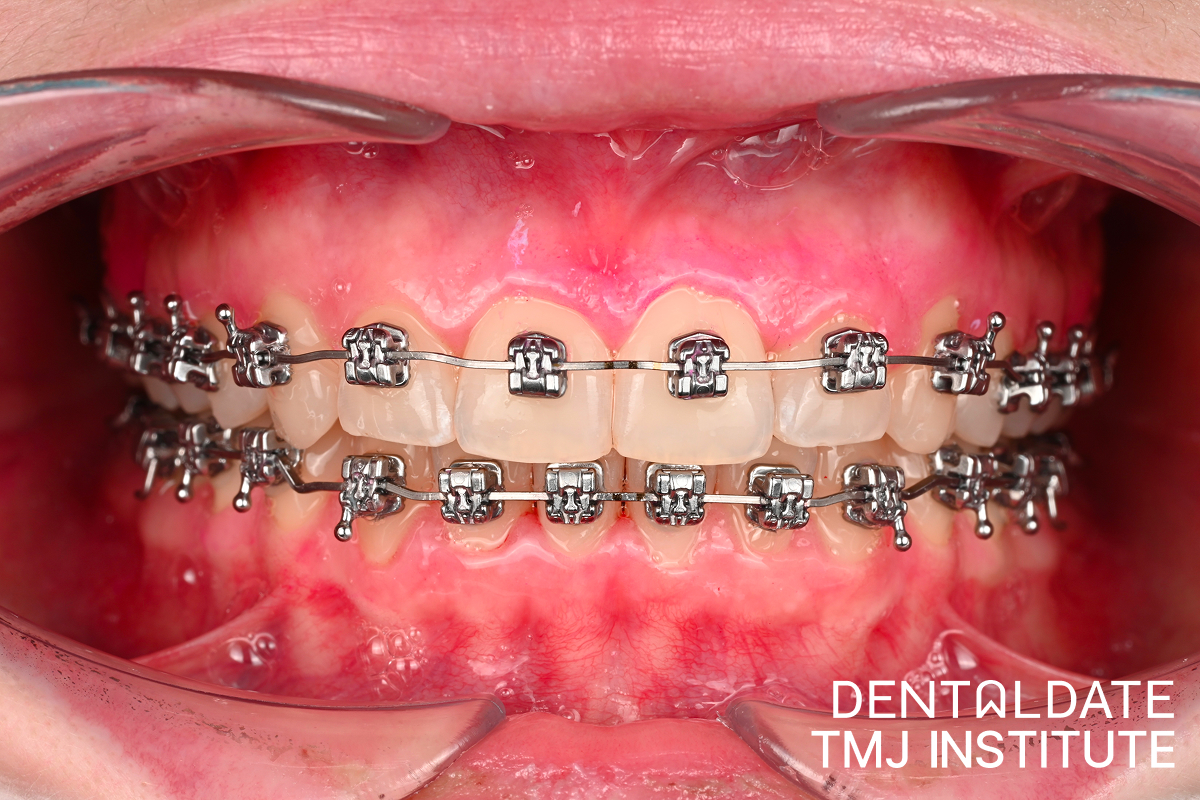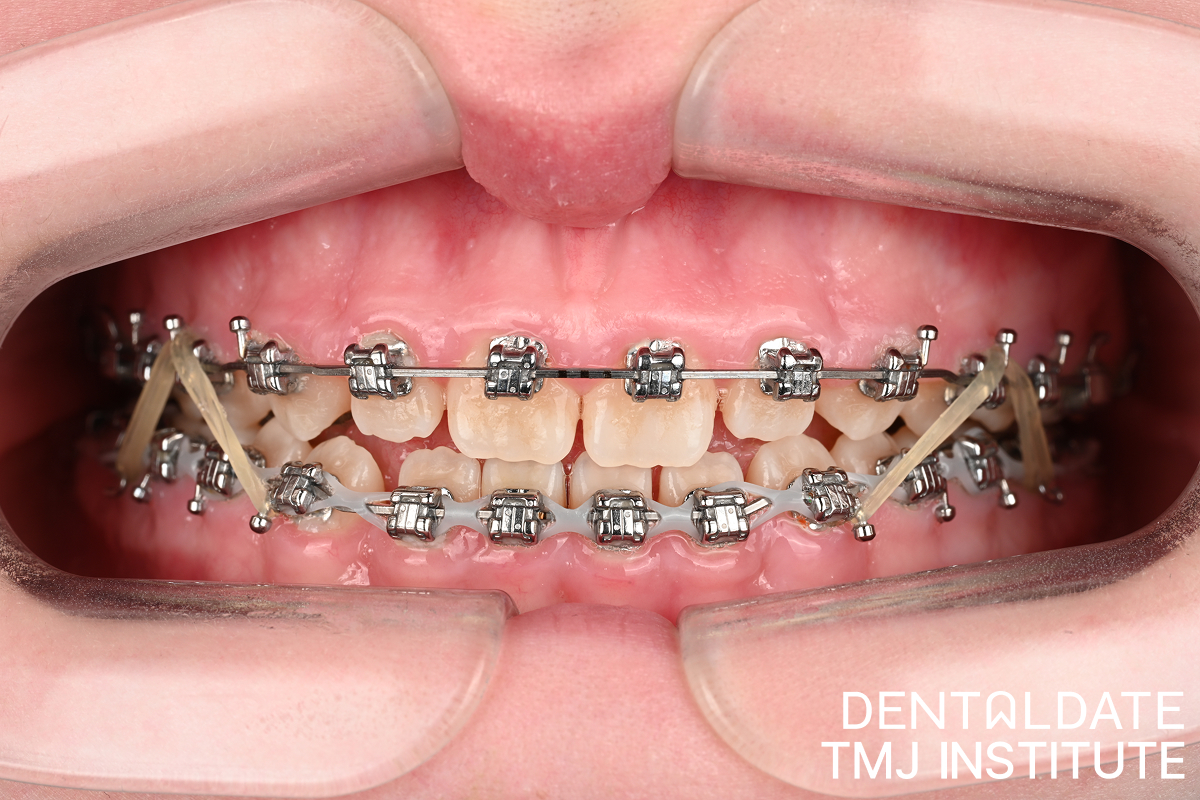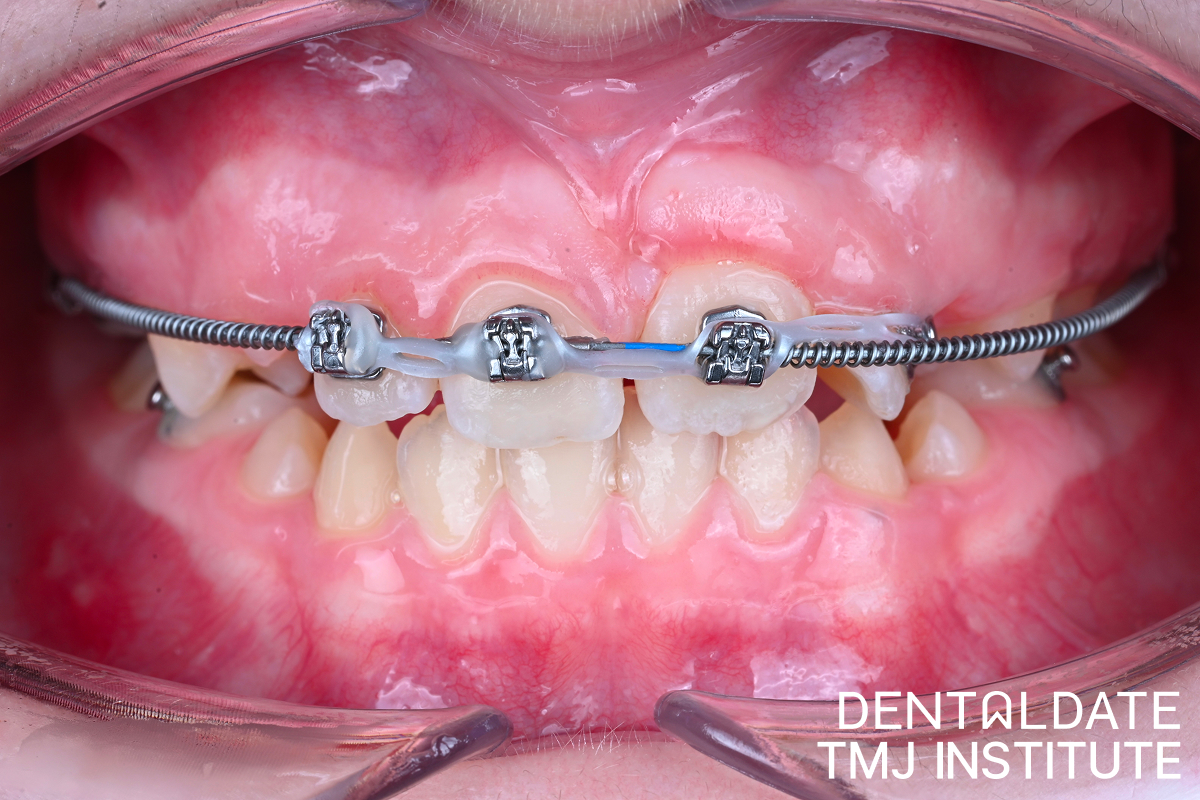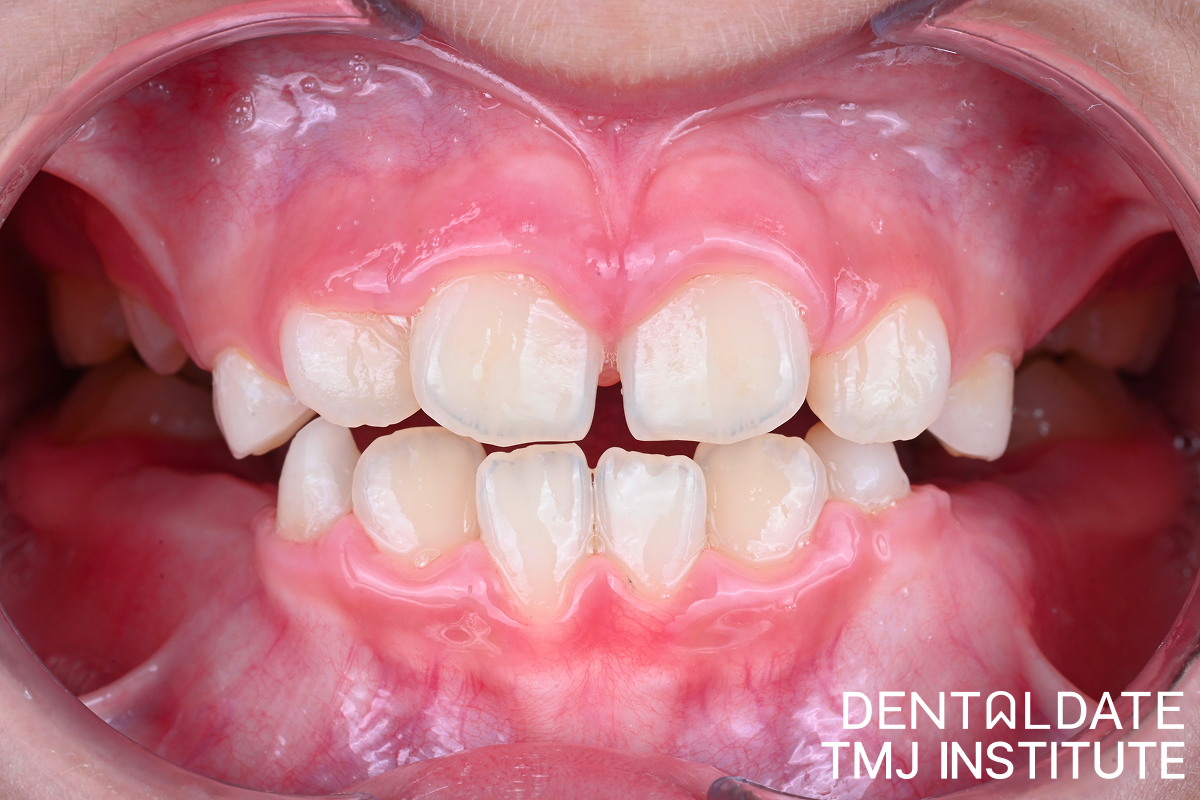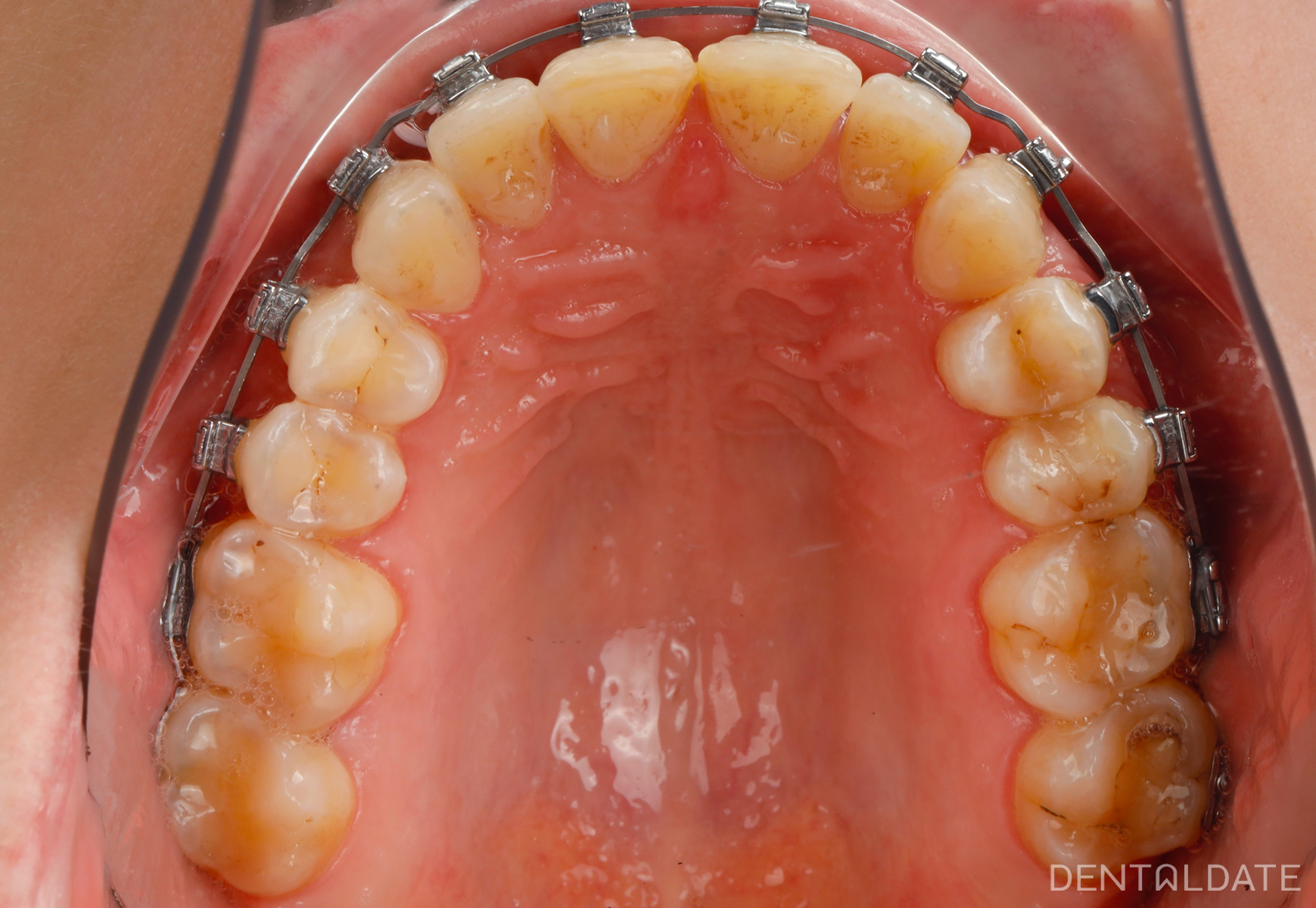

During examination, several typical problems were identified: lack of space for a tooth on the lower left side, crowded incisors, distal occlusion, and “edge-to-edge” contact of the posterior teeth. Additionally, the upper incisors were tilted backward, and a deep bite was observed — covering more than half of the lower teeth.
This condition was not only an aesthetic issue but also a functional one: improper load distribution led to enamel wear and increased risk of temporomandibular joint (TMJ) disorders.
After comprehensive orthodontic treatment, it was possible to:
- normalize the vertical dimension of the bite;
- improve tooth alignment and eliminate crowding;
- achieve proper occlusion on both the right and left sides;
- correct the inclination of the upper incisors and reduce the depth of the bite.
Why this is important
Improper occlusion is not just an aesthetic concern — it is also a risk factor for the overall health of the dental and jaw system. Over time, excessive tooth wear occurs, and the function of the masticatory muscles and joints is impaired. Early correction helps preserve teeth and prevent complications.
What patients should know
- Even with pronounced crowding and distal occlusion, modern orthodontic methods make it possible to achieve predictable results.
- Functional aspects (occlusion, load distribution) are corrected first, and only then can aesthetic adjustments be made.
- A comprehensive approach provides more stable, long-lasting results than localized correction of only the “visible part” of the smile.
Result
After treatment, the teeth moved into the correct position, and the bite became balanced, with even distribution of chewing forces. The patient noted not only improved aesthetics but also greater comfort while chewing.
Next stage
To achieve an ideal result, aesthetic rehabilitation with a prosthodontist is planned. This will allow final adjustment of tooth shape and color, enhancing the effect of orthodontic treatment and ensuring both smile harmony and long-term stability.
At DentalDate, we always approach treatment as a comprehensive process — from correcting functional disorders to achieving maximum aesthetics.