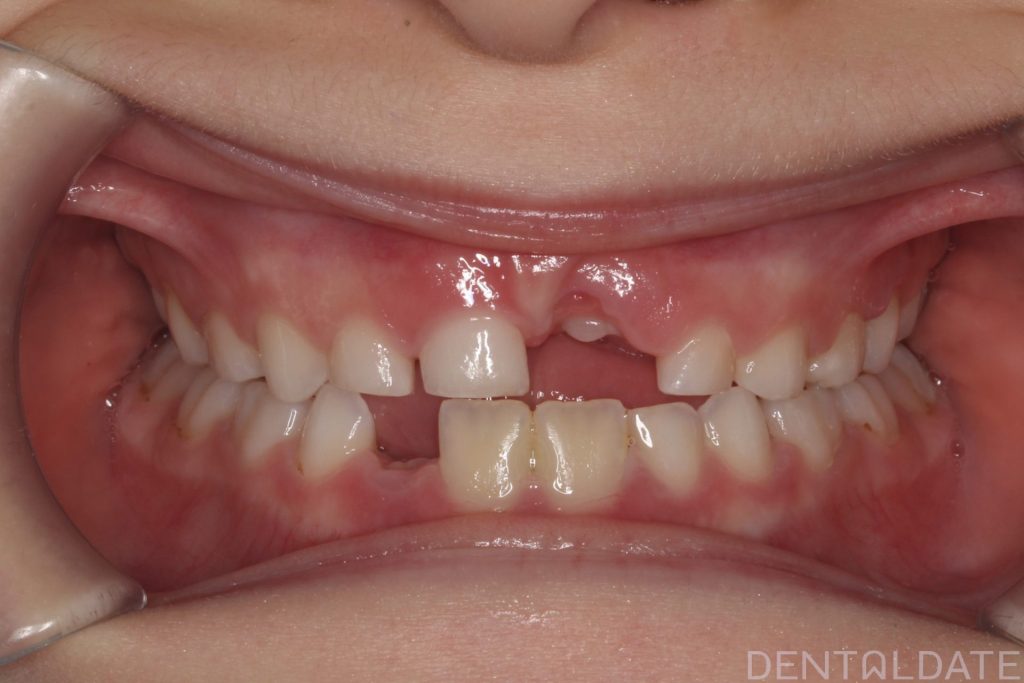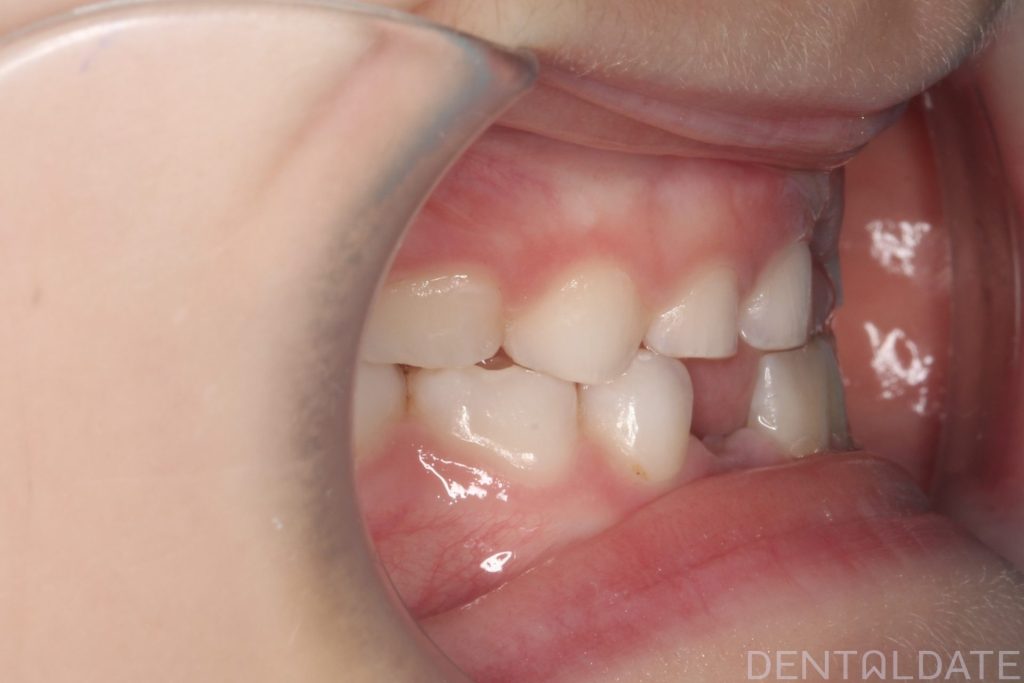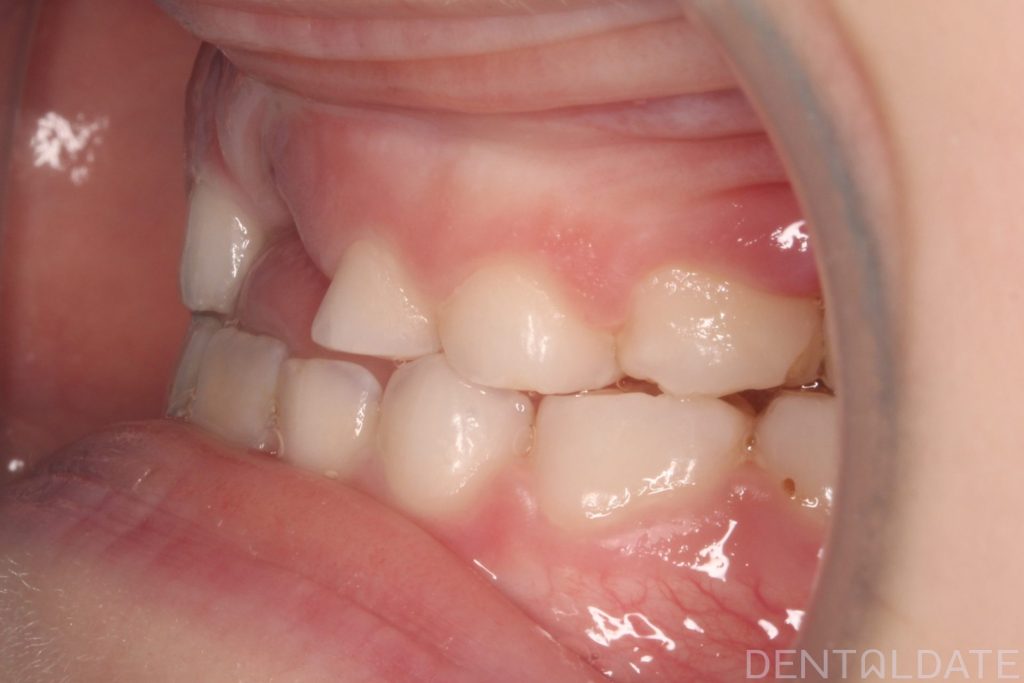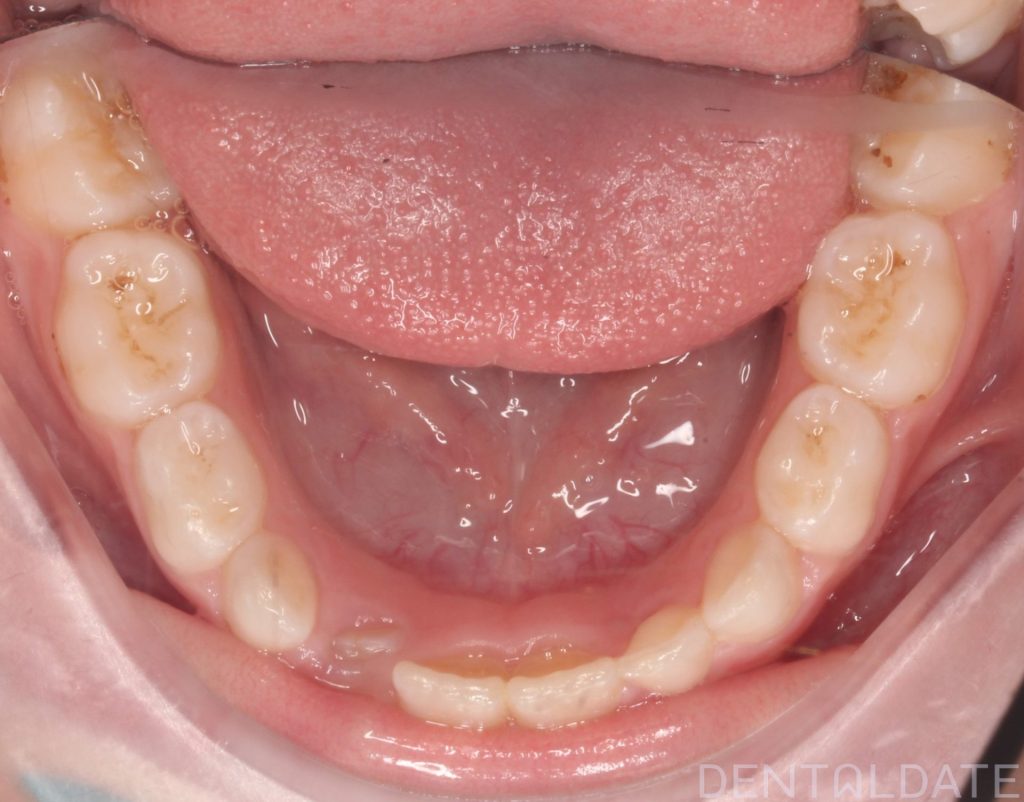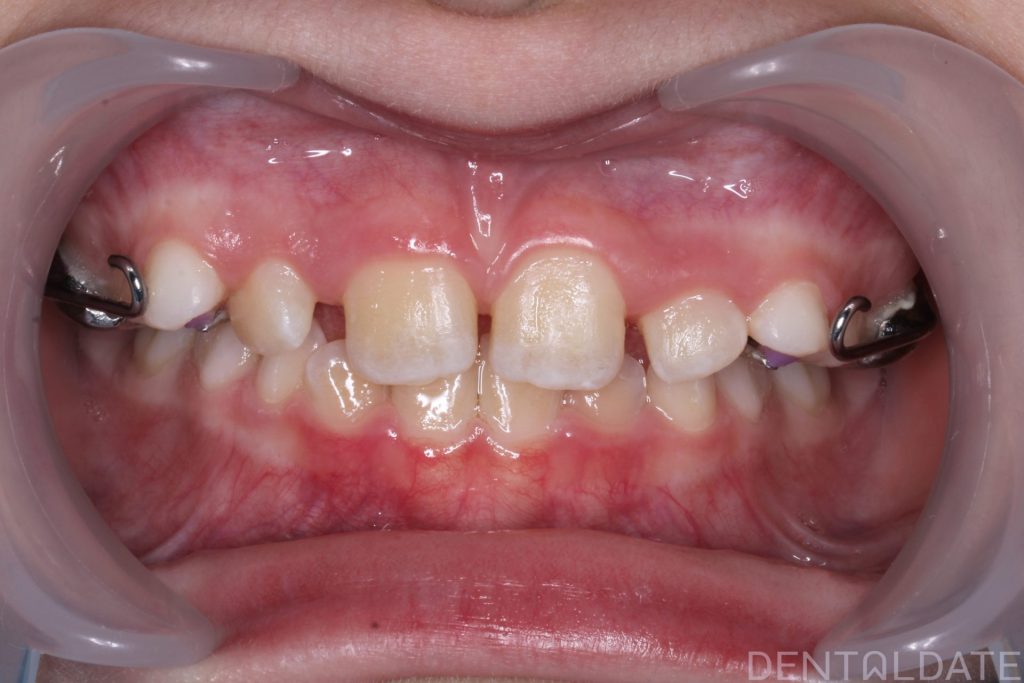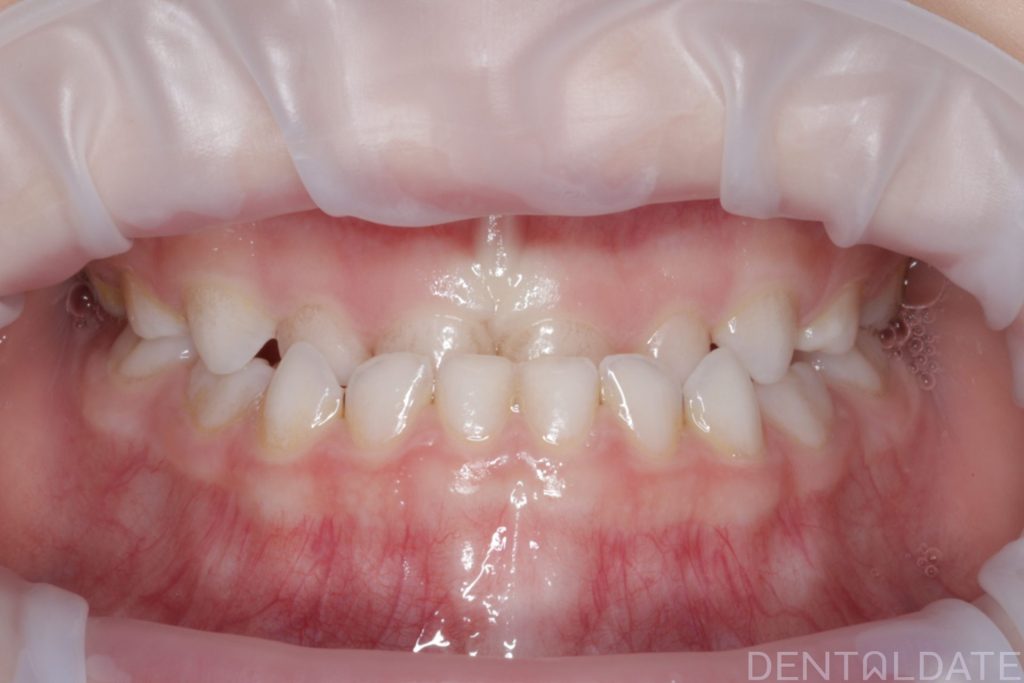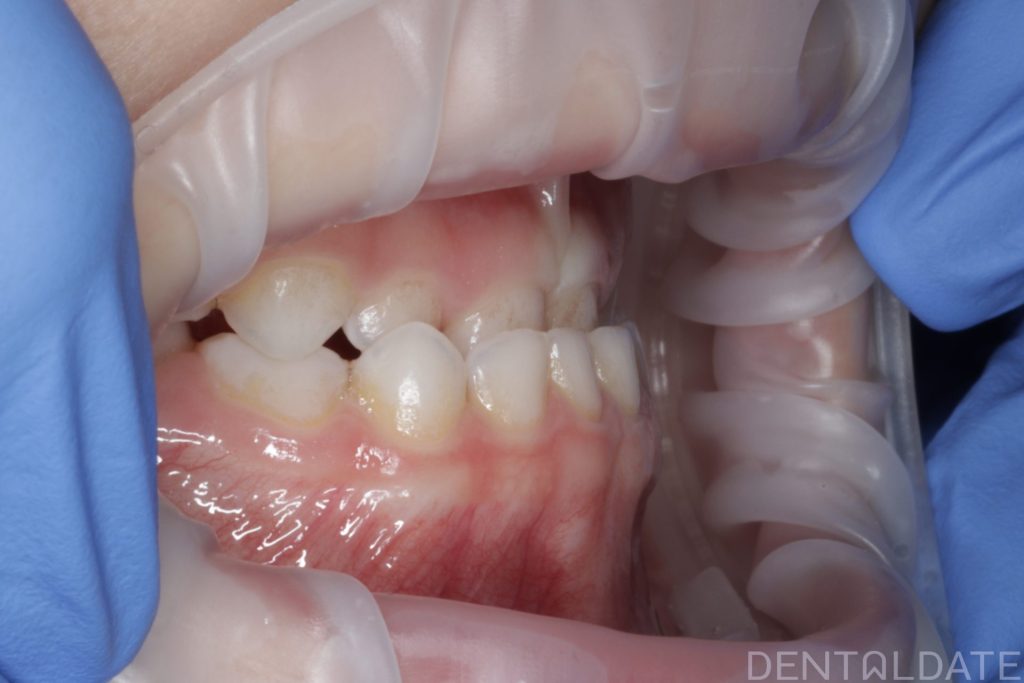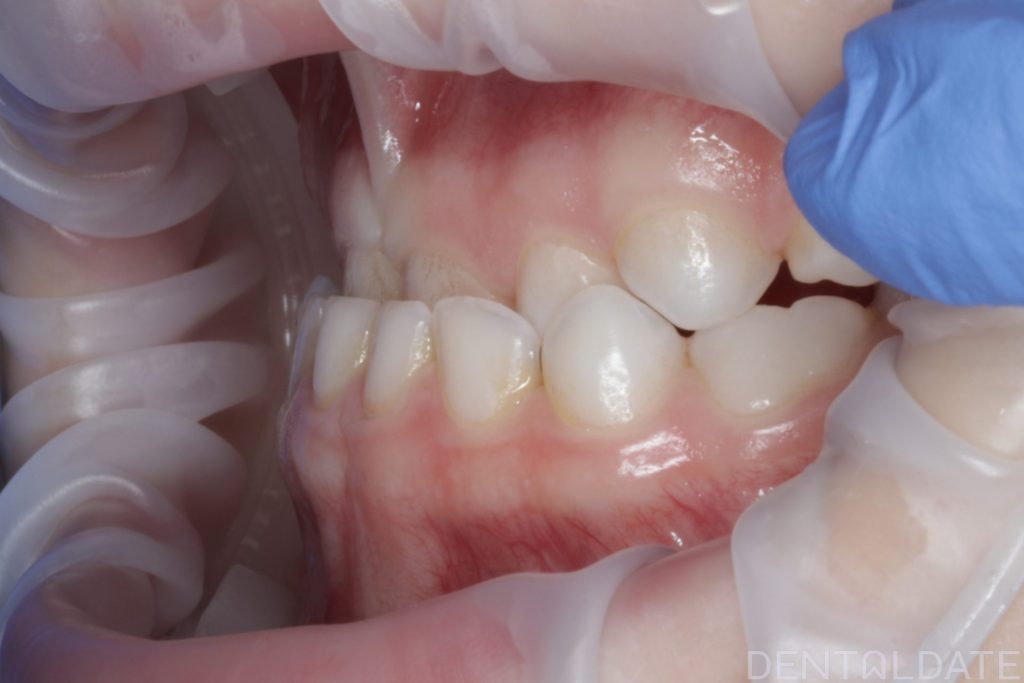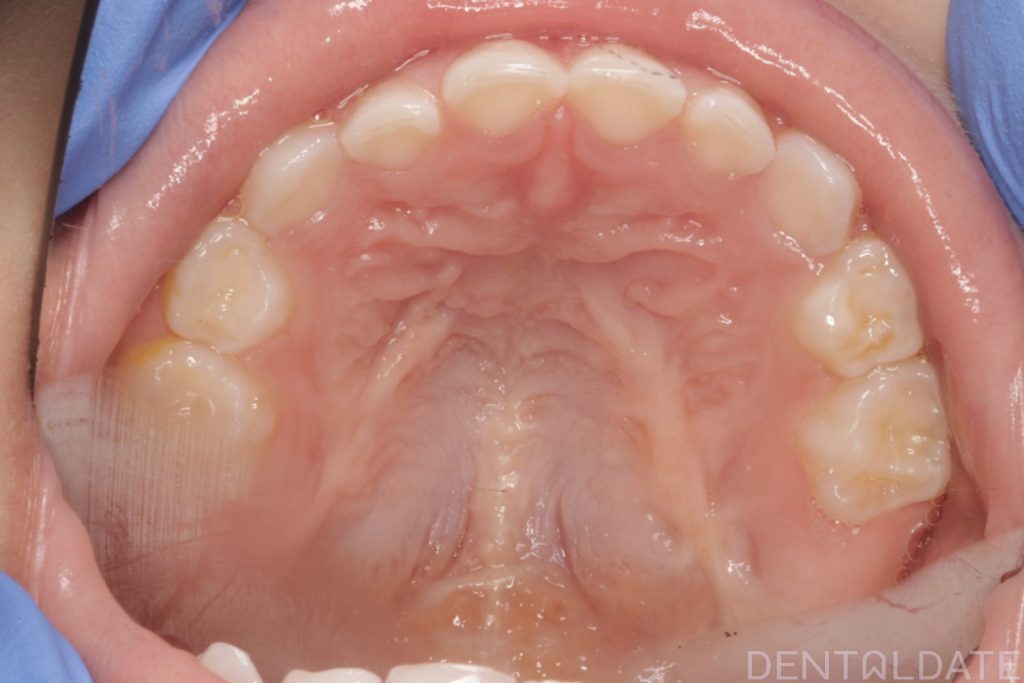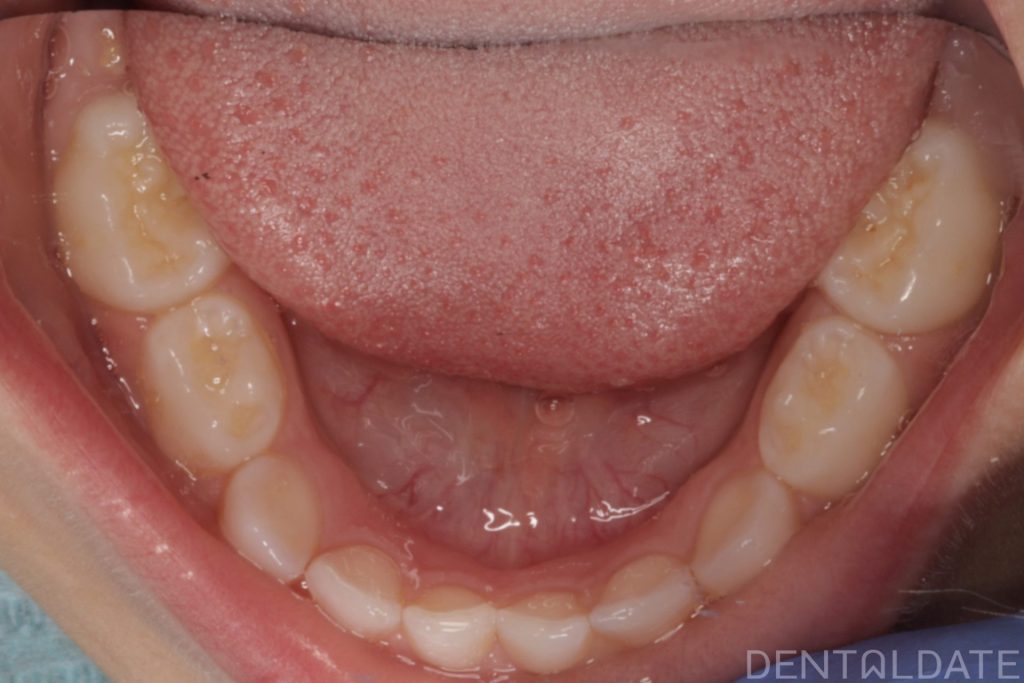
Findings During Examination
Clinical evaluation revealed:
- underdevelopment of the maxilla, leading to improper positioning of the mandible;
- impaired growth of the dental arches and insufficient space for eruption of the permanent teeth;
- if left untreated, continued development could have resulted in significant facial asymmetry and the need for maxillofacial surgery in the future.
Course of Treatment
Treatment was divided into several consecutive stages:
- First stage: orthodontic appliances were used to correct jaw positioning and create space for proper maxillary growth.
- Bite normalization: even after the first stage, proper occlusion was achieved and the growth restriction of the maxilla was eliminated.
- Further development: treatment continued to create sufficient space for permanent teeth and to correct the skeletal jaw relationship.
Continuous monitoring of the patient’s growth and dynamic changes was carried out throughout the treatment.
Treatment Outcome
- The need for surgical intervention was avoided — the bite was corrected during the child’s growth phase.
- Physiological conditions for harmonious facial development and proper tooth positioning were restored.
- Both the parents and the child achieved not only an aesthetically pleasing result, but also healthy function of the entire maxillofacial system.
Information for Parents
- Early diagnosis of orthodontic problems allows intervention before the completion of active growth, when jaw development can still be corrected without surgery.
- At the first signs of malocclusion (a protruding mandible, lack of space for teeth, facial asymmetry), an orthodontic consultation should not be delayed.
- Many adult patients who did not receive orthodontic treatment in childhood later face the need for complex orthognathic surgery.
Frequently Asked Questions
1. At what age can orthodontic treatment begin for such conditions?
The optimal age is 5–7 years, when active growth allows correction of jaw position without surgical intervention.
2. What happens if a child’s bite is not treated?
The problem will worsen: an abnormal facial profile develops, chewing function is impaired, and surgery is often required in adolescence or adulthood.
3. How comfortable is treatment for a child?
Modern orthodontic appliances are safe and do not interfere with a child’s normal daily life. Adaptation is quick, and discomfort is minimal.
At DentalDate, we place special emphasis on early orthodontic care, as it allows us to prevent traumatic and costly surgical procedures in the future. We guide our patients from childhood, helping them grow with a correct bite and a beautiful smile.