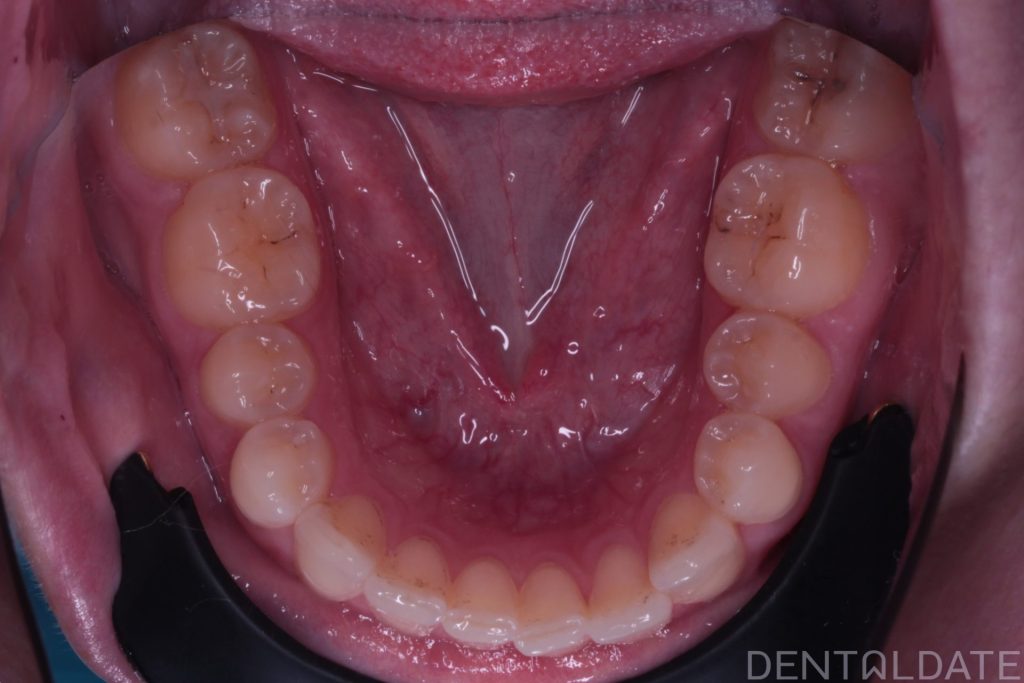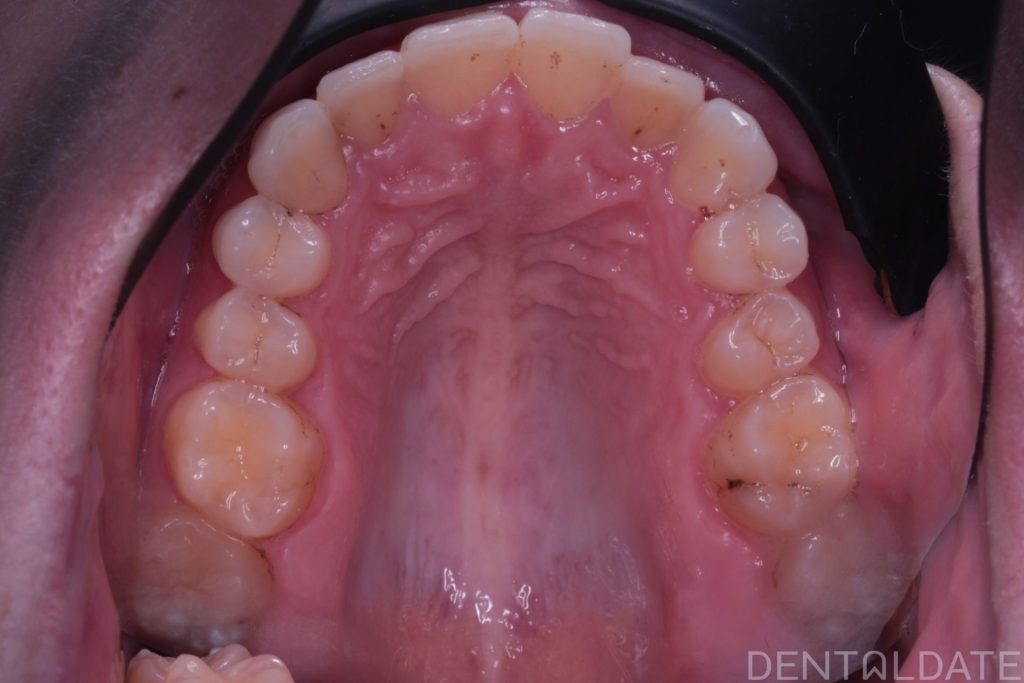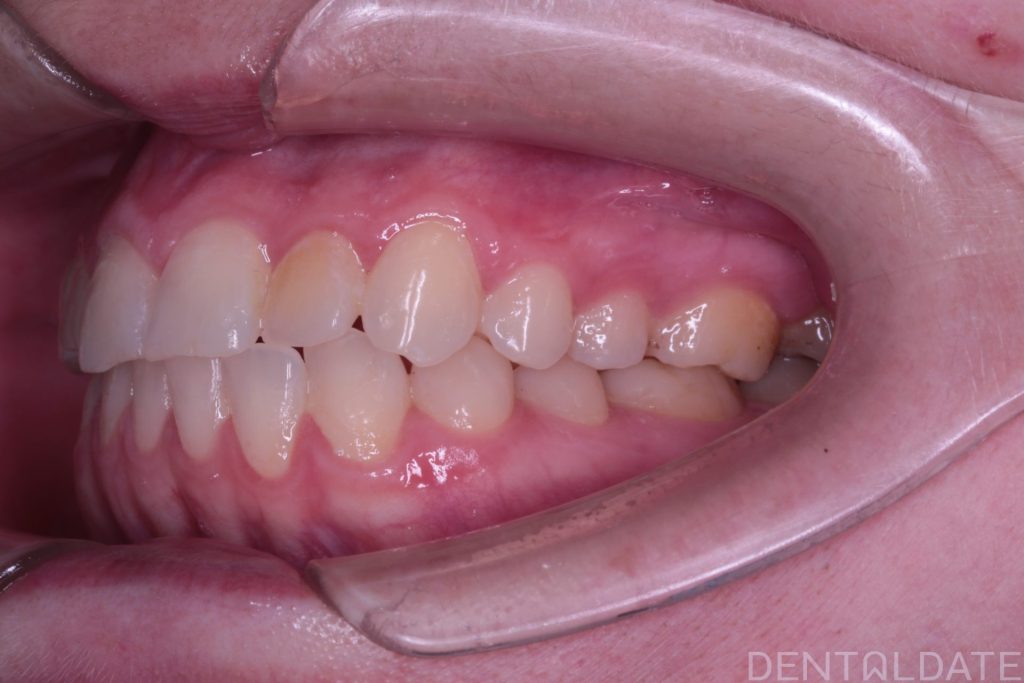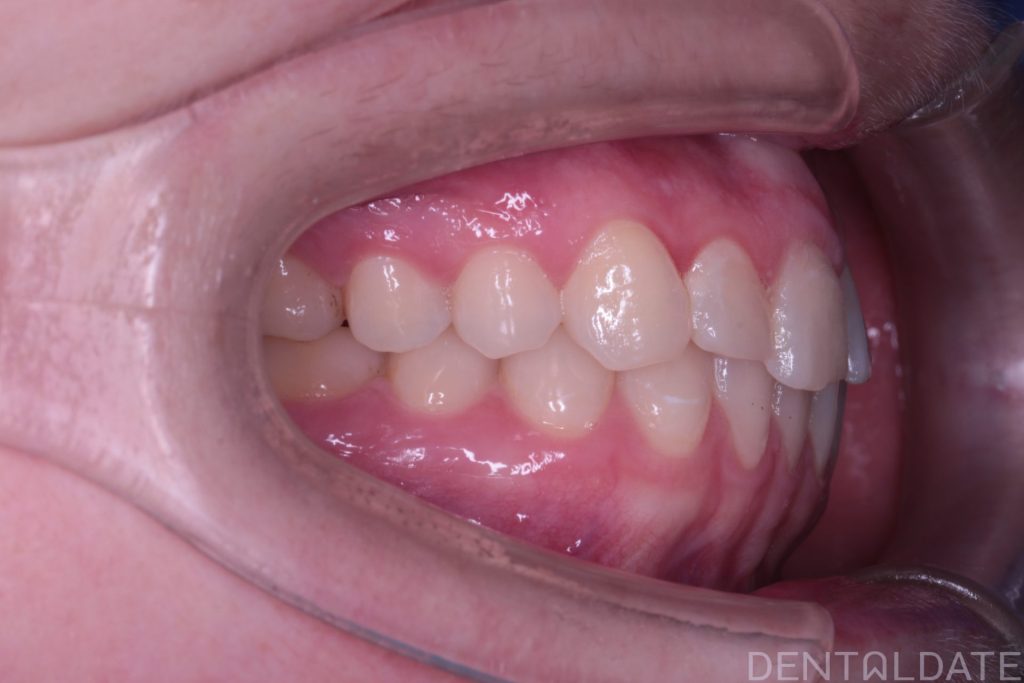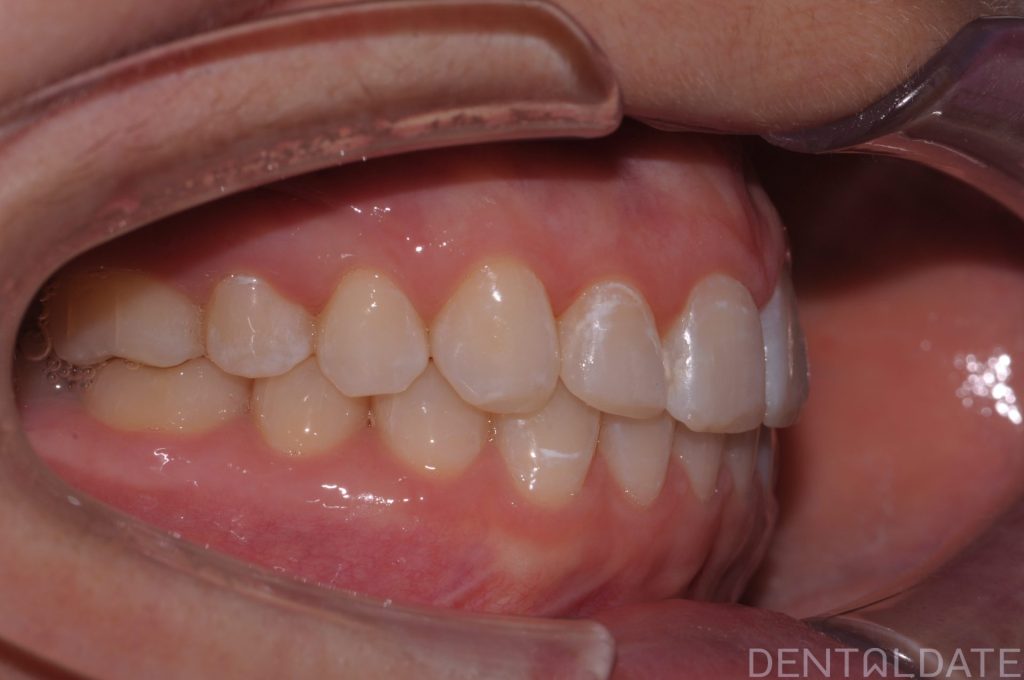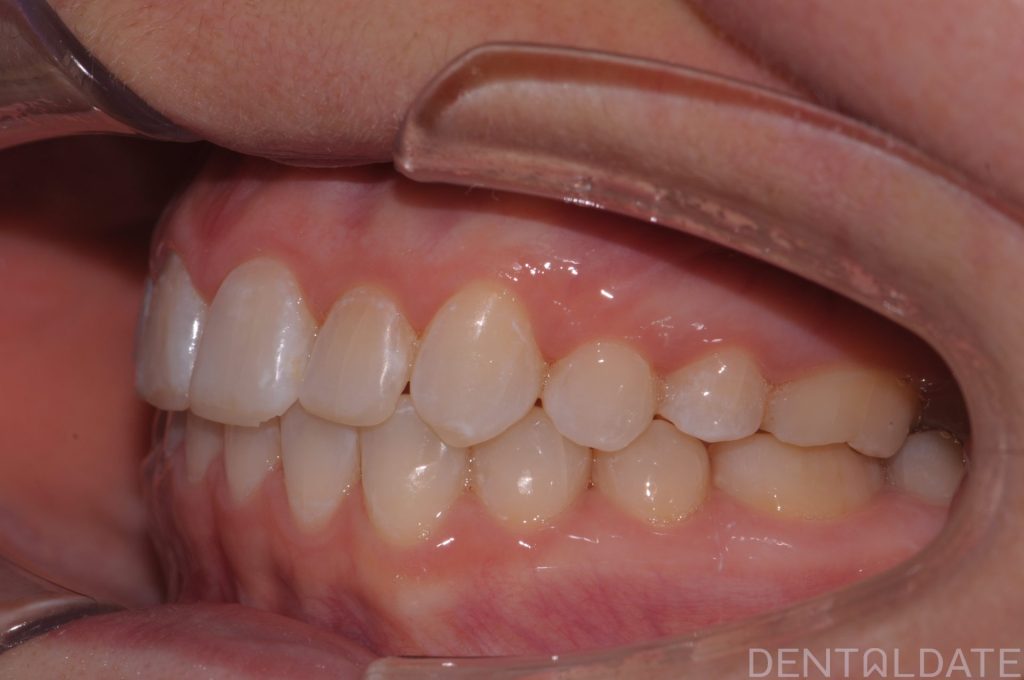
After braces are removed, teeth remain mobile for some time: the ligaments and surrounding tissues do not immediately stabilize in their new position. Without retainers, teeth tend to move back toward their original alignment – a phenomenon known as “positional memory.”
This is exactly what occurred in this case. The relapse developed gradually, but within a few years it became visually noticeable and began to affect the bite function.
The patient was concerned that the teeth had started to tilt again, some became overlapped, and the smile line lost its symmetry. In addition to aesthetic changes, functional complaints appeared, including:
- difficulty chewing;
- discomfort when biting;
- food getting stuck between teeth due to crowding.
Diagnostic evaluation (radiographic imaging and dental arch scanning) revealed a pronounced orthodontic relapse and confirmed the need for repeat orthodontic correction.
Treatment Plan
To restore proper tooth alignment, the following approach was chosen:
1. Reapplication of the Braces System
This allowed for controlled and gentle repositioning of the teeth into their physiologically correct alignment.
2. Gradual Normalization of the Dental Arches
We restored arch symmetry, expanded crowded areas, and improved overall tooth contacts.
3. Bite Correction
The bite displacement was corrected, which is essential to prevent excessive loading on individual teeth.
4. Mandatory Retention Phase
After achieving the desired result, retainers were placed to stabilize the corrected tooth position and prevent recurrence.
Treatment Results
- teeth are fully aligned;
- the bite has been restored;
- the smile is symmetrical;
- discomfort during eating has disappeared;
- oral hygiene has become easier – food no longer gets stuck between teeth.
Why This Matters
Orthodontic relapse is not a treatment error, but a natural characteristic of the dentofacial system. Ignoring such changes may lead to:
- recurrent tooth crowding;
- improper distribution of chewing load;
- tooth sensitivity during eating;
- temporomandibular joint (TMJ) dysfunction;
- progression of aesthetic defects.
Timely intervention helps preserve dental health and prevents the problem from returning.
What Patients Should Know
- Retainers must always be placed after braces removal – this is a standard part of orthodontic treatment.
- Retainers are discreet, comfortable, and essential for maintaining long-term results.
- Once teeth begin to shift, relapse tends to progress rather than stabilize.
- Discomfort while eating, tooth tilting, or changes in the smile are clear reasons to undergo diagnostic evaluation.
A Note for Parents of Teenagers
Orthodontic relapse occurs more frequently in adolescents because:
- the dentofacial system is still developing;
- ligaments are more flexible;
- absence of retention quickly leads to tooth movement.
If your teenager has already completed orthodontic treatment, it is crucial to ensure that retainers are in place and securely bonded.
At DentalDate, we provide orthodontic treatment of any complexity, correct relapses, and always pay special attention to the retention phase – the key factor that ensures stable and long-lasting results.