



Initial Stage – Detection of Hidden Caries
Caries on contact surfaces is challenging to identify during a routine visual examination, as the lesion is concealed beneath the point of tooth contact. Working under a microscope allows the clinician to detect even minimal changes and accurately determine the true extent of the damage.
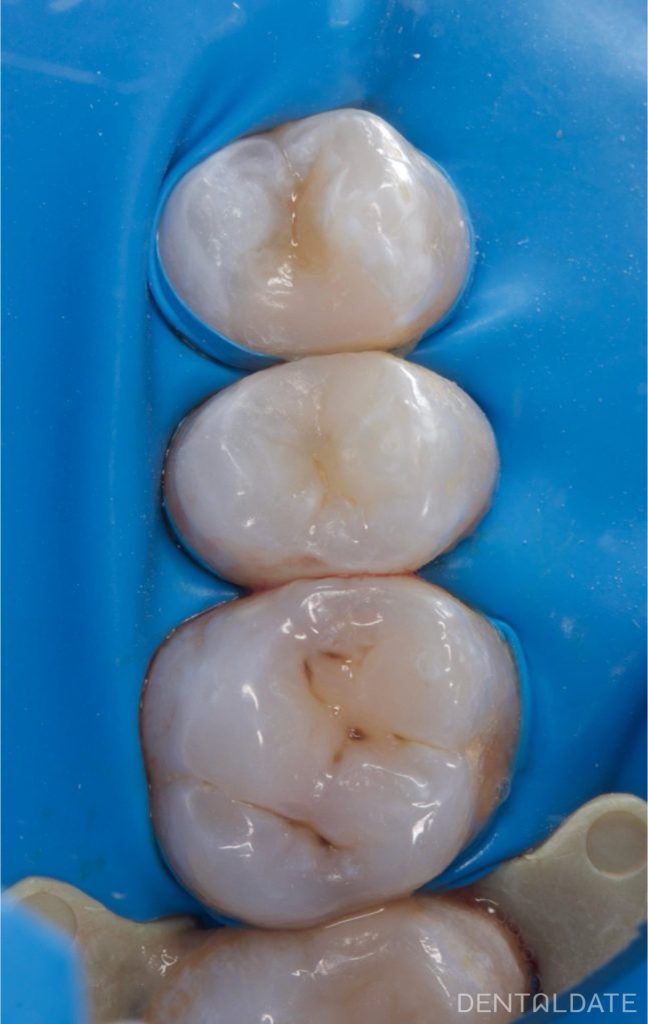
Intraoperative Diagnosis: Caries Found on an Adjacent Tooth
After treatment was initiated, it became evident that the lesion affected not only one tooth – a zone of softened, infected tissue was also detected on the neighboring contact surface.
This is a common clinical scenario: interproximal caries often develops symmetrically between adjacent teeth.
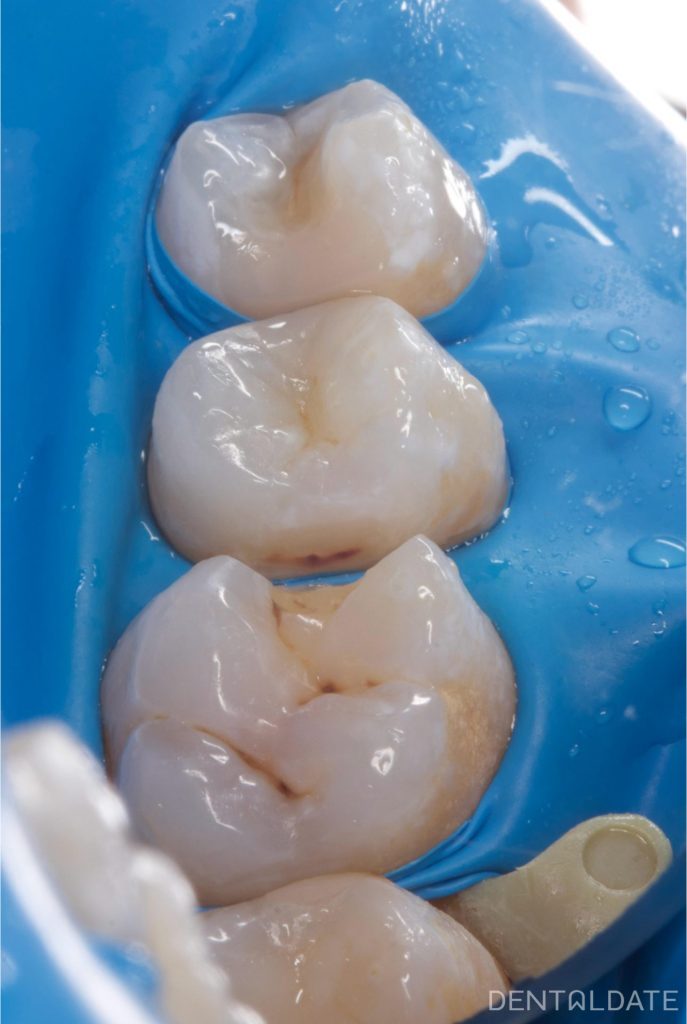
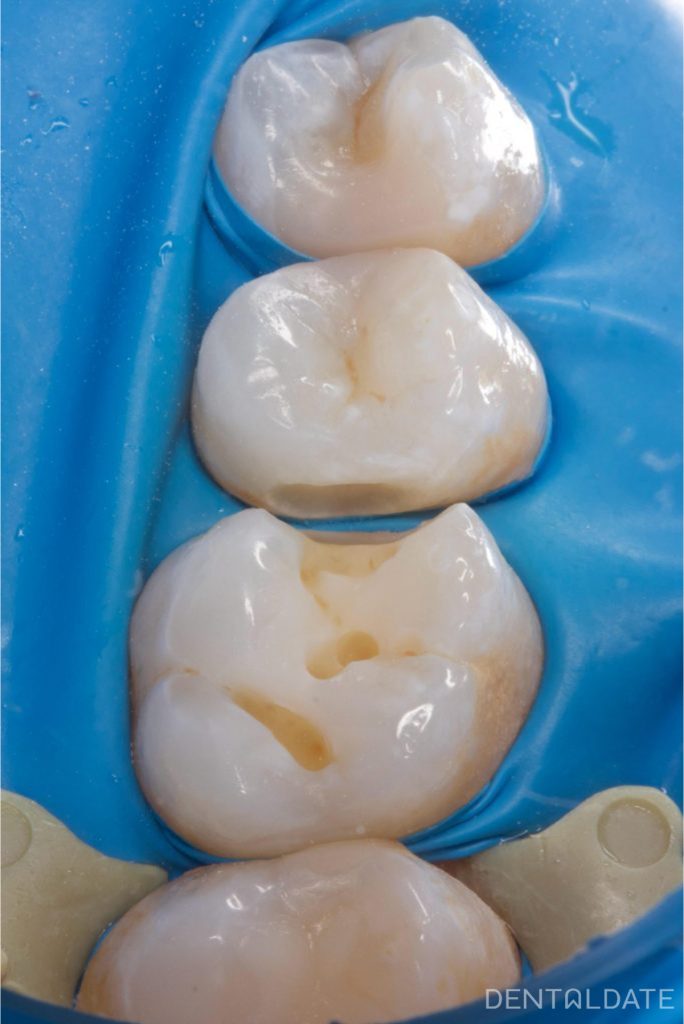
Complete Removal and Preparation for Restoration
Under microscopic control, all infected tissues were carefully removed from both teeth. It is essential to preserve healthy tooth structures while simultaneously creating sufficient space for proper restoration.
After cleaning, well-defined cavities were formed and prepared for anatomical reconstruction.
Anatomical Restoration With Formation of a Tight Contact Point
The final stage involved restoration of both teeth with precise modeling of the contact point.
A tight contact is essential in order to:
- prevent food impaction;
- avoid recurrent gingival inflammation;
- reduce the risk of secondary caries.
Ceramic or composite restorations accurately replicate natural tooth anatomy and ensure proper function during chewing.
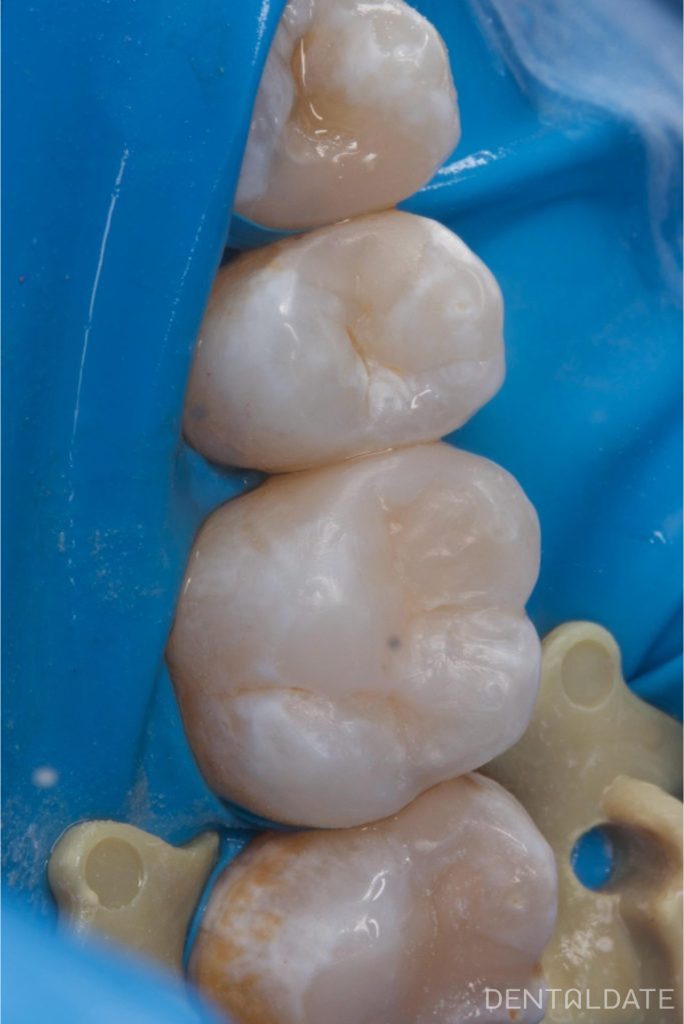
Treatment of interproximal caries requires a high level of precision and control – this is why the use of a dental microscope makes it possible to detect lesions that remain invisible during standard examination.
In this case, timely diagnosis allowed hidden caries to be identified on two adjacent teeth and complete restoration to be performed without loss of healthy tissue.
A correctly formed contact point and anatomical restoration provide chewing comfort and protect the interproximal area from recurrent damage.


