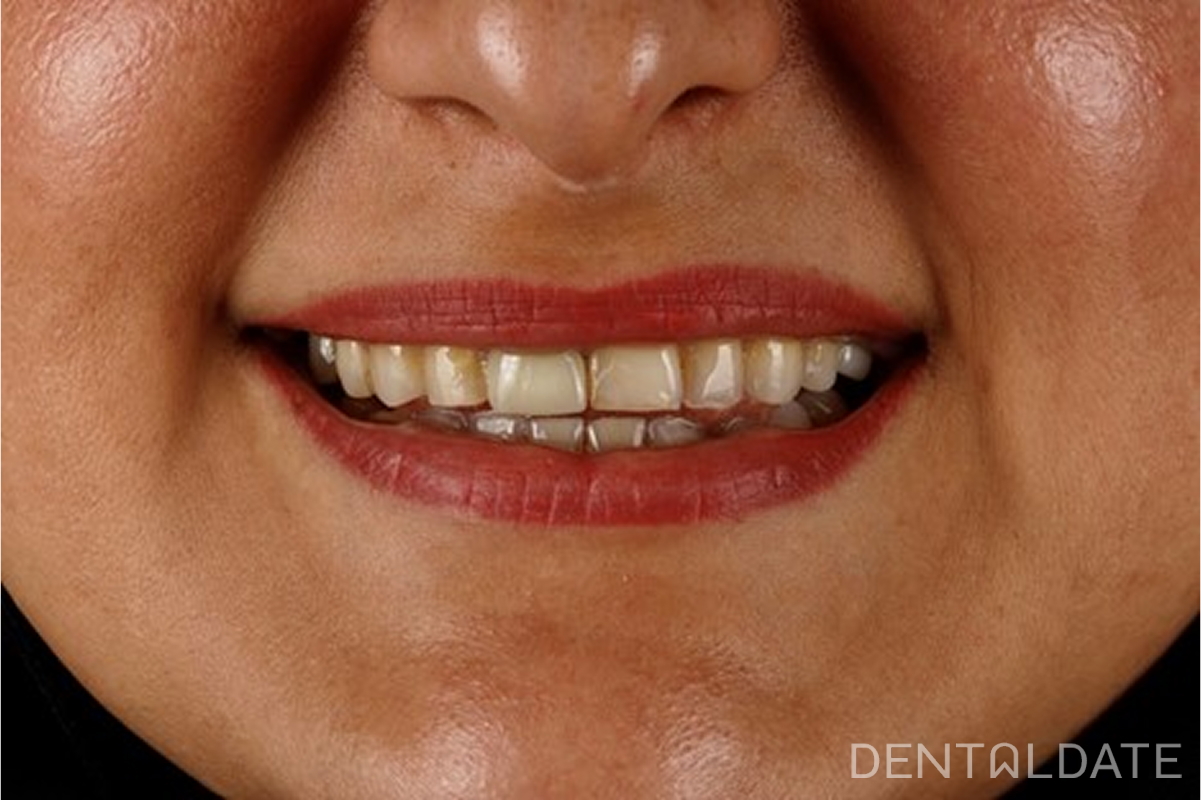
What a Patient Experiences With TMJ Subluxation
Subluxation of the temporomandibular joint (TMJ) is characterized by a distinct “click” that occurs when the displaced articular disc returns to its proper position. In addition to the sound, patients often report:
- a feeling of tension in the joint area;
- the sensation that the jaw opens “unevenly”;
- mild discomfort while chewing;
- fatigue of the masticatory muscles;
- limitation in wide mouth opening;
- deviation of the jaw to one side during movement.
These signs indicate joint instability and require diagnostic evaluation, as untreated subluxation usually progresses over time.
Diagnosing the Cause of the Clicking
To determine the cause of the dysfunction, we performed functional diagnostics, including condylography, which allowed us to identify the exact moment at which TMJ subluxation occurs and is accompanied by a pronounced clicking sound.
Condylography made it possible to visualize the movement trajectory of the condylar head and confirmed that the clicking was caused by disc displacement during mouth opening.
Test Bite: Confirming the Therapeutic Jaw Position
Before fabricating a splint, we performed a test bite – a technique used to evaluate the future correct position of the mandible, known as the therapeutic position.
Test procedure
- The patient opens her mouth – a clicking sound occurs.
- Temporary bite pads are placed.
- The patient closes and then reopens her mouth – the clicking disappears, as the disc is fully repositioned within the TMJ.
This test confirms the correctness of the selected jaw position and ensures joint stability before initiating the main phase of treatment.
Splint Therapy as the First Stabilization Stage
After defining the therapeutic jaw position, an individual splint was fabricated.
Its purpose is to hold the lower jaw in a safe position, reduce joint loading, and allow the disc to function physiologically.
This stage is essential before orthodontic treatment when the joint is initially unstable.
Why Ignoring Joint Clicking Is Risky
Clicking in the jaw is not a cosmetic issue or an anatomical “variant.” It is a sign of joint dysfunction that can lead to:
- reduced jaw mobility;
- pain during chewing;
- chronic muscle tension;
- headaches;
- mandibular displacement;
- changes in the bite;
- asymmetry of the lower third of the face.
For this reason, it is important not merely to eliminate the sound, but to restore proper TMJ biomechanics – which is the core focus of treatment at DentalDate.
When TMJ Evaluation Is Necessary
TMJ diagnostics are recommended if you notice:
- clicking or crunching sounds when opening the mouth;
- a sensation of “locking”;
- tension in the joint area;
- discomfort while speaking or chewing;
- deviation of the jaw to one side;
- a combination of functional symptoms and crooked teeth.
Evaluation is especially important before orthodontic treatment to prevent worsening of joint instability.
At DentalDate, TMJ assessment is a mandatory step prior to tooth alignment – ensuring safe and predictable treatment outcomes.
Why the DentalDate Approach Delivers Stable Results
Our clinic follows a structured, evidence-based protocol:
- Functional diagnostics and assessment of joint mechanics.
- Determination of the therapeutic jaw position.
- Test bite to confirm the correct position.
- Splint therapy to stabilize the joint.
- Orthodontic treatment only after stabilization.
This sequence allows us to address not only the symptoms of TMJ subluxation, but its underlying cause – providing long-term results and stable, healthy TMJ function.