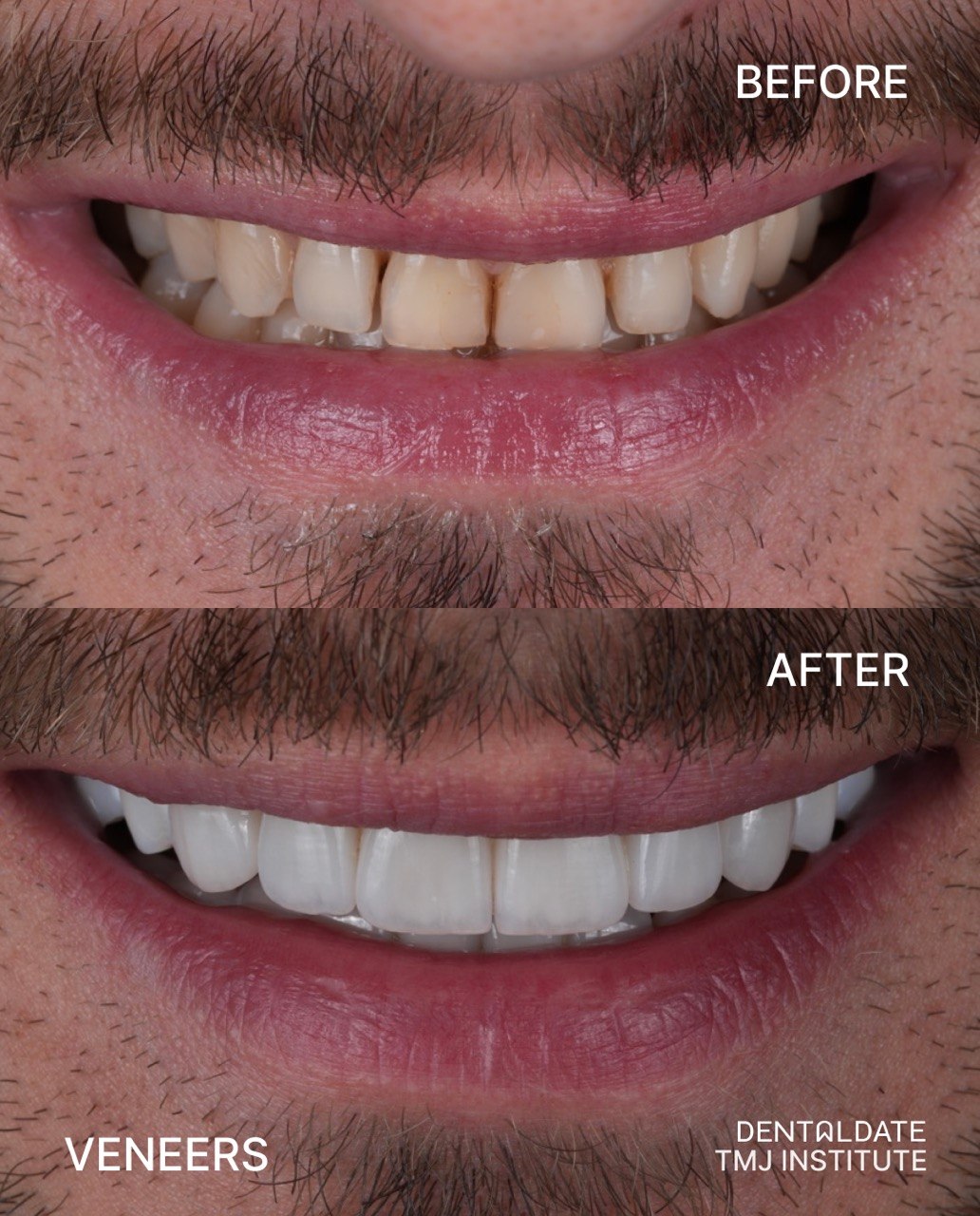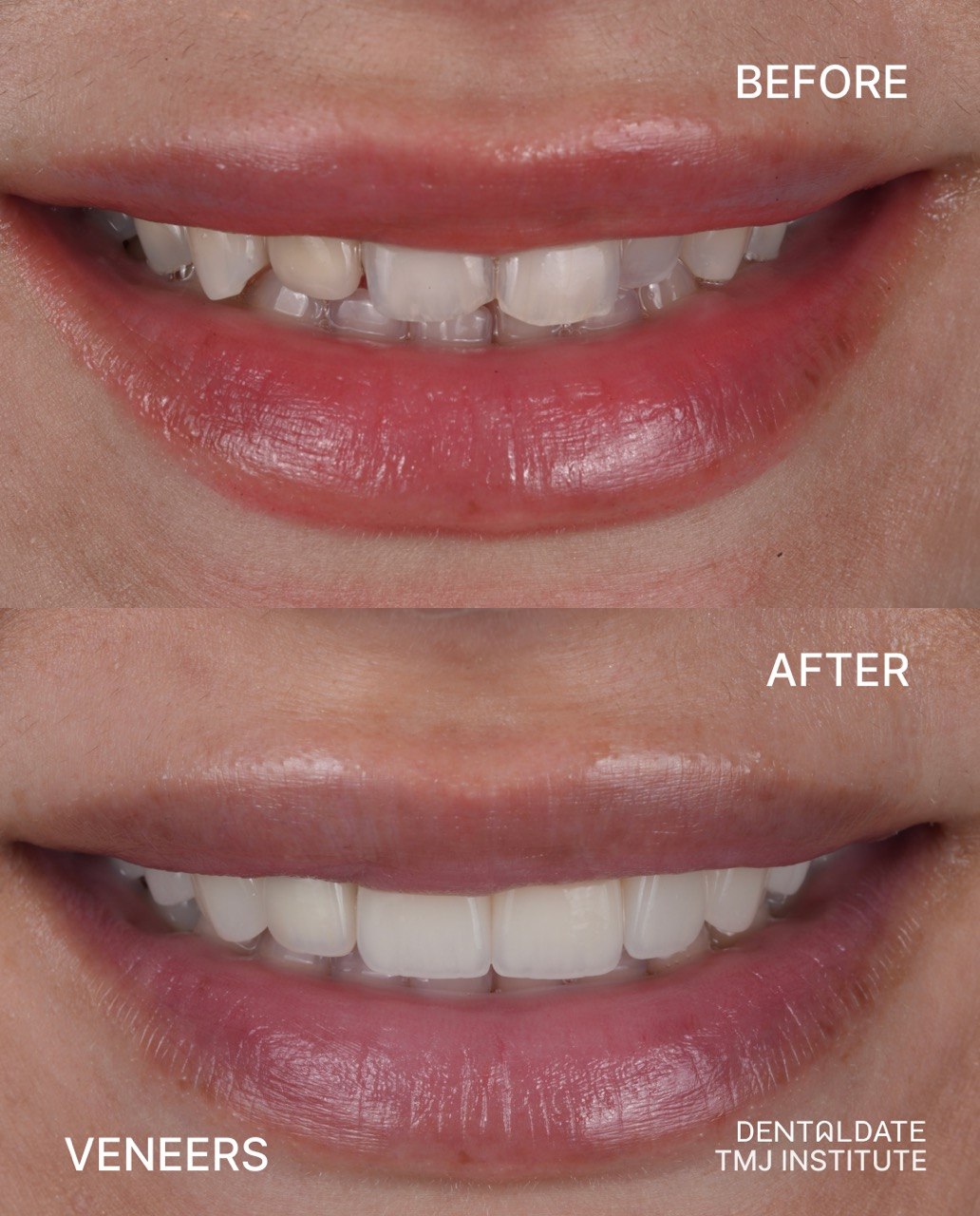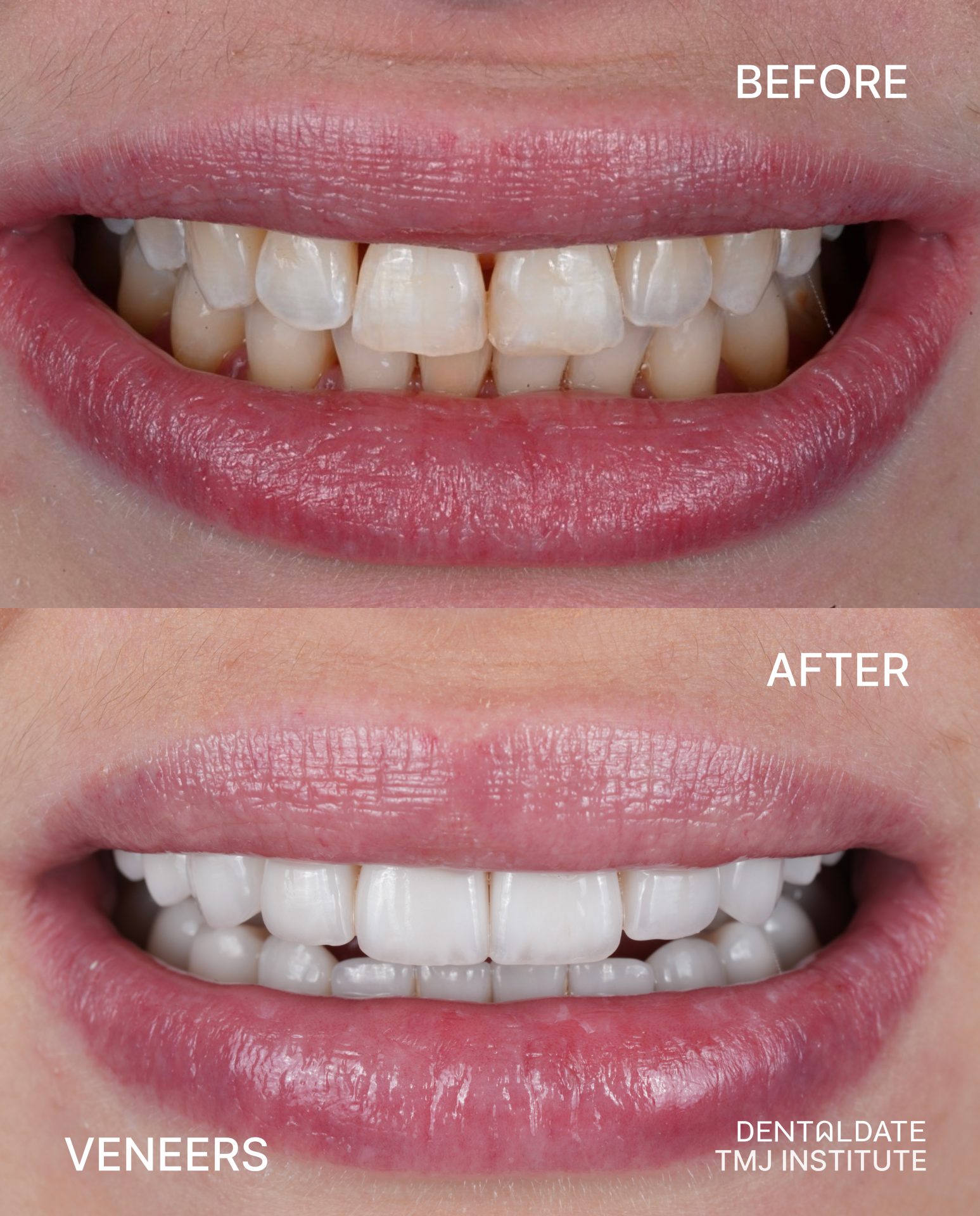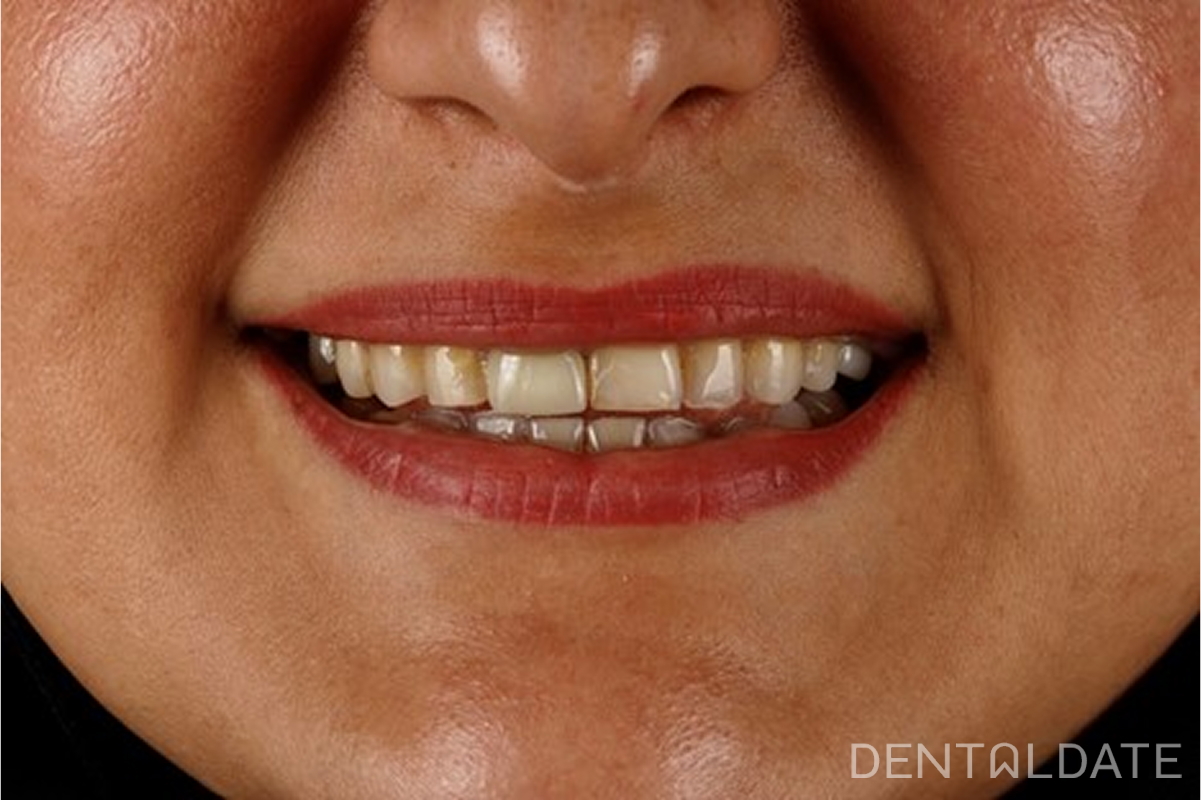
An extended TMJ assessment was performed, including functional analysis and condylography. The diagnostic data confirmed disturbances in joint function and occlusal relationships, making immediate definitive ceramic restorations contraindicated.
Treatment was planned and executed in stages:
- splint therapy was initiated to decompress the temporomandibular joints and stabilize the neuromuscular system;
- a new therapeutic mandibular position was established and clinically verified;
- occlusion was tested and refined using provisional restorations, allowing assessment of comfort, function, and aesthetic parameters.
Once functional stability was achieved, definitive prosthetic rehabilitation was completed:
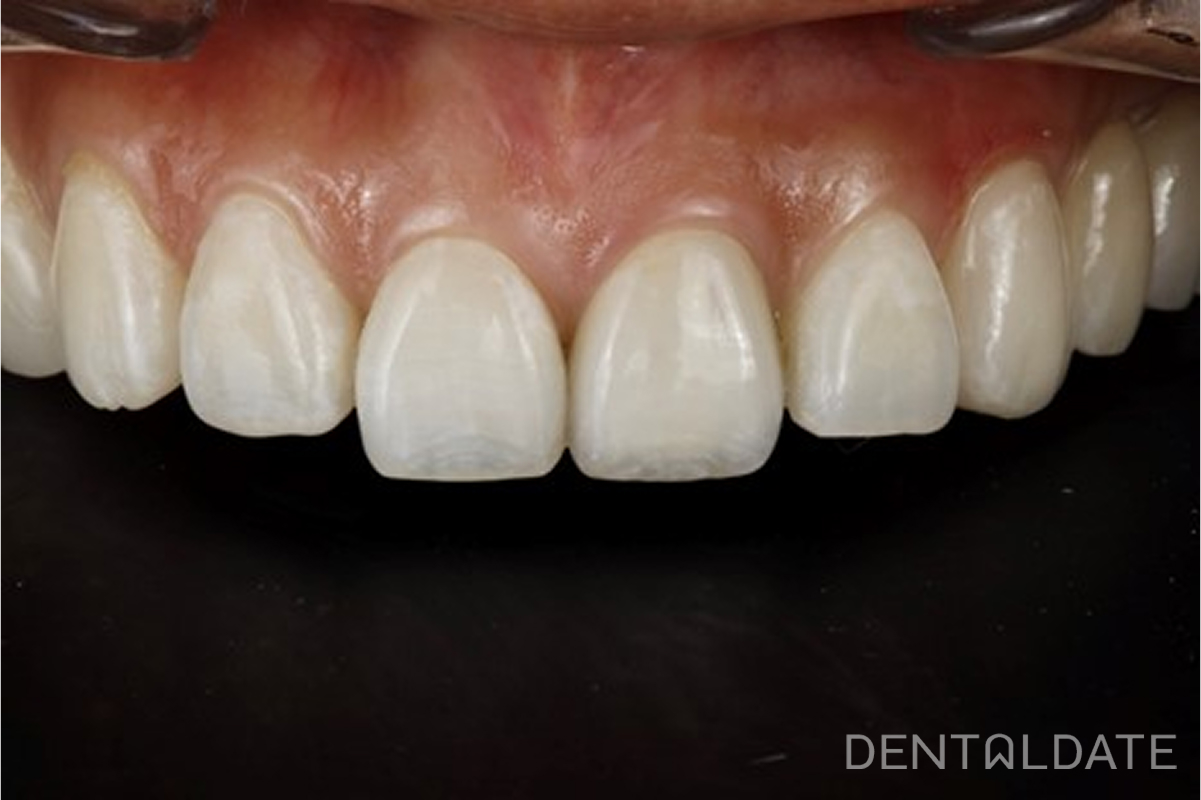
- ceramic veneers were placed in the anterior region,
- ceramic overlays were used in the posterior segments to restore vertical dimension and masticatory function.
The final outcome included restoration of vertical dimension, elimination of joint symptoms, a stable functional occlusion, and a natural, balanced smile.