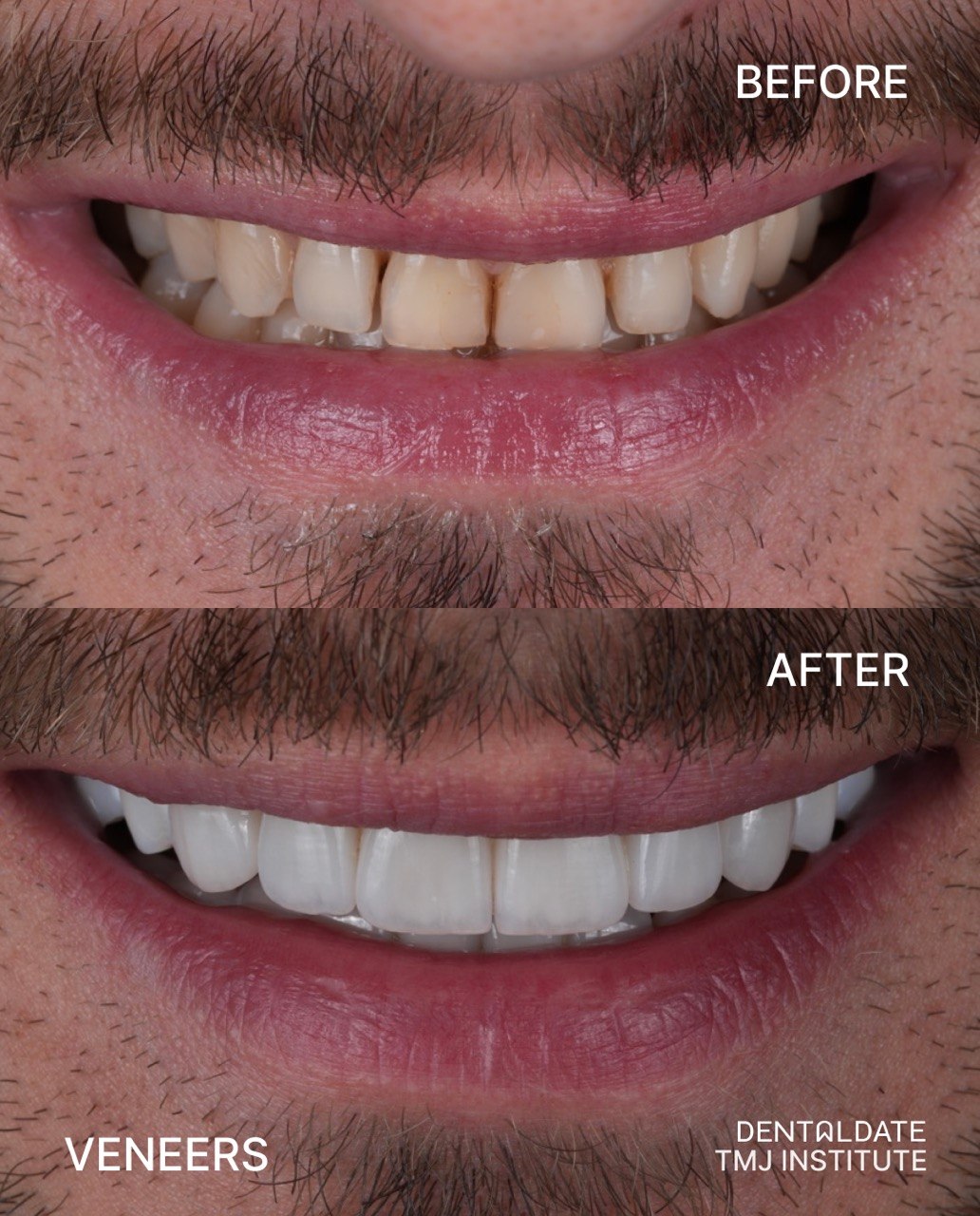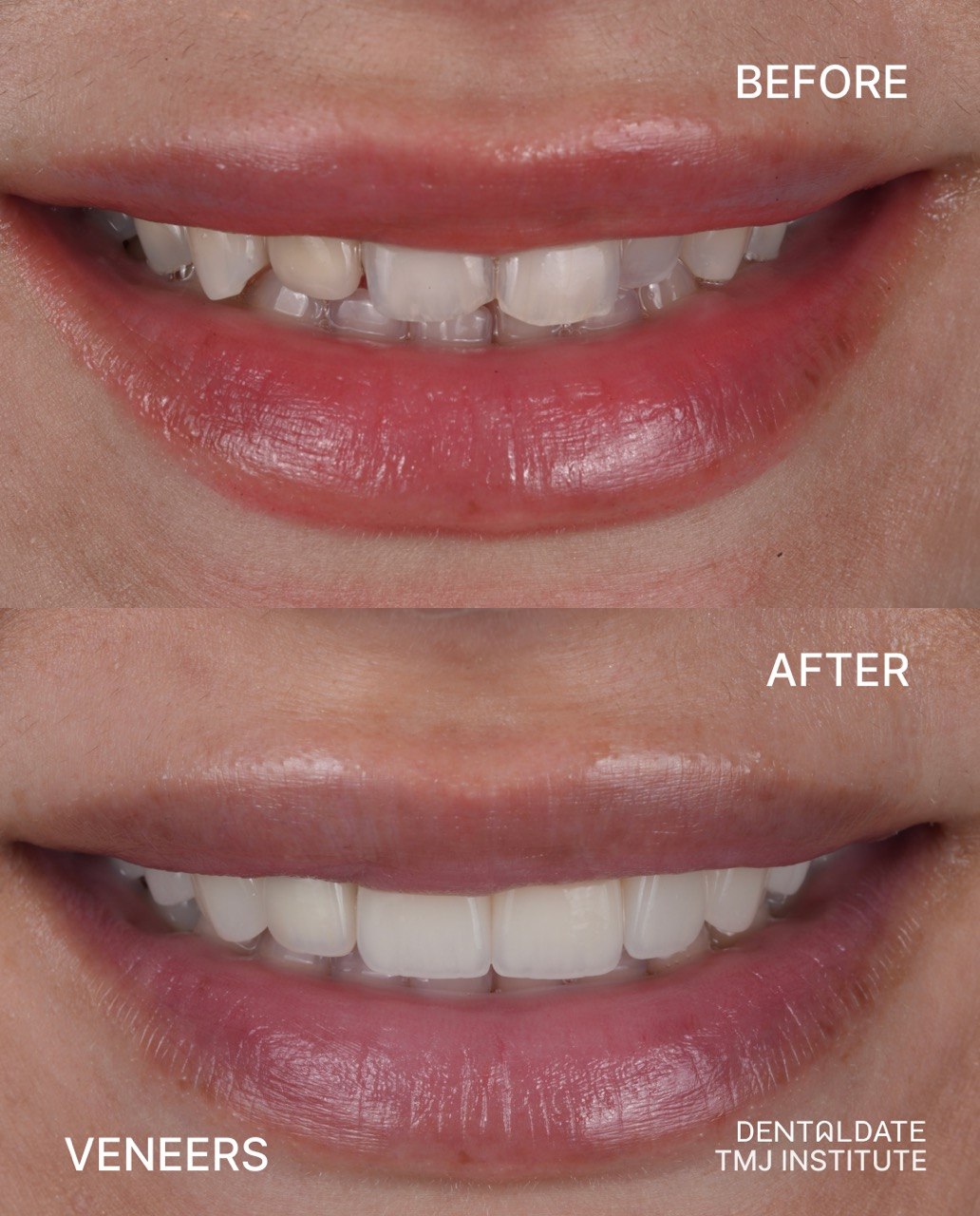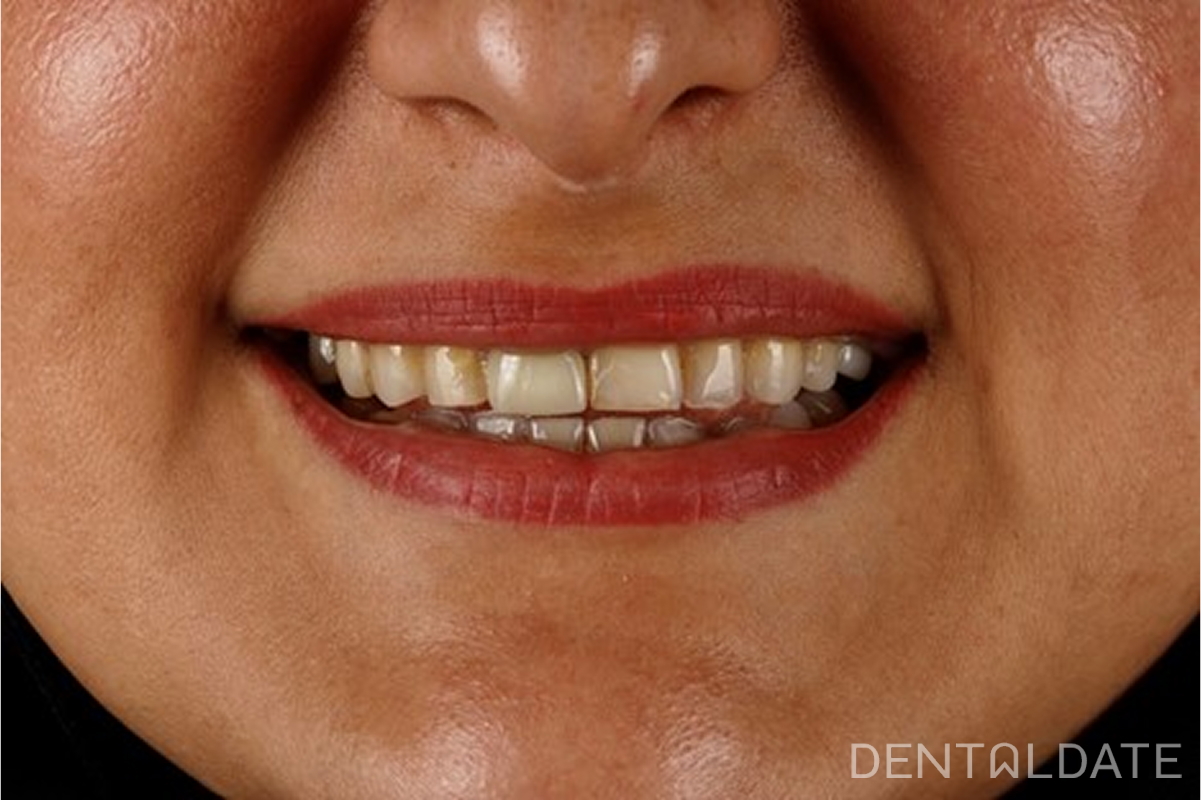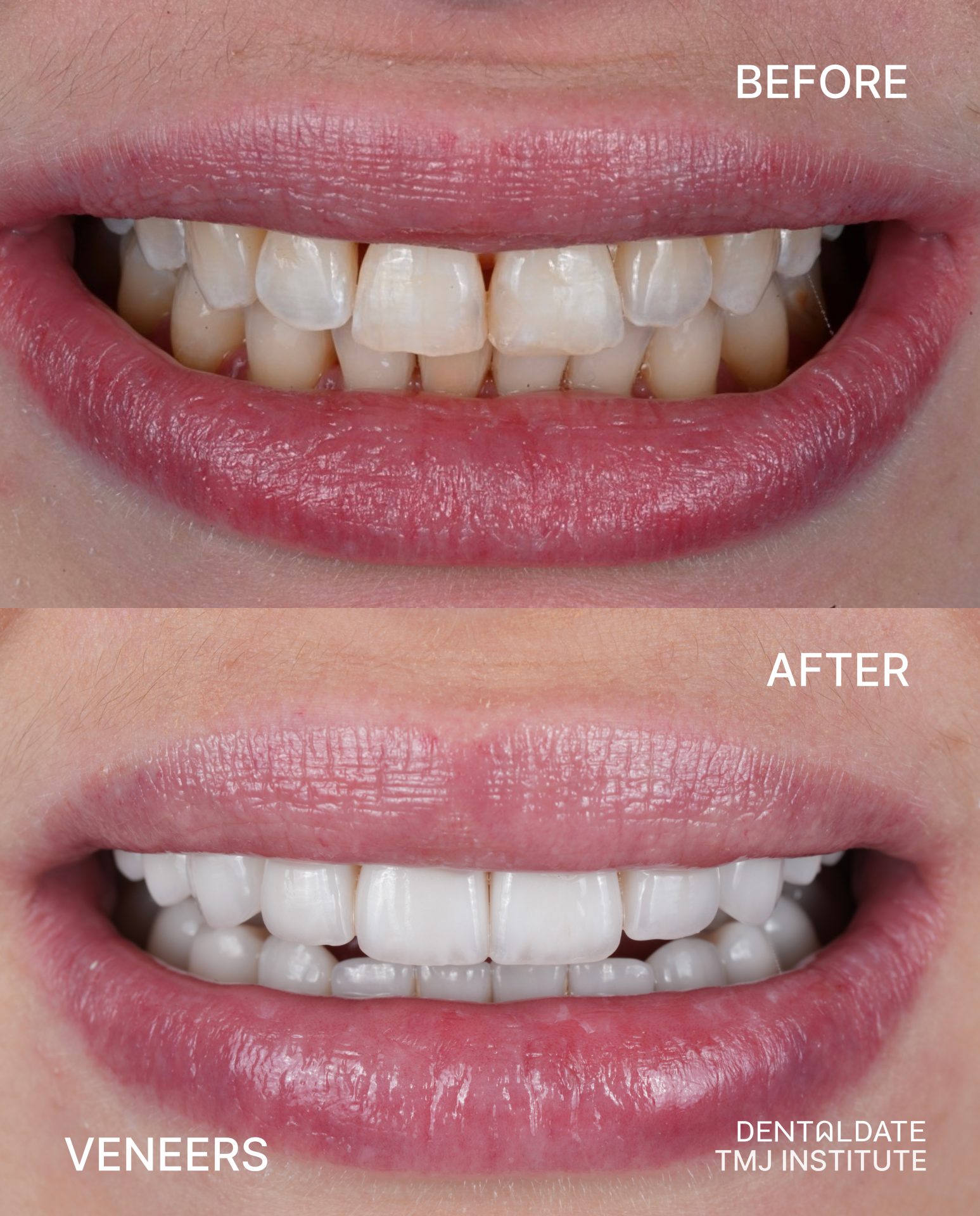

Despite well-aligned dental arches, signs of incisal wear, irregular tooth morphology, and uneven enamel coloration remained. The smile appeared “unfinished,” lacking definition in anatomy and freshness in color.
Functionally, the situation was stable; however, the esthetic outcome did not meet the patient’s expectations.
A comprehensive evaluation was performed, including occlusal analysis, assessment of tooth position after orthodontic treatment, and analysis of tooth shape, length, and color.
The primary goal was to preserve the orthodontic result while:
- restoring lost incisal length
- improving tooth morphology
- enhancing color without creating an overly artificial appearance
A minimally invasive prosthetic approach using ceramic restorations was selected.
Aesthetic result
Restoration of the anterior teeth was performed using ceramic veneers.
Key objectives included:
- restoration of incisal wear and tooth length
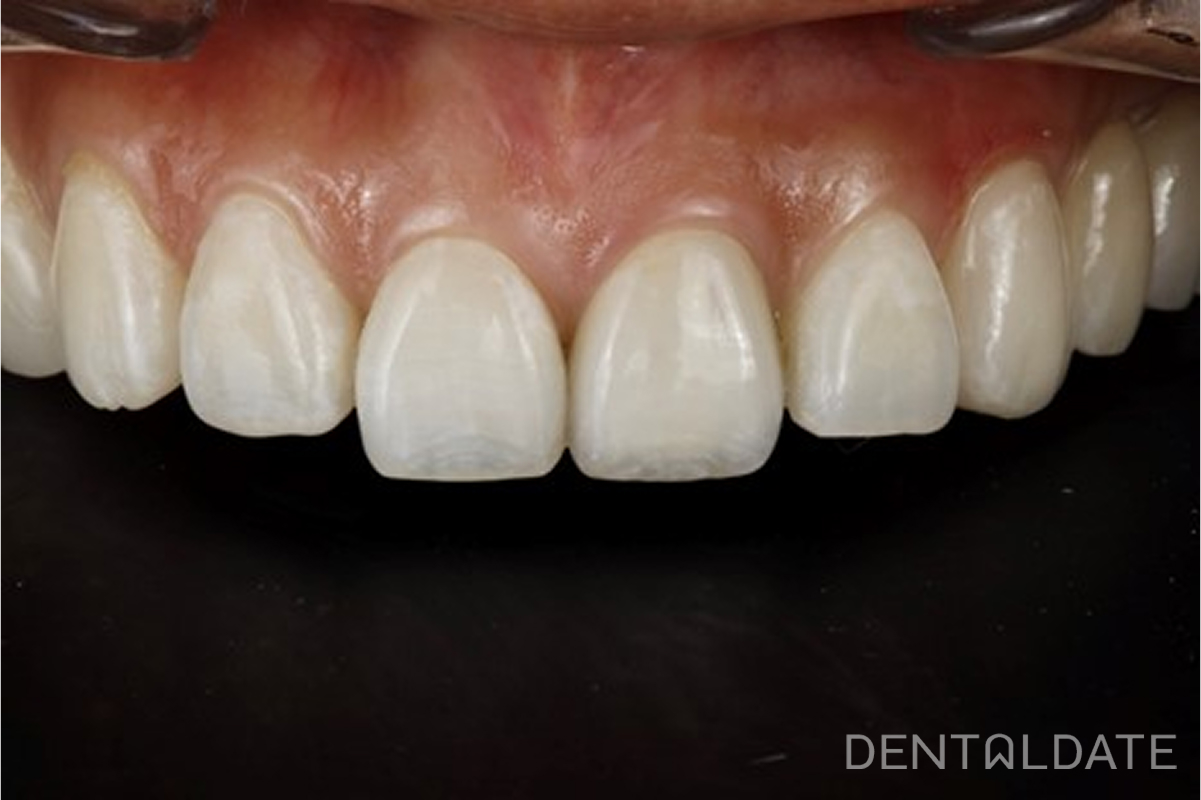
- recreation of natural anatomy, including micro- and macro-texture
- subtle color enhancement with preservation of natural depth and translucency
- integration of restorations into the existing occlusion
Special attention was given to surface texture and light dynamics to achieve a highly natural result
As a result of treatment
- anatomical form and tooth length were restored
- signs of wear were eliminated
- tooth color became more uniform and refreshed
- the smile gained a harmonious and finished appearance
The restorations appear natural, without an artificial “overly white” effect, fully preserving the patient’s individuality.
This case demonstrates that even after successful orthodontic treatment, a final esthetic phase is often required.
Minimally invasive ceramic restorations allow refinement of the smile — restoring anatomy, enhancing shape, and refreshing color — while maintaining functional balance.