What Was Found to Be the Cause of the Pain
During the clinical examination, the following was identified:
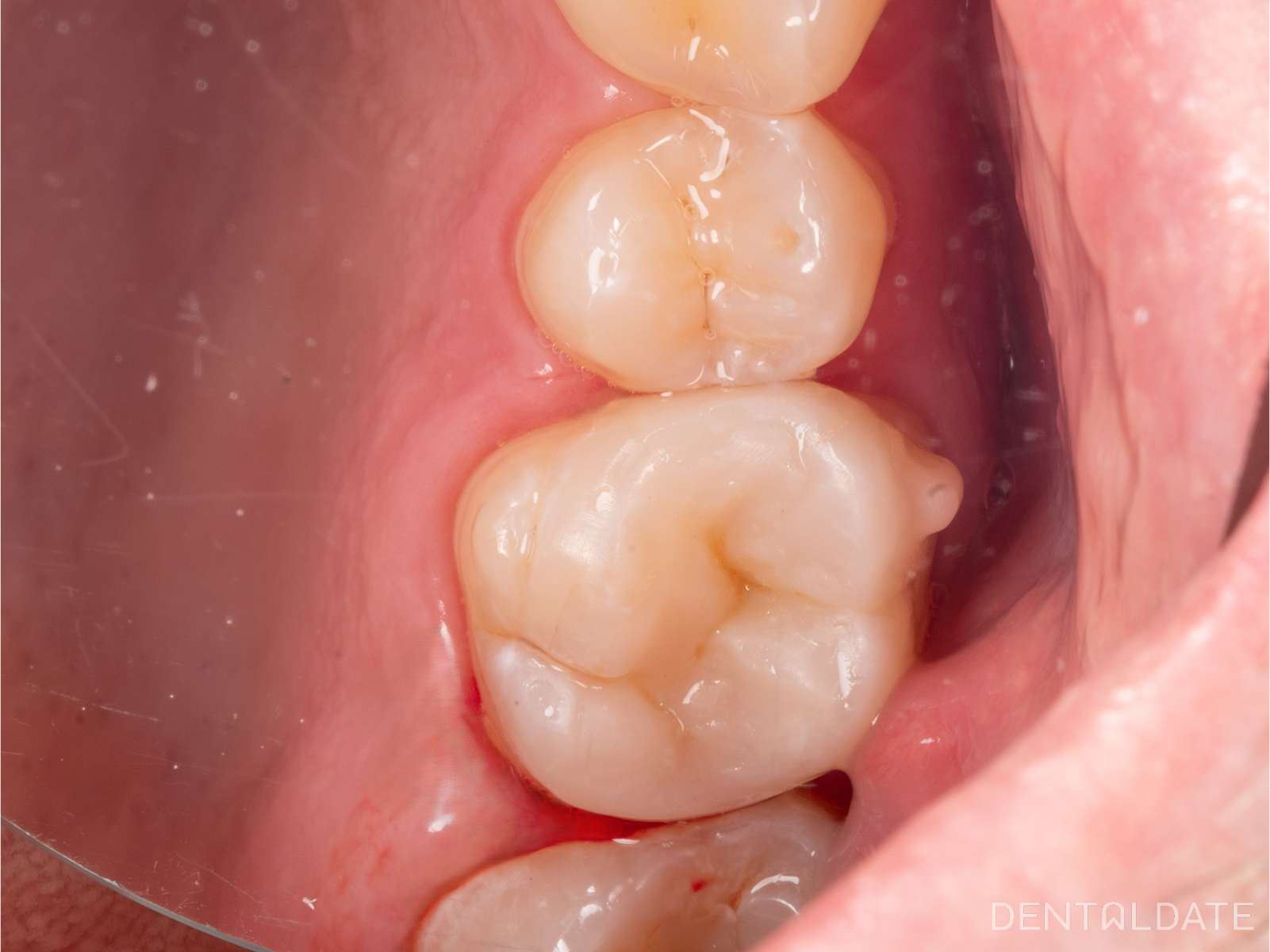
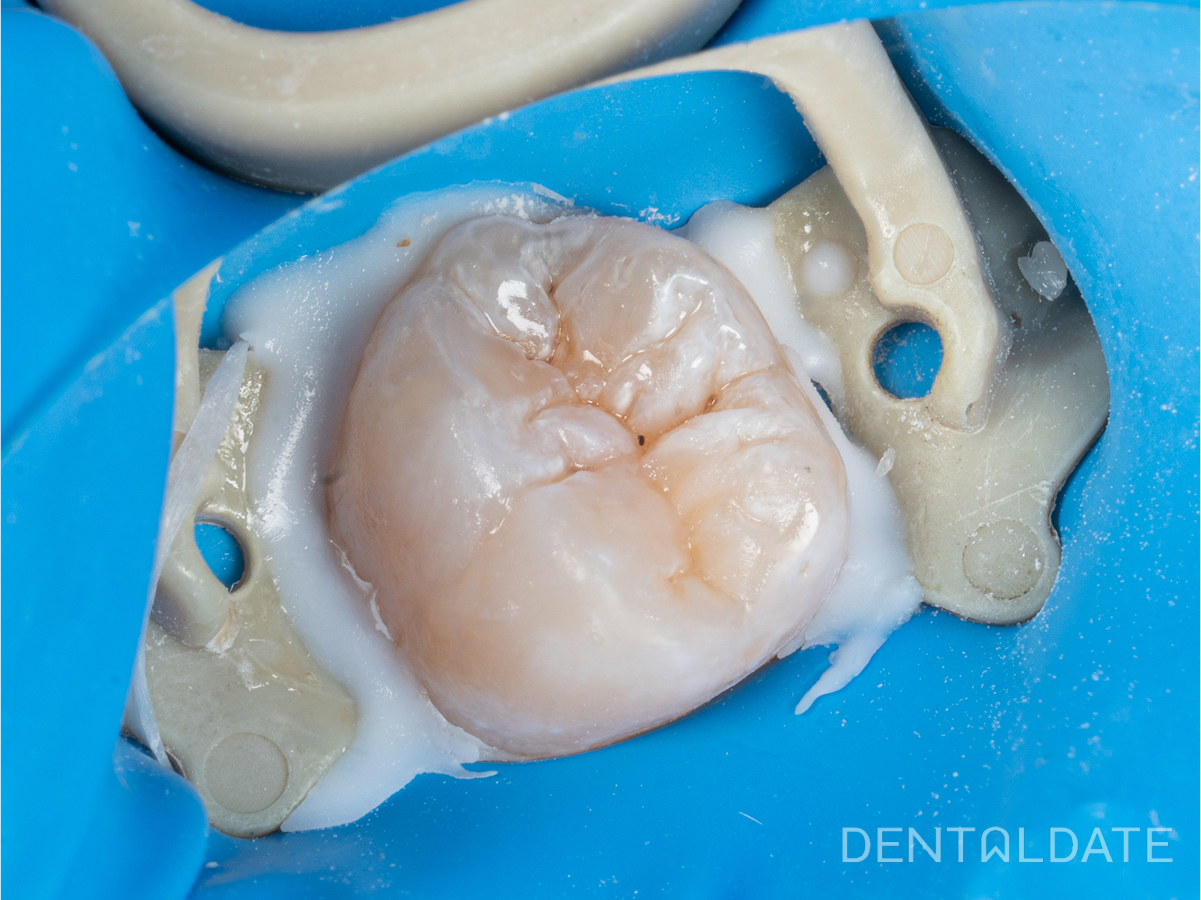
- on tooth 4.6 — a relatively new filling on the occlusal–buccal surface;
- on tooth 4.7 — an old filling with compromised marginal integrity and signs of secondary caries.
When probing the filling on tooth 4.6, the patient experienced sharp discomfort.
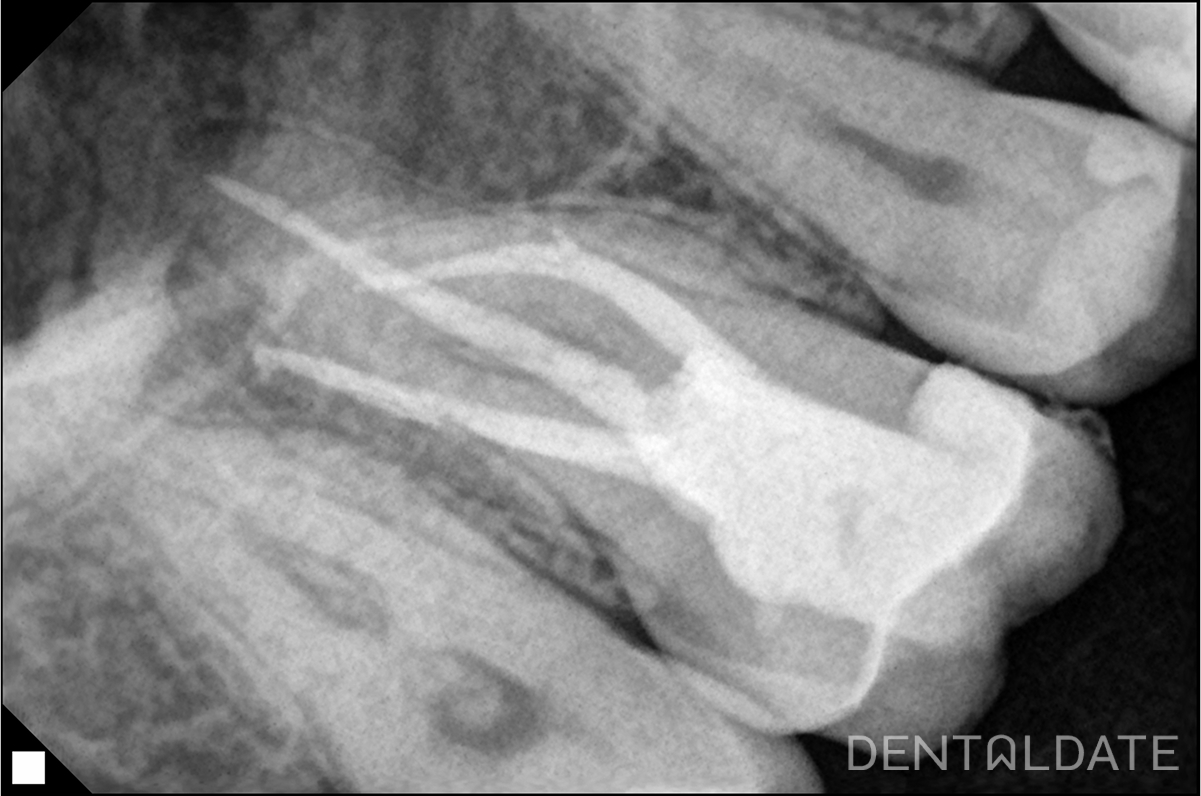
Percussion testing and temperature sensitivity were within normal limits, which ruled out pulpal (nerve) involvement.
This clinical presentation often indicates a hidden problem beneath the filling or at the interface between the restorative material and the tooth structure.
Diagnostic Process and Treatment
Because the pain had been present since the filling was placed and did not decrease over time, the decision was made to:
- carefully remove the filling on tooth 4.6;
- assess the condition of the underlying tooth tissues;
- eliminate any detected defect;
- if no signs of inflammation were found, perform a new aesthetic restoration.
To ensure safety and maximum precision, the following measures were taken:
- mandibular anesthesia was administered;
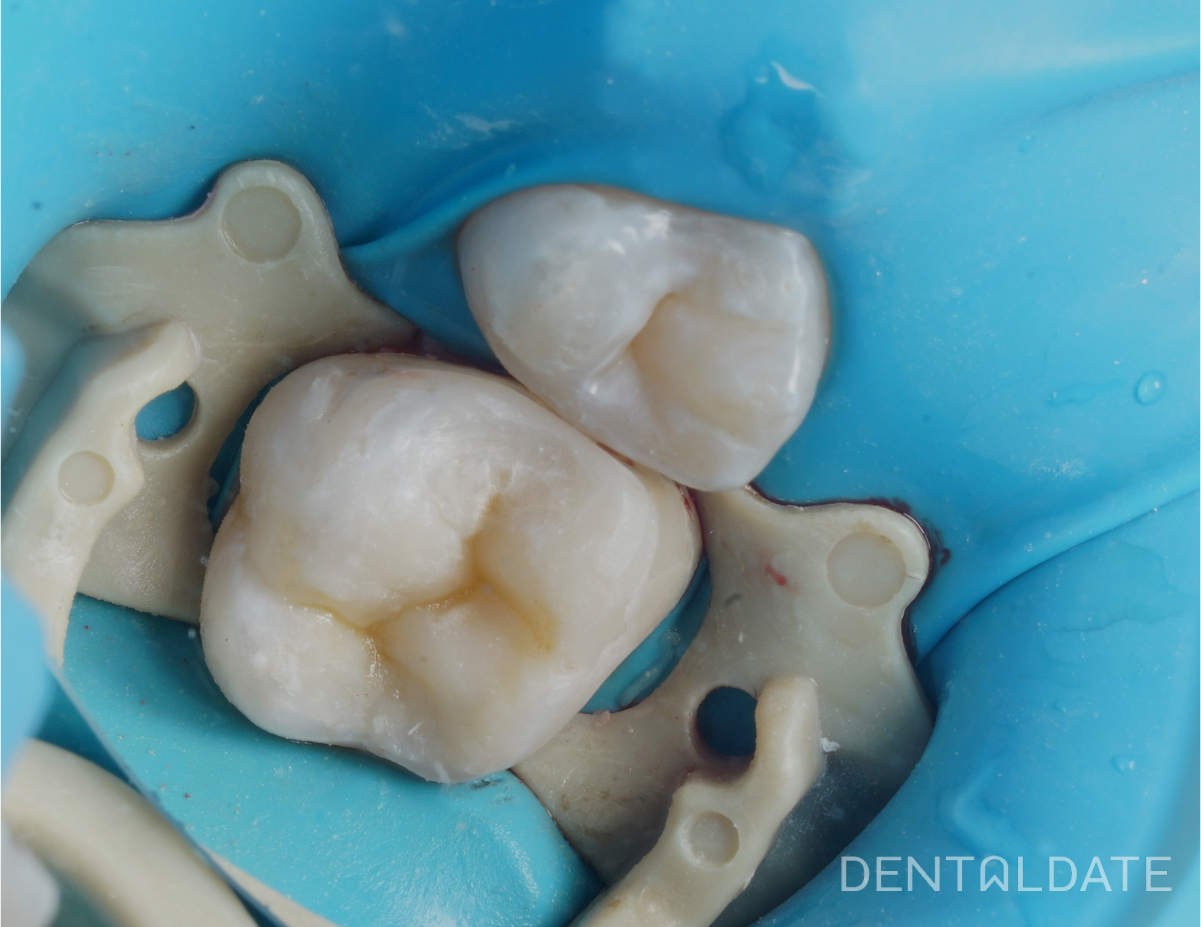
- a rubber dam was placed to achieve ideal isolation;
- all procedures were performed under a dental microscope.
After removing the filling on tooth 4.6, the cause of the pain was identified — an air bubble at the interface between the restorative material and the tooth tissues. Such a defect leads to micro-mobility of the filling under load, resulting in discomfort and pain during chewing.
On tooth 4.7, secondary caries was removed and the old filling was replaced.
After preparation, aesthetic restorations were performed on both 4.6 and 4.7, with full reconstruction of anatomical contours and contact points. Occlusal adjustment was minimal.
Changes After Treatment
Immediately after completing the treatment:
- pain during chewing disappeared;
- discomfort was completely resolved;
- the patient noted that the teeth felt “natural” and did not respond painfully to load;
- comfort during eating was fully restored.
The issue was resolved through accurate diagnostics and high-quality replacement of the fillings, with careful consideration of the material-to-tooth interface.
Why Such Cases Occur
Even with high-quality restorations, small defects can sometimes occur, including:
- air inclusions;
- compromised material adhesion;
- microcracks along the filling margins;
- secondary caries beneath old restorations.
These issues can lead to:
- pain during chewing;
- tooth sensitivity while eating;
- a sensation of filling “movement”;
- food impaction between teeth.
Such problems do not resolve on their own and require professional correction.
How Patients Can Recognize When to See a Dentist
- Pain after a filling should not persist for months.
- Sharp pain when biting is a common sign of a defective filling-to-tooth contact.
- If a filling feels “high,” uneven, or causes discomfort when chewing hard food, evaluation is necessary.
- An old filling may appear intact externally while hiding secondary caries underneath.
As a result of thorough diagnostics and microscope-assisted treatment, the hidden cause of pain — a defect in the filling on tooth 4.6 — was successfully eliminated, and both teeth were fully restored.
The patient was relieved of discomfort and returned to normal chewing function without pain.