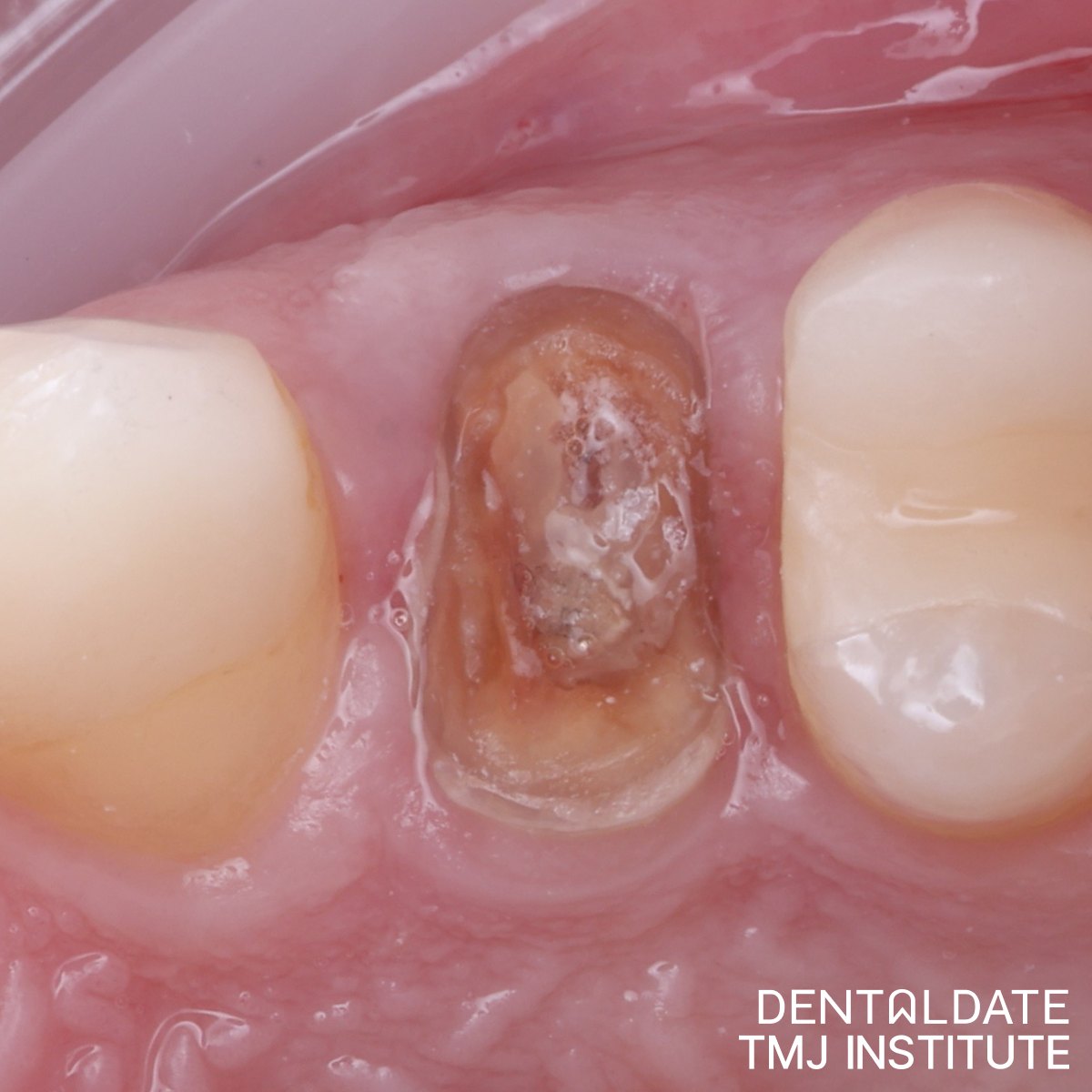
The Complaint: A Fistula That Kept Coming Back
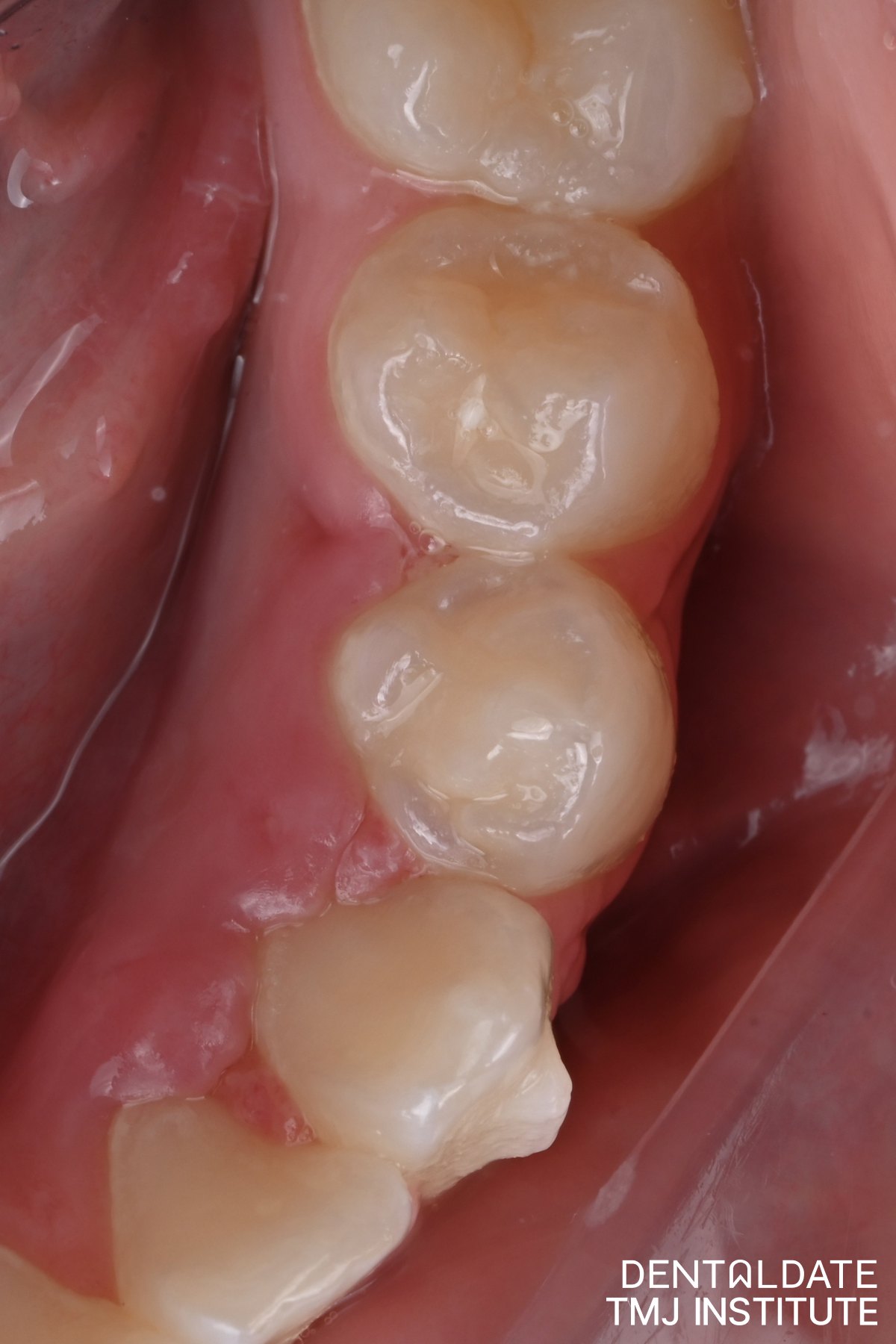
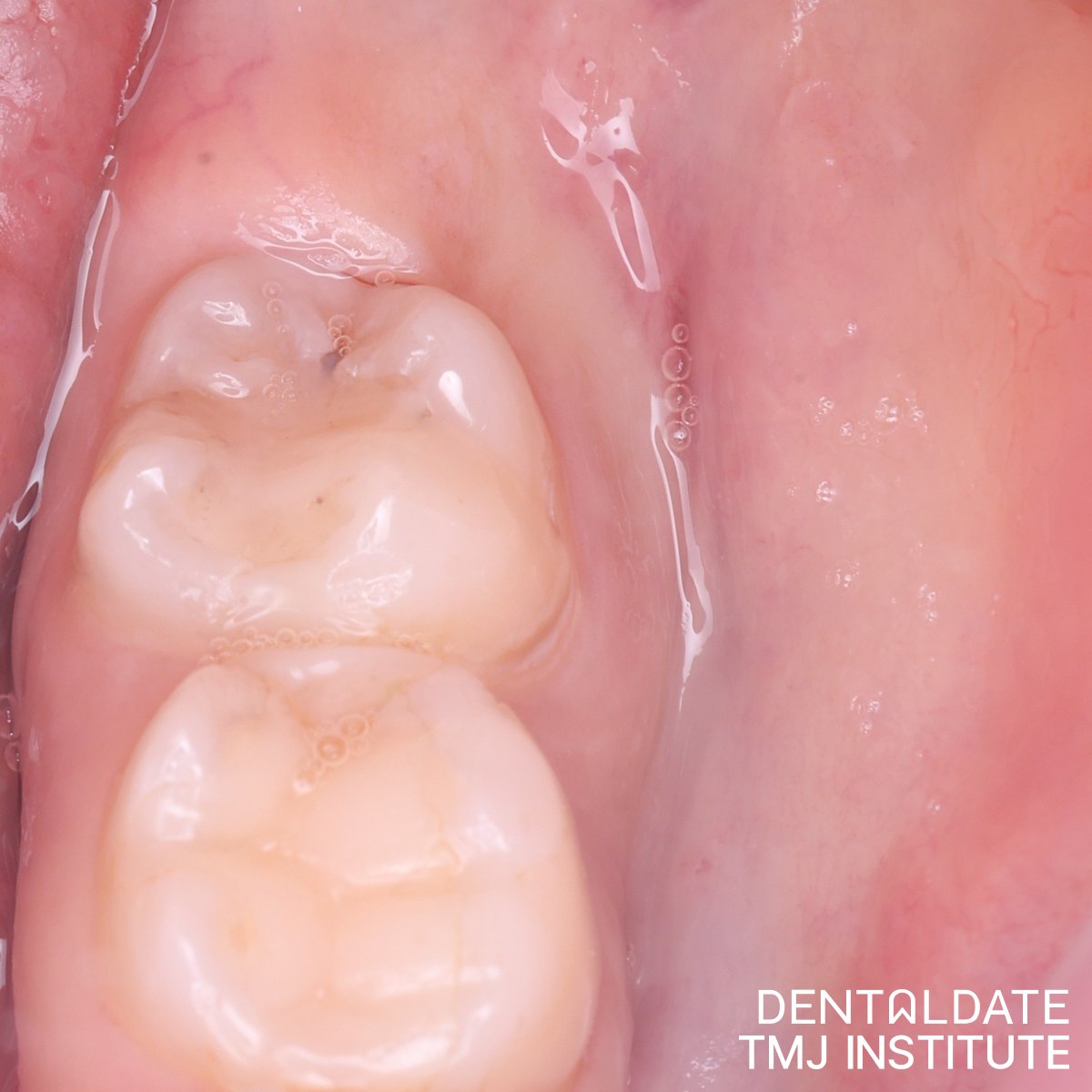
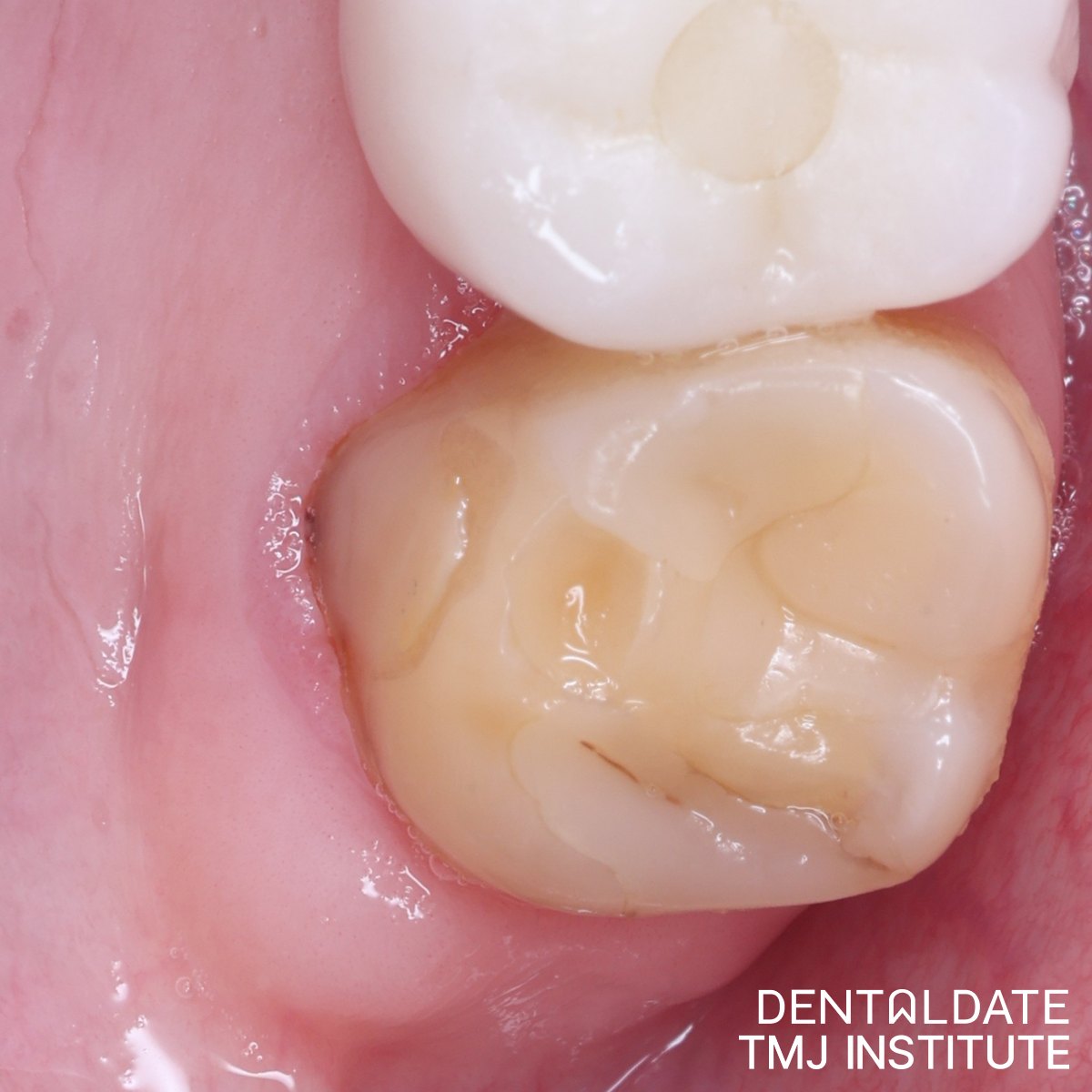
The patient complained of a sinus tract that kept reappearing on the gum in the area of the upper premolar (25). The tooth had previously been treated endodontically, in other words it had had root canal treatment, at another clinic. Despite this treatment, the problem kept returning.
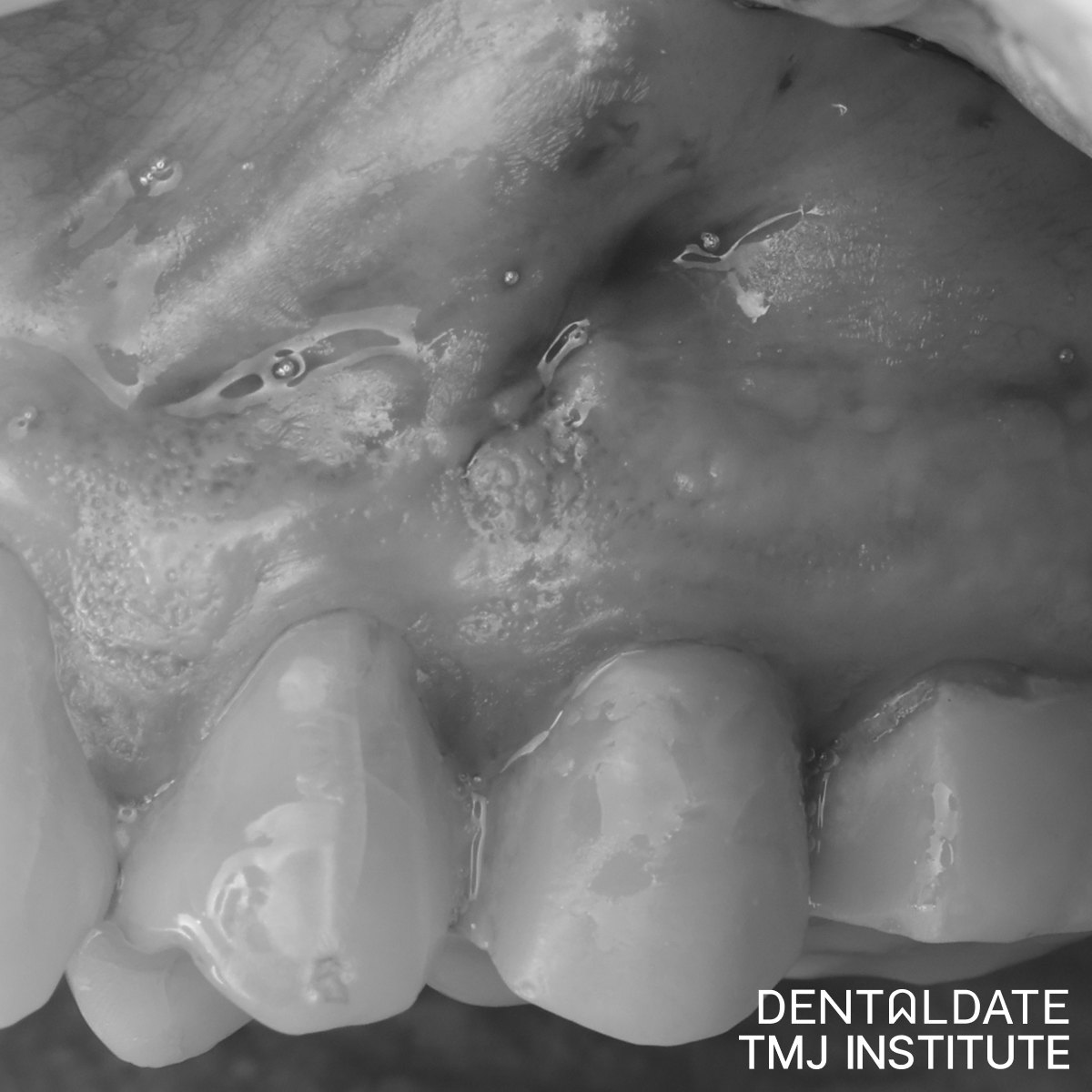
What a Fistula on the Gum Means
A fistula, or sinus tract, is a small channel through which pus from an infection drains to the surface of the gum. It often looks like a small pimple or bump near a tooth and may release a salty or unpleasant-tasting fluid before seeming to disappear.
Because the pus has a way out, pressure does not build up, so the tooth often does not hurt. This is why a fistula is easy to ignore. Yet it is a sign that an infection at the root is still active, and it tends to return until the source is dealt with.
Finding the Source with a CT Scan
The CT scan revealed a focus of chronic periodontitis at the root tip, which was causing the symptoms. Chronic apical periodontitis is a long-standing inflammation of the tissues around the tip of the root, usually caused by bacteria that remain in or around the root canal system. A 3D scan is particularly helpful in such cases, as it shows the size and position of the lesion and the shape of the root in more detail than a standard two-dimensional X-ray can.
When Root Canal Treatment Is Not Enough
Conservative endodontic treatment had not solved the problem. In general, when a root-treated tooth keeps showing signs of infection, there are several possible paths:
- root canal retreatment: reopening the tooth, cleaning and refilling the canals, often considered first when the canals can be accessed;
- apicoectomy (apical resection): surgically removing the infected tip of the root and the inflamed tissue around it, while the tooth itself is kept;
- extraction followed by replacement of the tooth, when it cannot be saved.
Which path fits generally depends on the condition of the tooth, the existing root filling and crown, and what the imaging shows. In this case, an apicoectomy was performed to remove the source of the infection while keeping the tooth.
What an Apicoectomy Involves
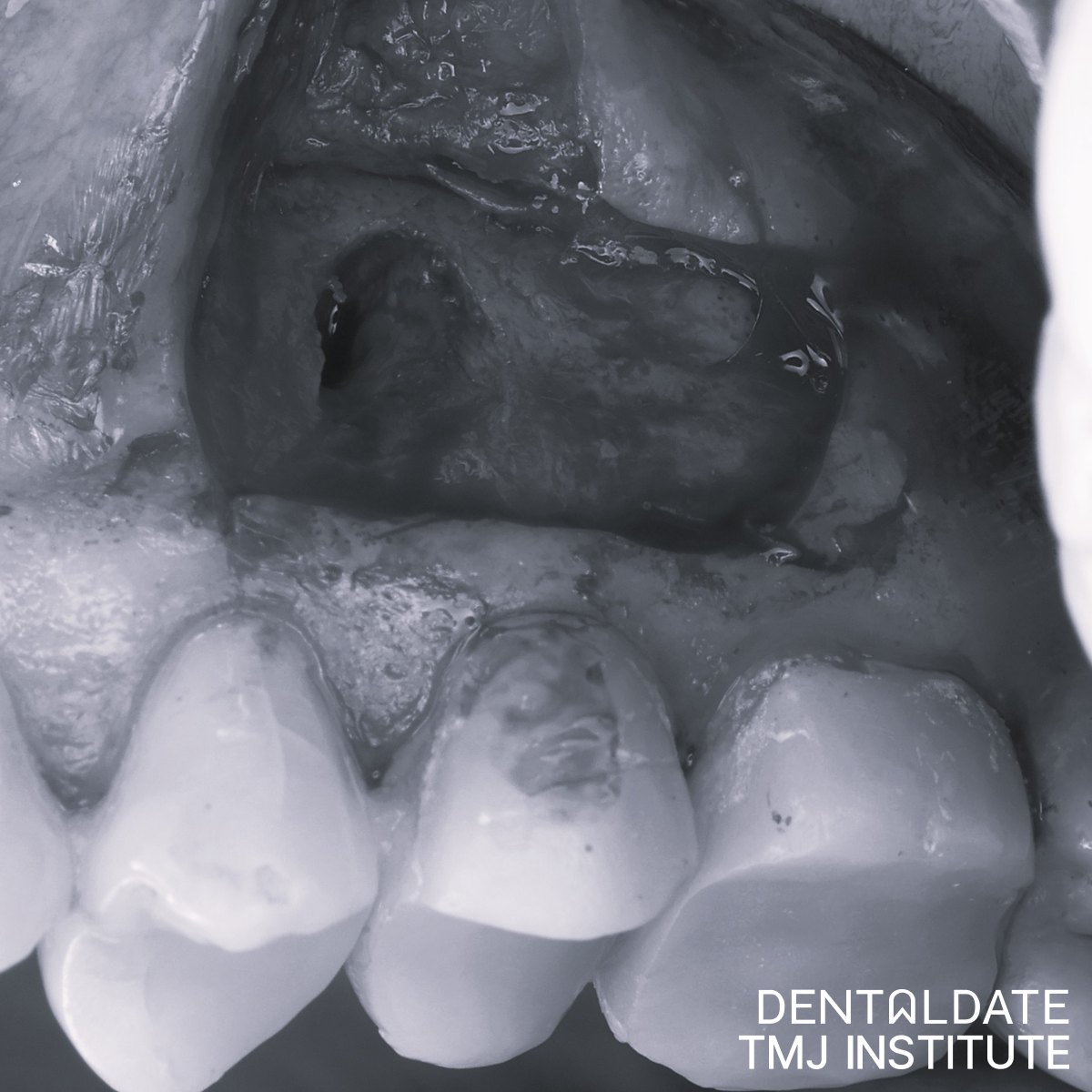
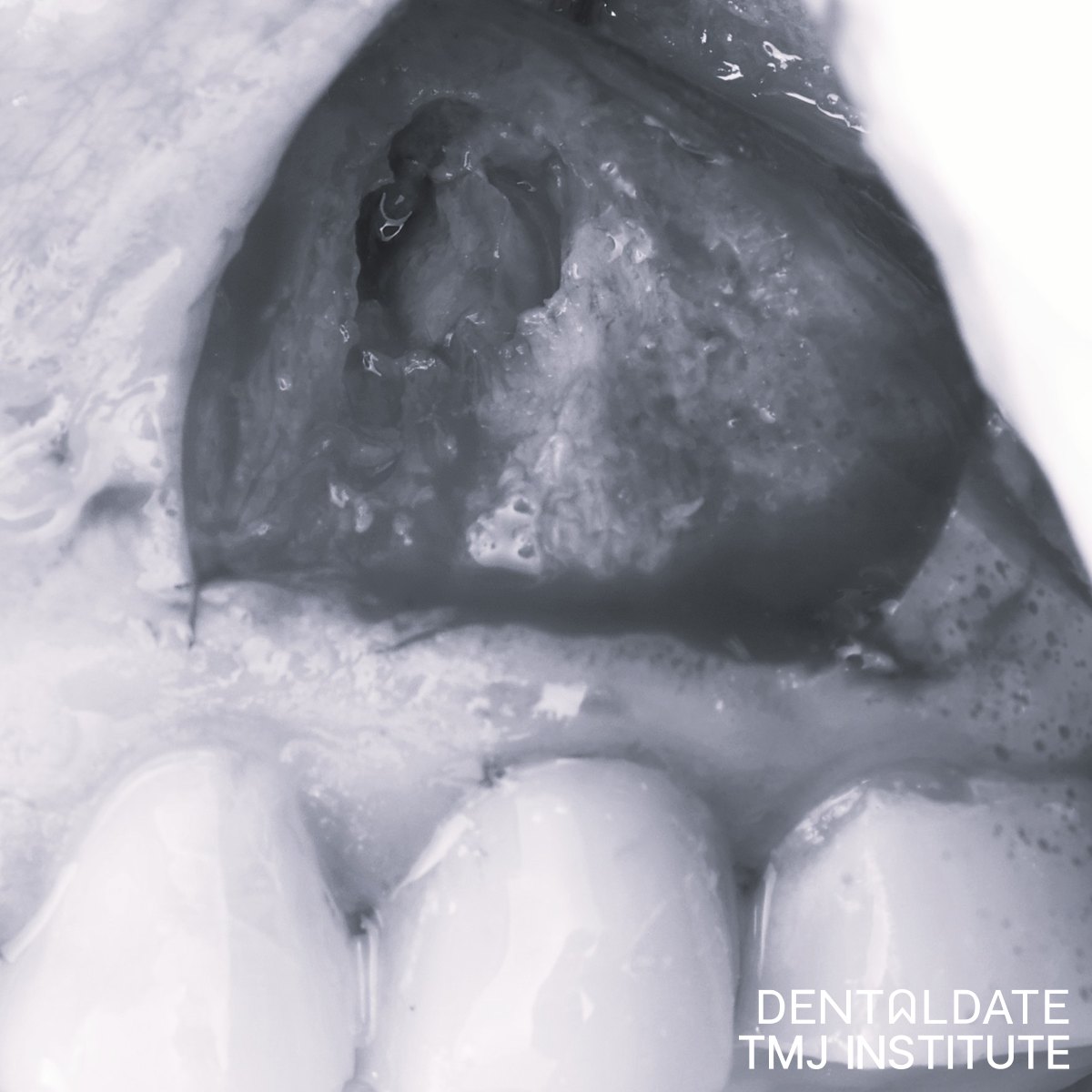
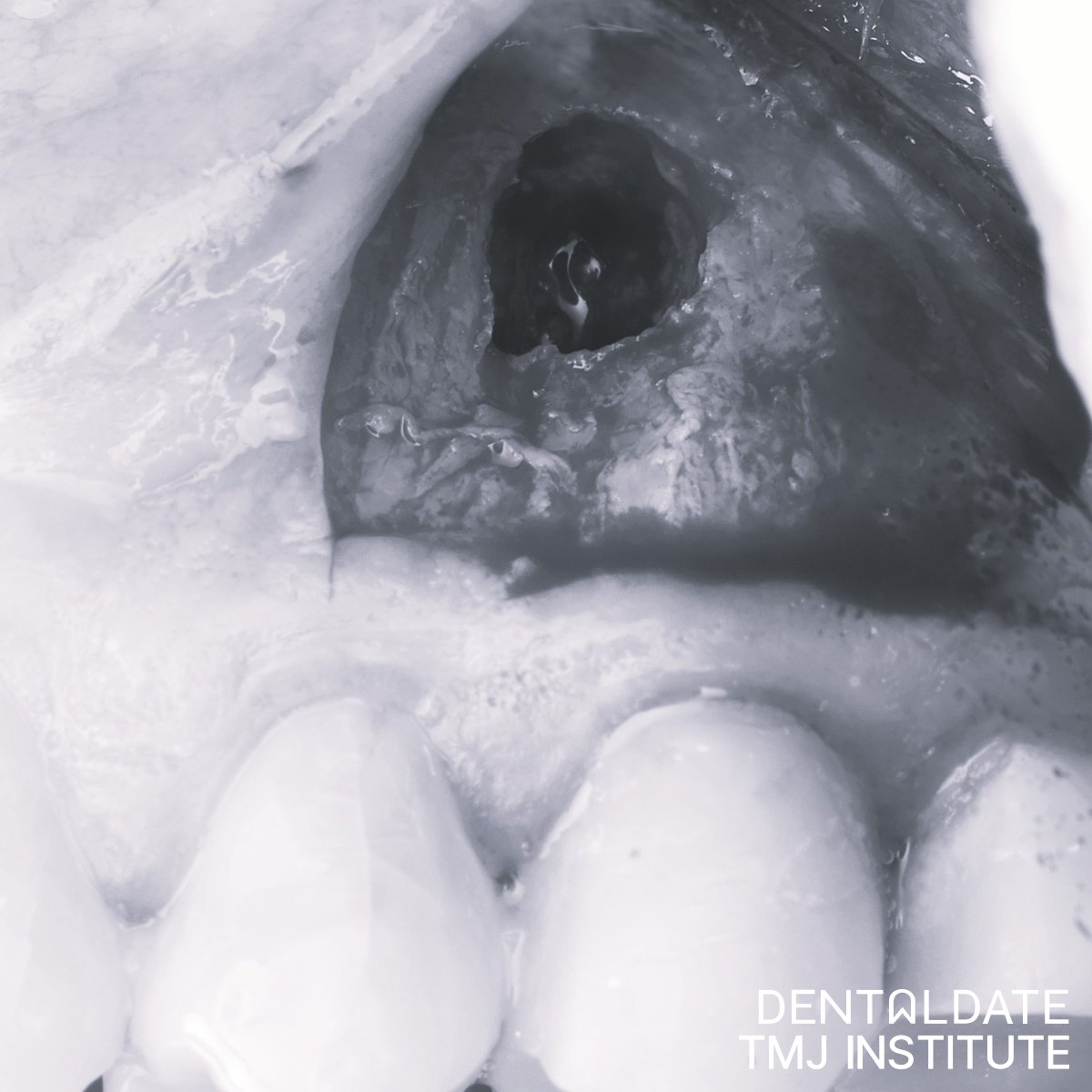
An apicoectomy is a surgical procedure carried out through the gum rather than through the tooth. In general terms, it includes these stages:
- the area is numbed with local anesthesia;
- the gum is gently lifted to reach the bone over the root tip;
- the tip of the root and the surrounding inflamed tissue are removed;
- the end of the root canal is usually sealed from below with a filling material;
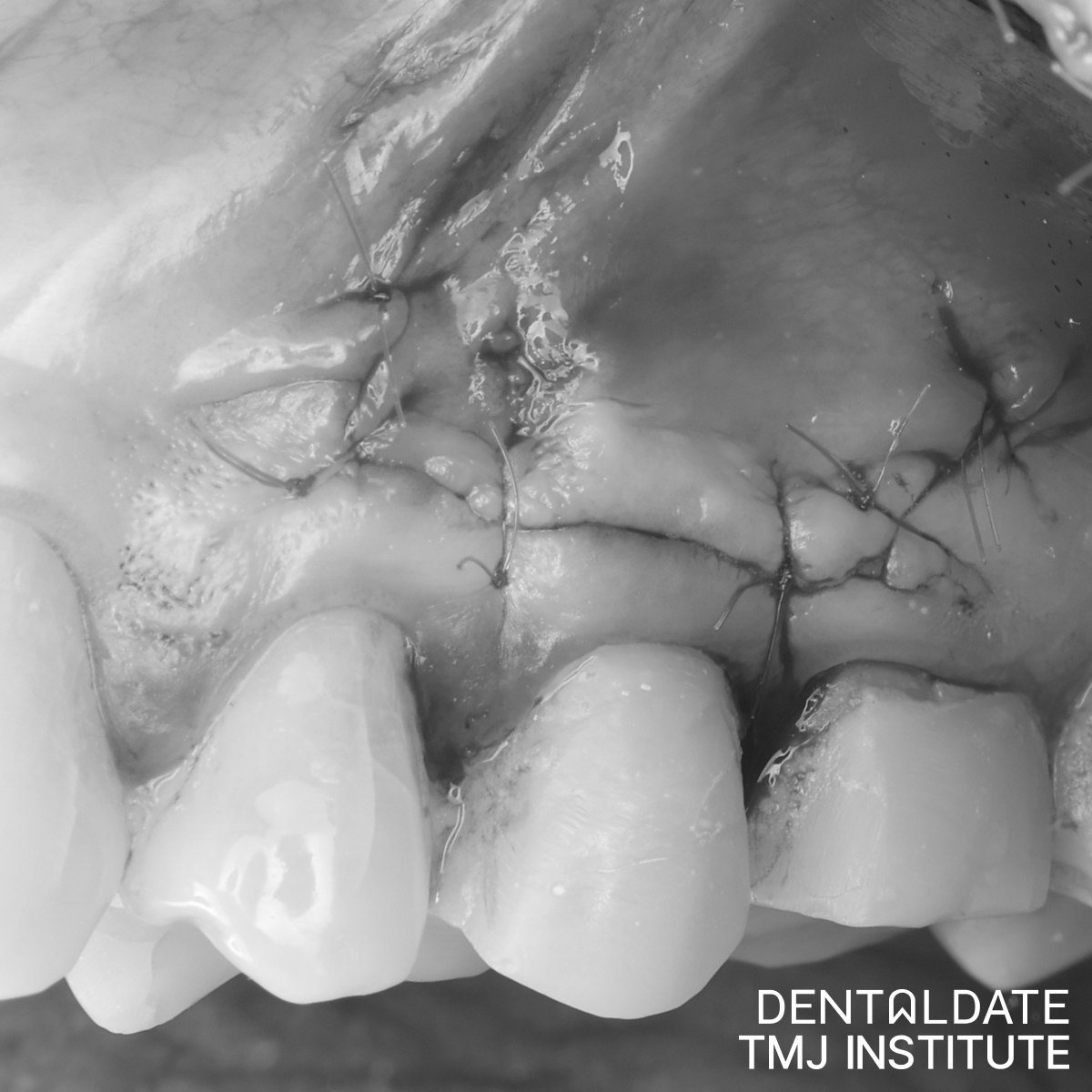
- the gum is repositioned and sutured.
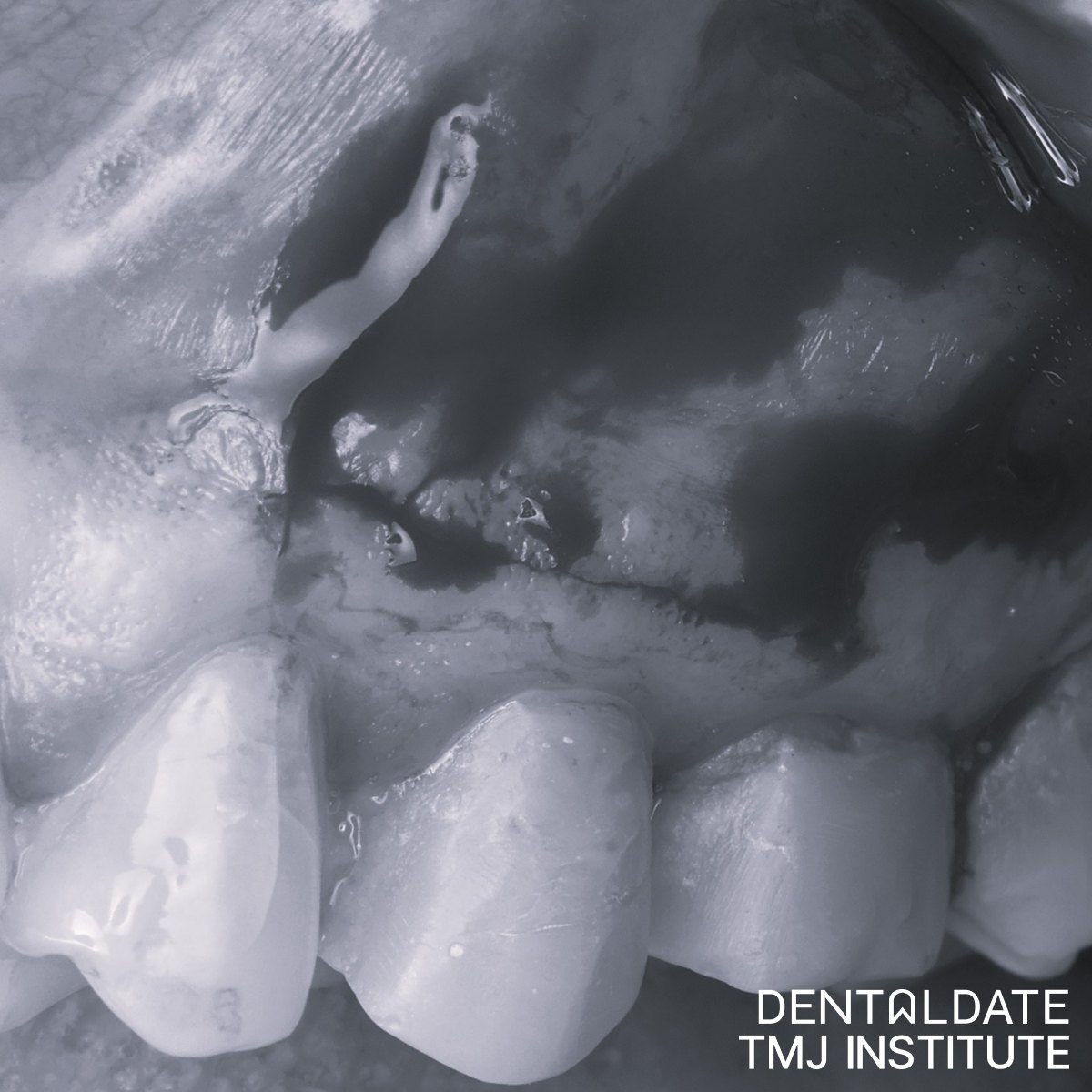
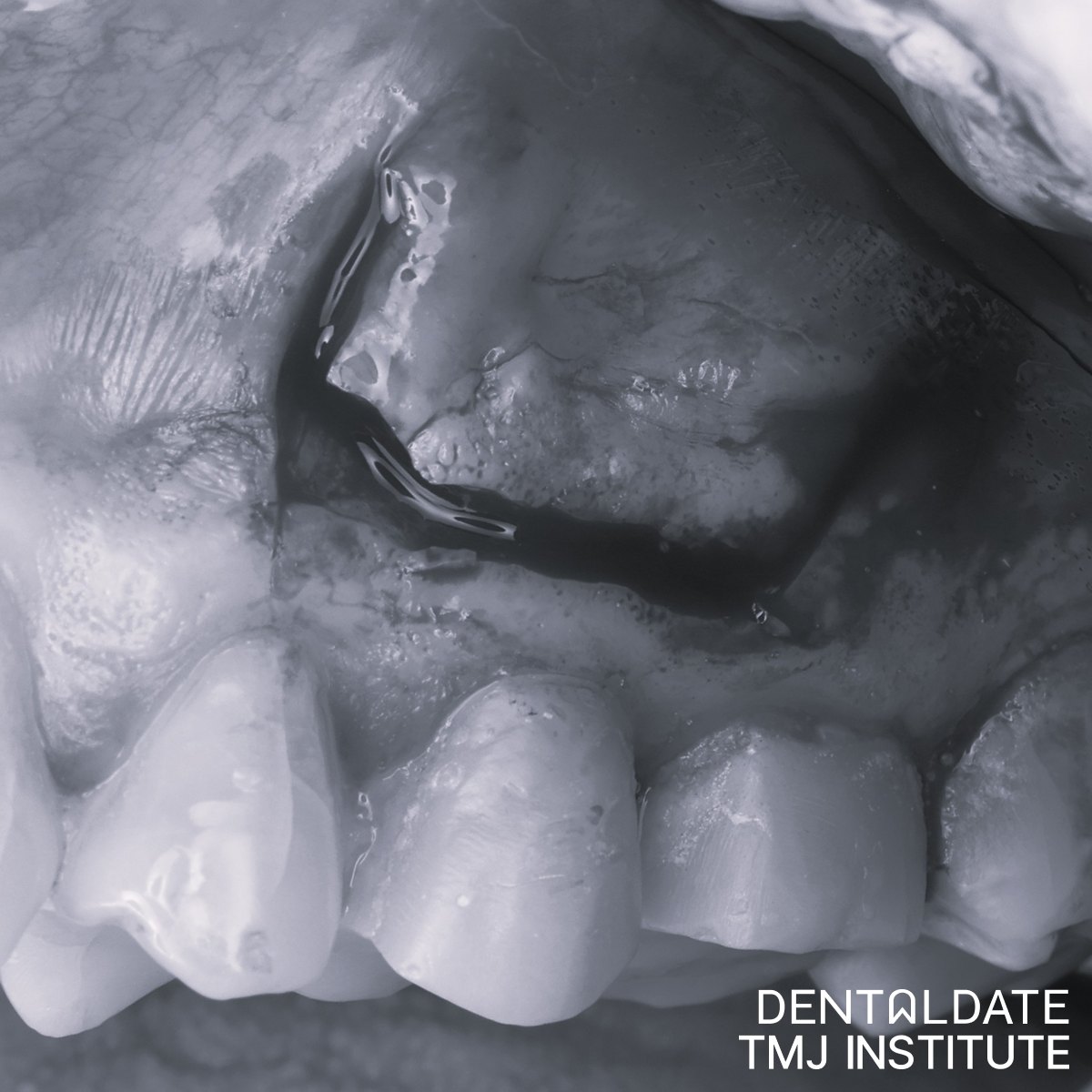
In this case, the apicoectomy was performed under local anesthesia and took 30 minutes.
Ten Days Later
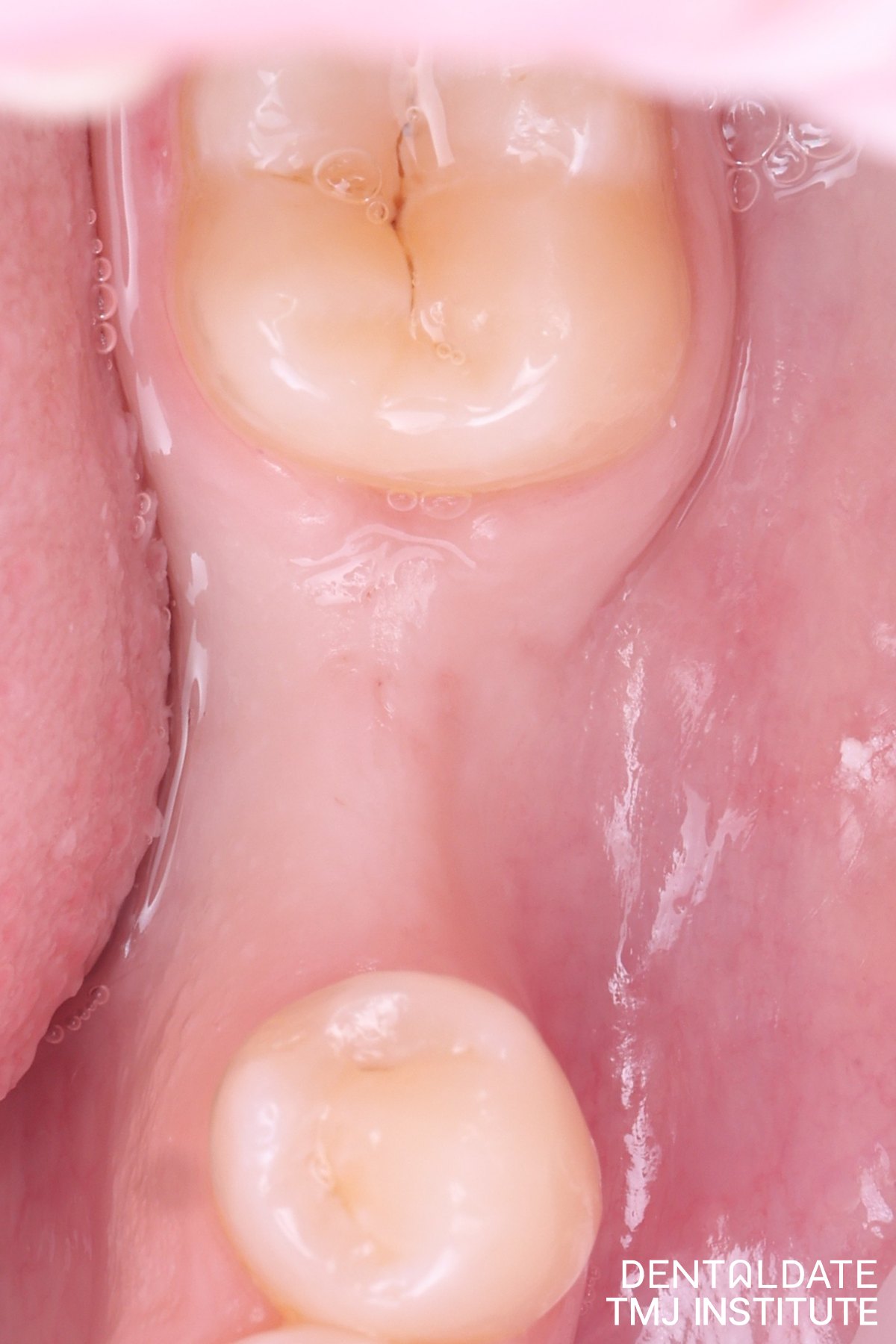
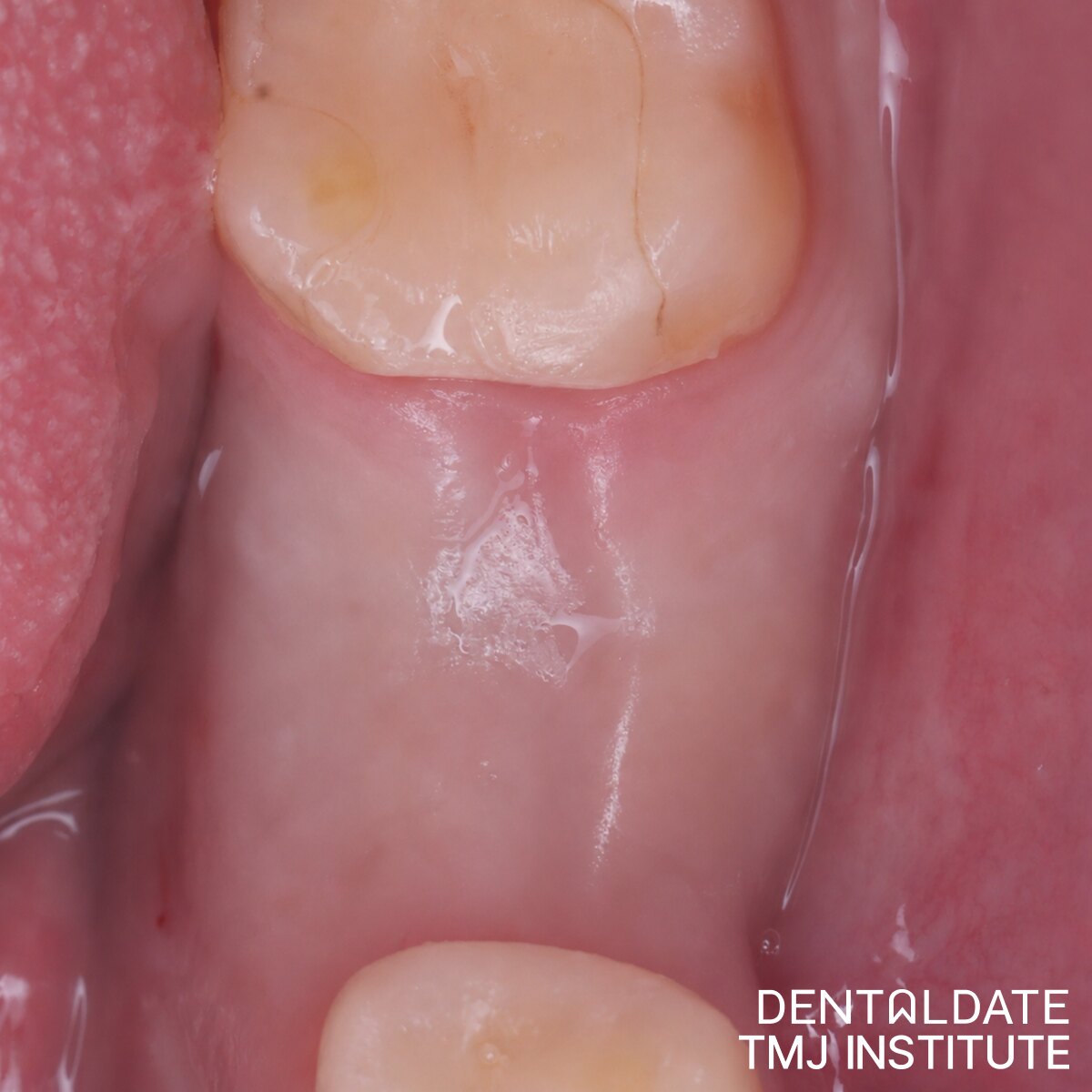
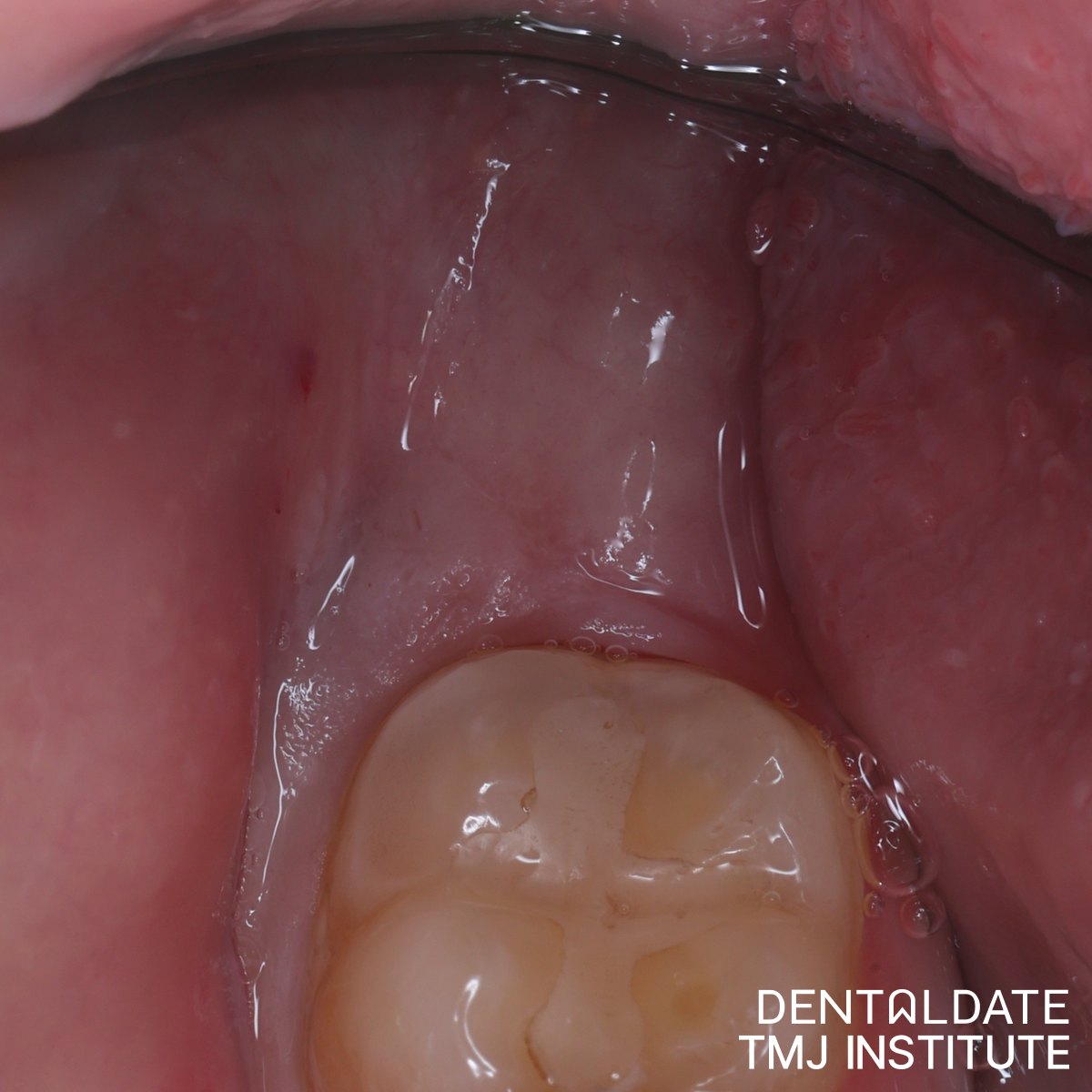
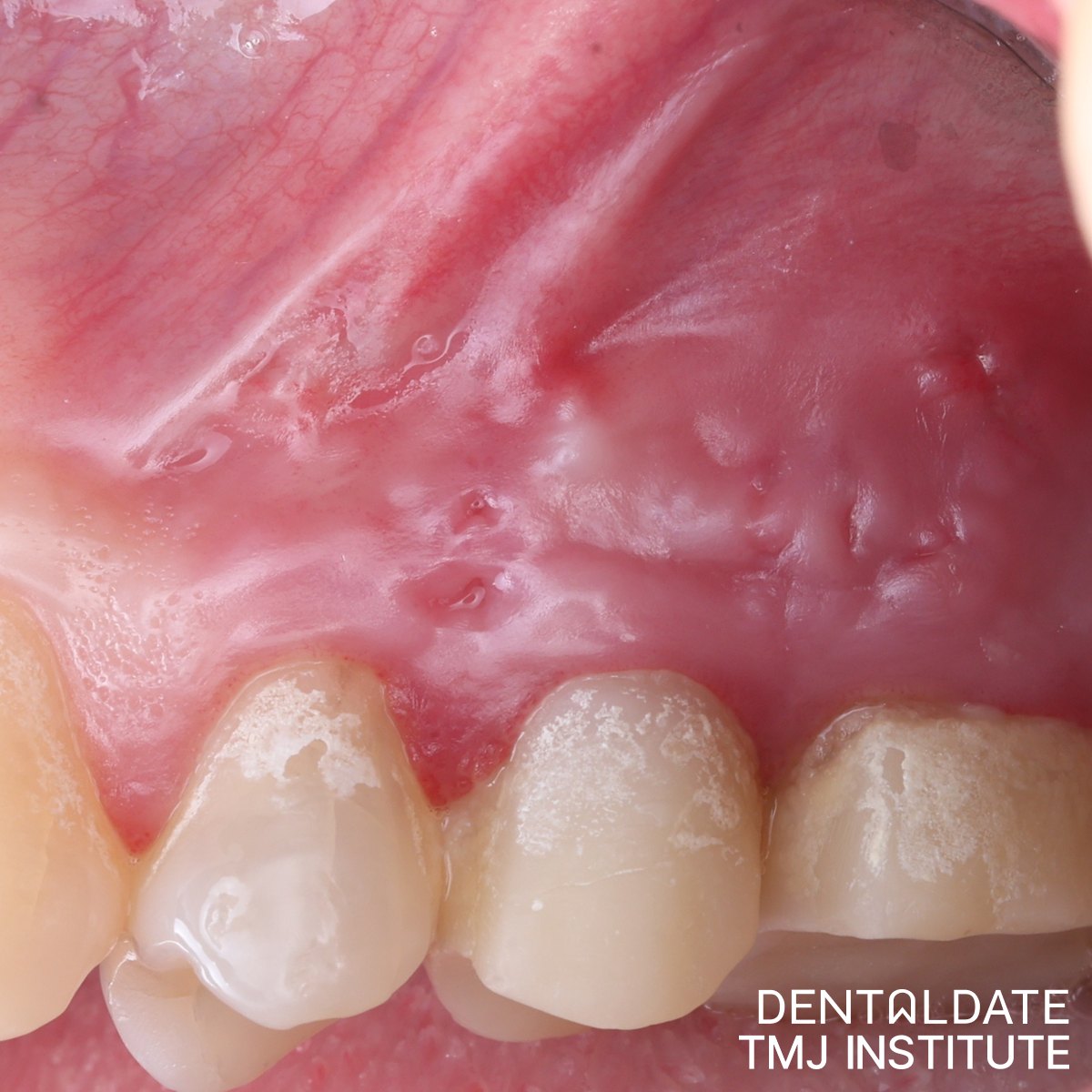
Ten days after surgery, the patient came back for suture removal. At this visit, complete closure of the sinus tract was documented. A closed sinus tract is an encouraging early sign, but it is not yet the final verdict on the treatment.
Why the Final Result Takes Months to Judge
The final assessment of the treatment result will be made in a few months, based on follow-up examinations. Bone heals much more slowly than gum: the area where the inflamed tissue was removed needs time to fill in with new bone, and this can only be confirmed on follow-up imaging. Until then, patients are generally advised to keep the area clean, attend the planned check-ups and report any return of swelling or a new bump on the gum straight away.
Don’t Ignore a Bump on the Gum
A fistula on the gum is a sign of infection at the root, even if the tooth does not hurt. Finding the cause early generally leaves more options for keeping the tooth. Book a consultation at DentalDate to find out whether your tooth can be saved.