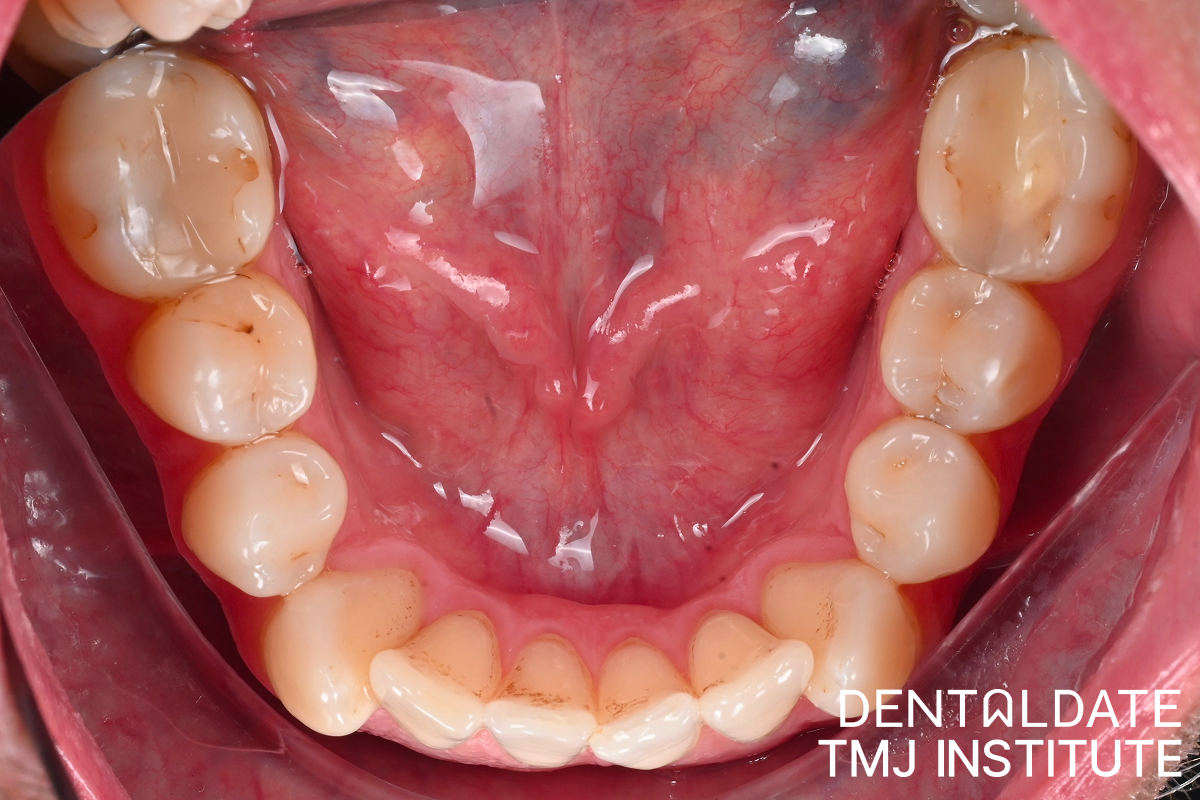
Initial Occlusal Condition
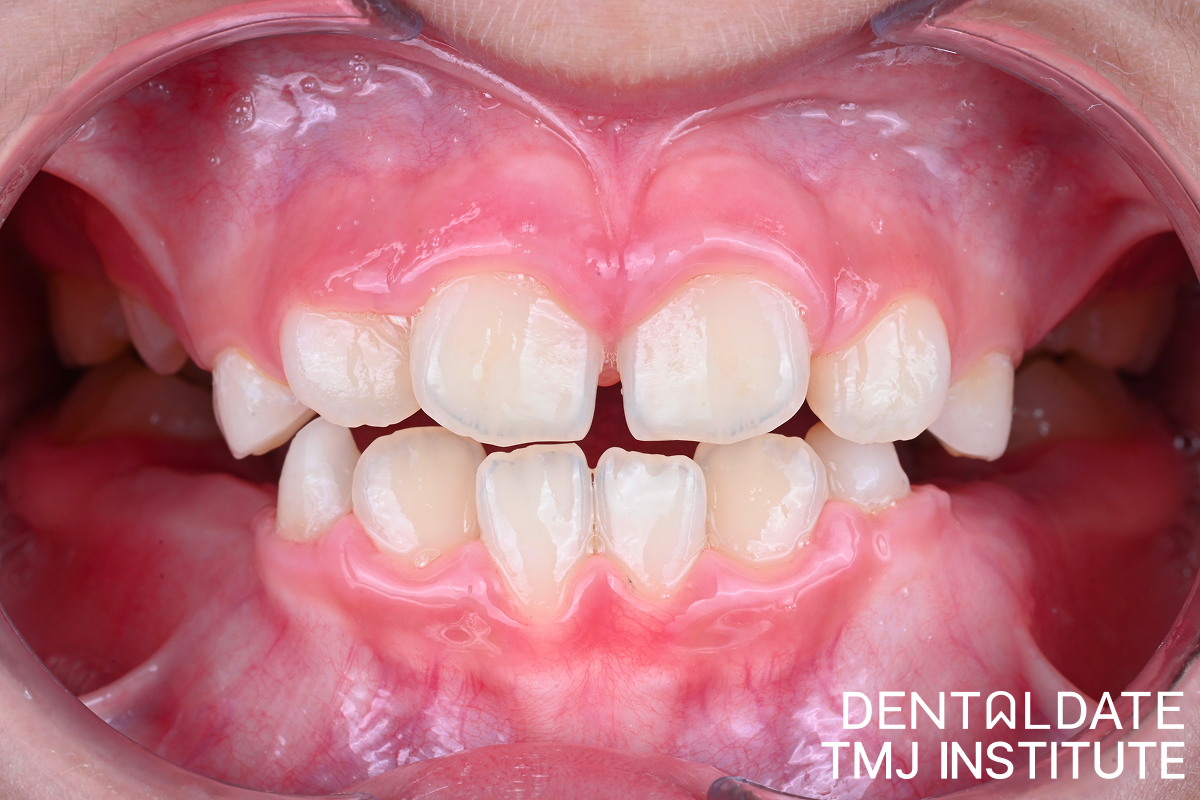
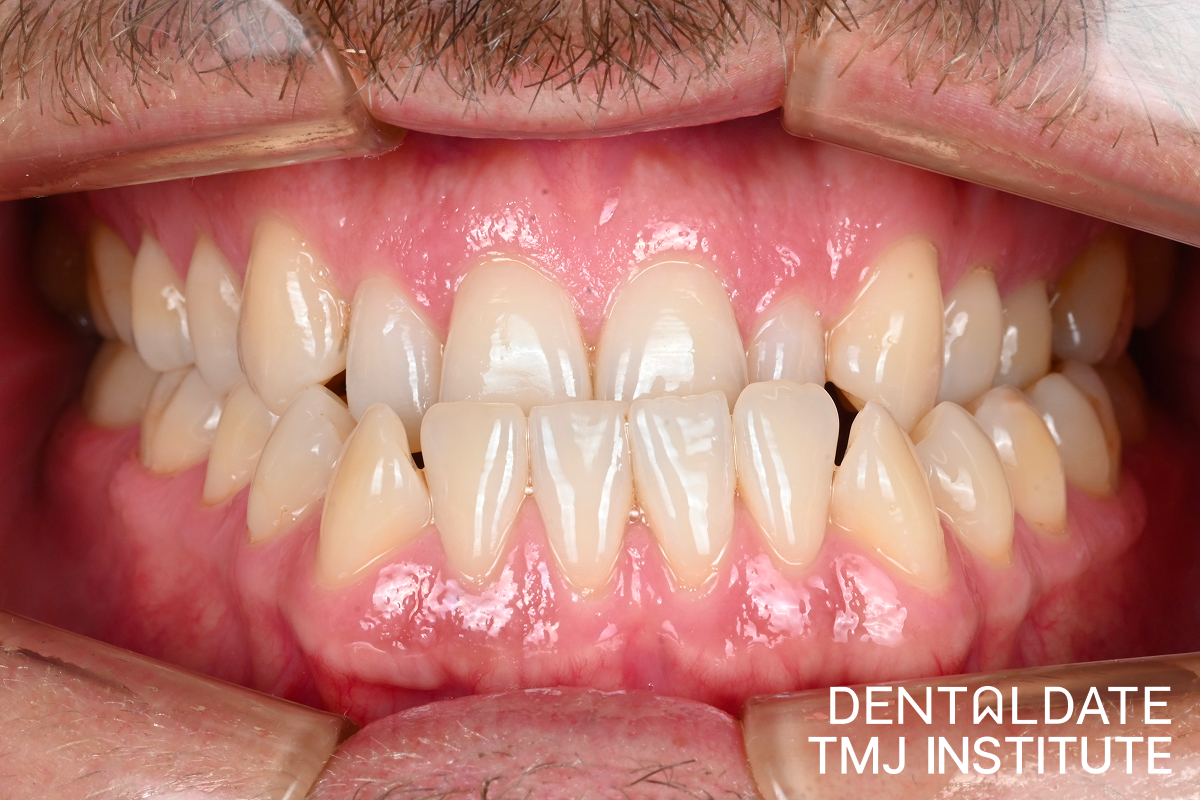
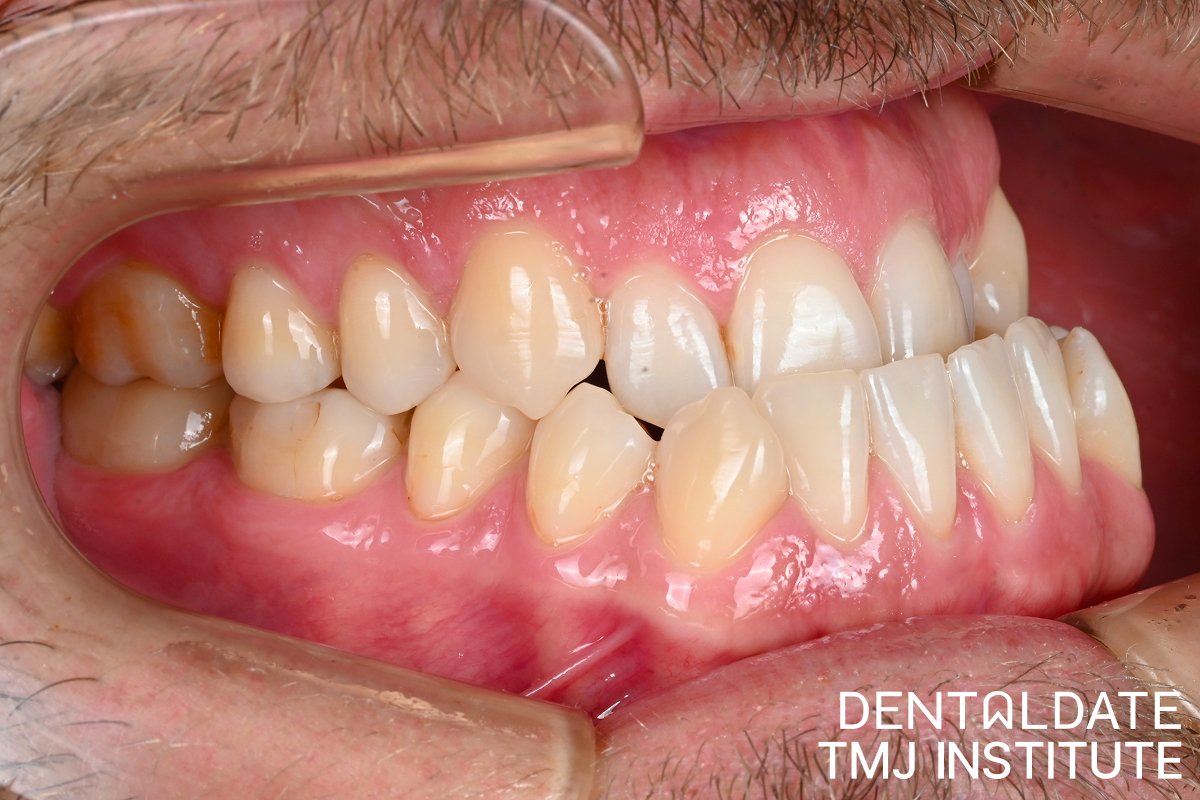
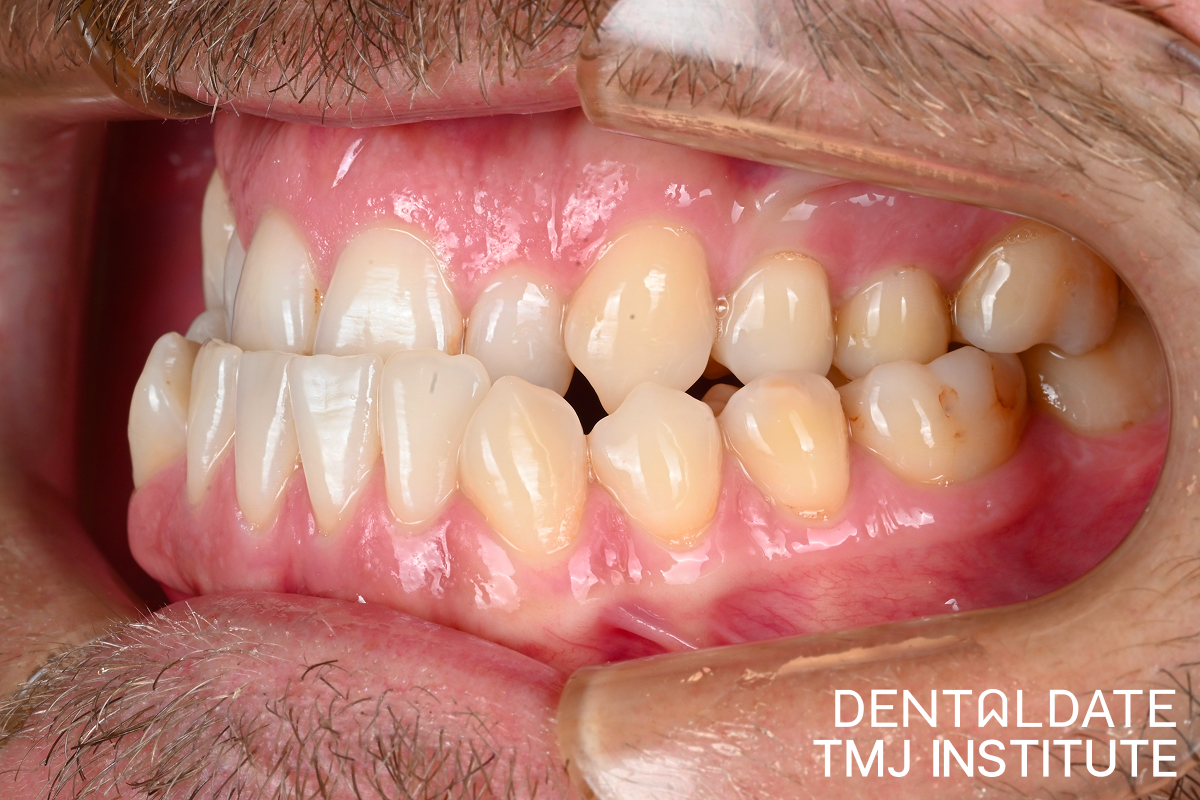
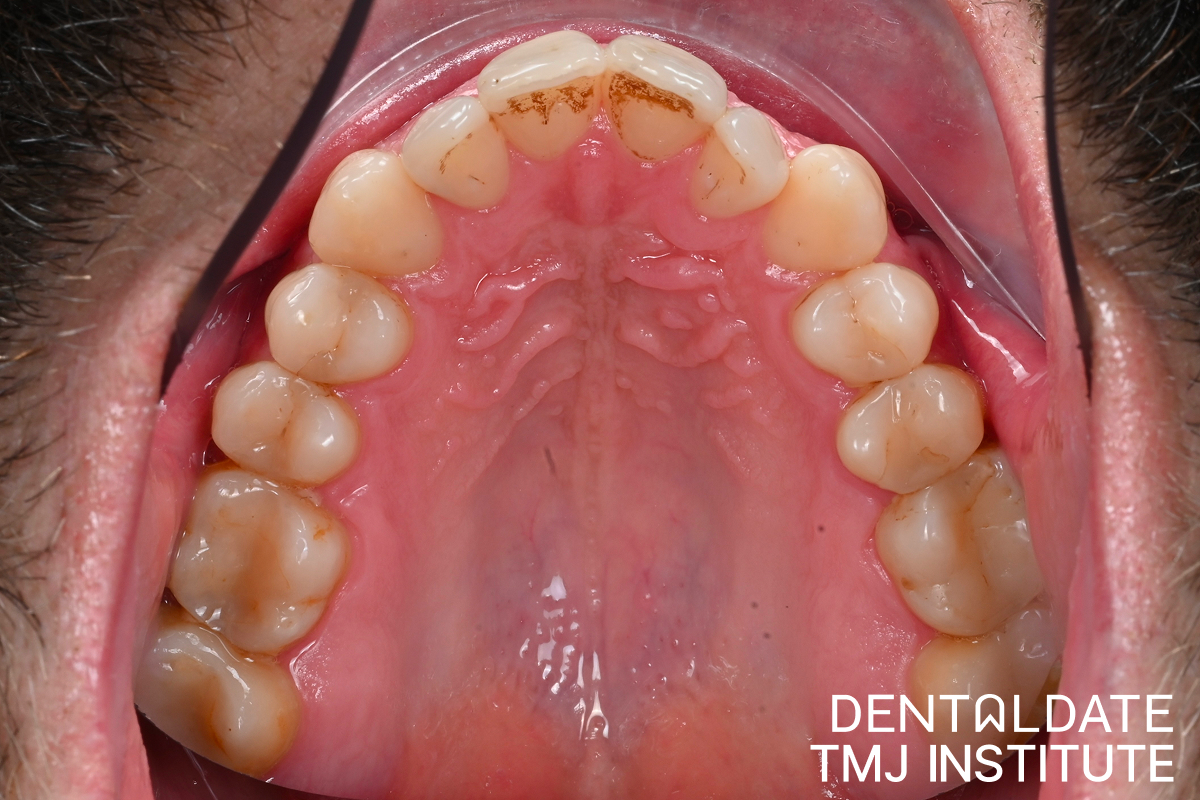
Before treatment, a pronounced discrepancy between the upper and lower dental arches was present, with relative predominance of the mandible.
Clinical findings included:
- a mesial type of occlusion;
- maxillary constriction;
- anterior crossbite;
- posterior crossbite;
- abnormal relationship between the upper and lower teeth;
- aesthetic concerns;
- impaired masticatory function.
Correction therefore required more than alignment of individual teeth. The treatment also needed to address dental arch form and the relationship between the upper and lower dentition.
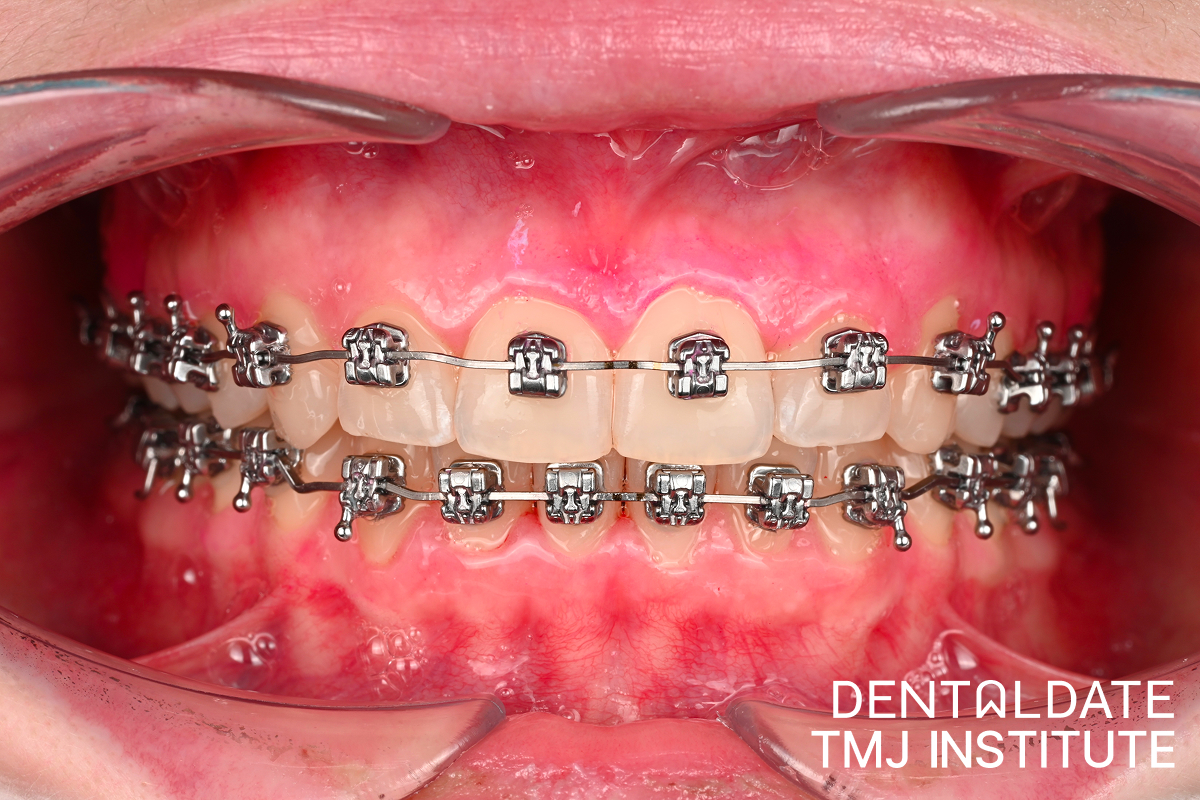
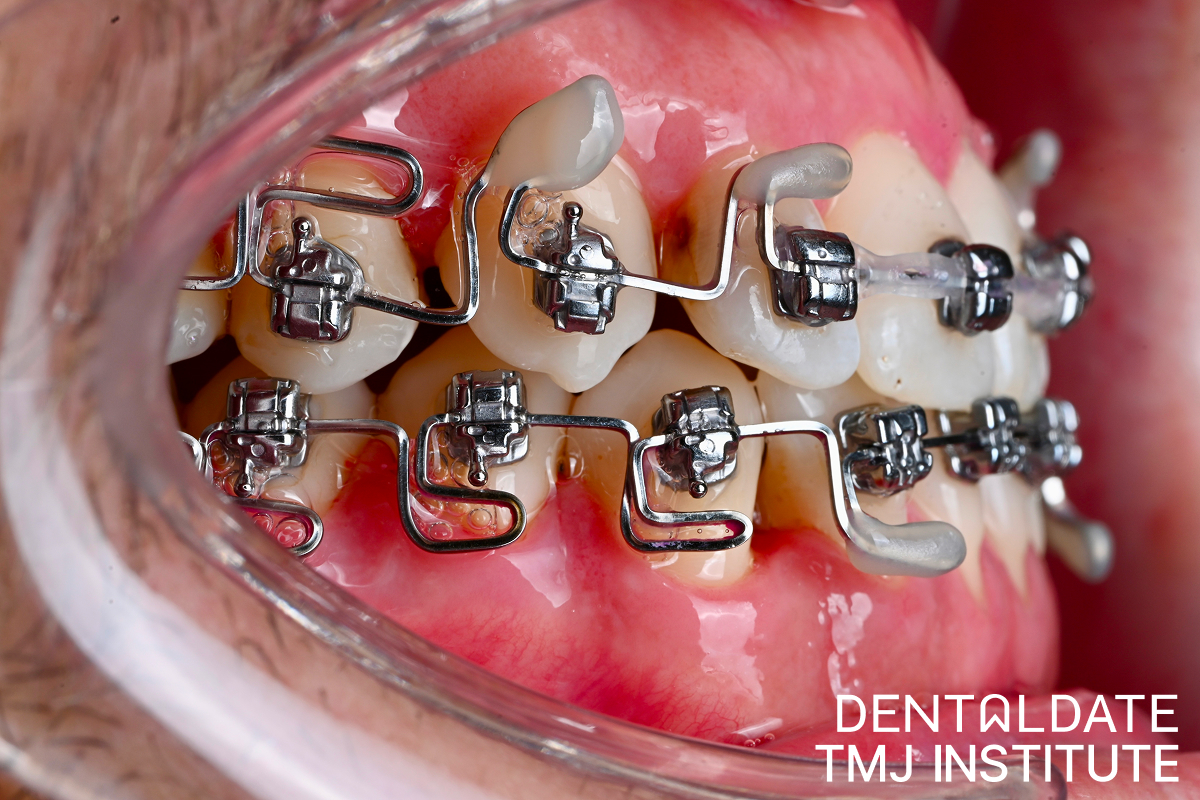
Fixed Braces on Both Arches
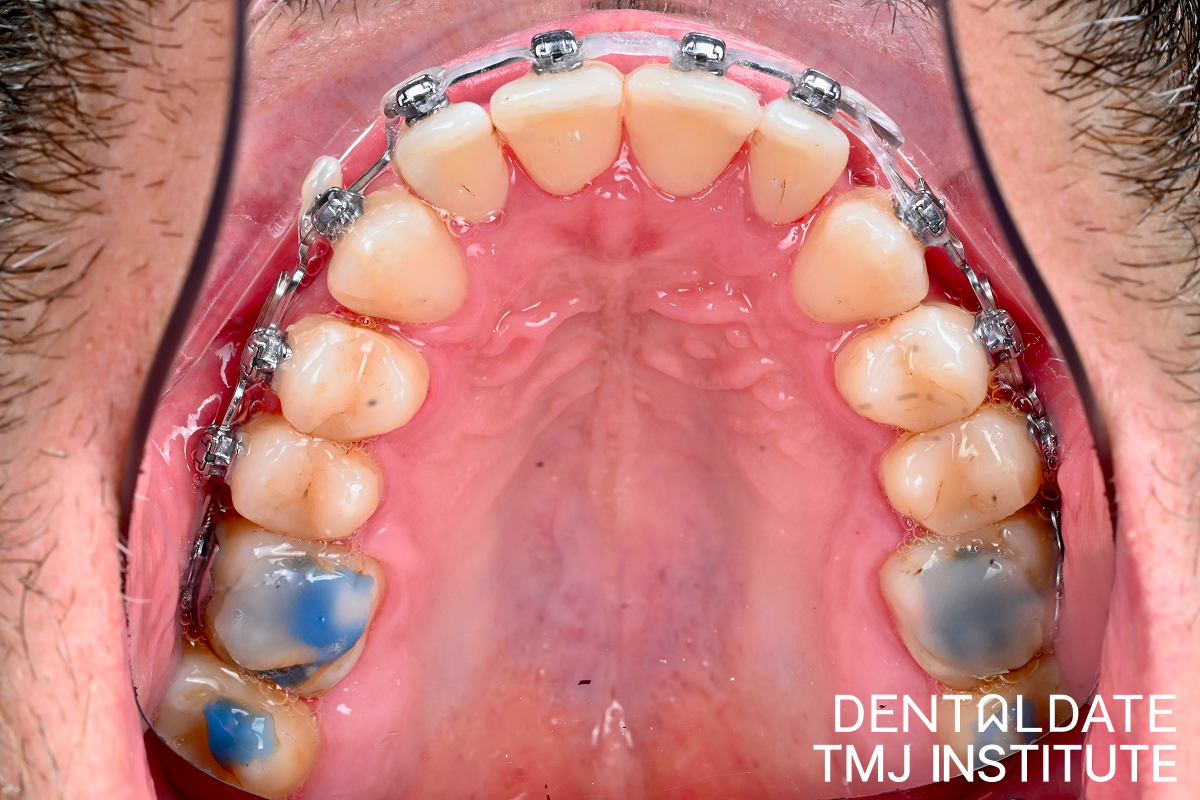
A fixed orthodontic appliance was placed on both the upper and lower arches.
Treating both arches makes it possible to control tooth positions simultaneously and progressively modify their relationship during orthodontic treatment.
The main objectives included:
- correction of the crossbite;
- improvement of individual tooth positions;
- improvement of the upper dental arch form;
- correction of dentoalveolar relationships;
- establishment of a more physiological relationship between the upper and lower teeth;
- improvement of smile aesthetics.
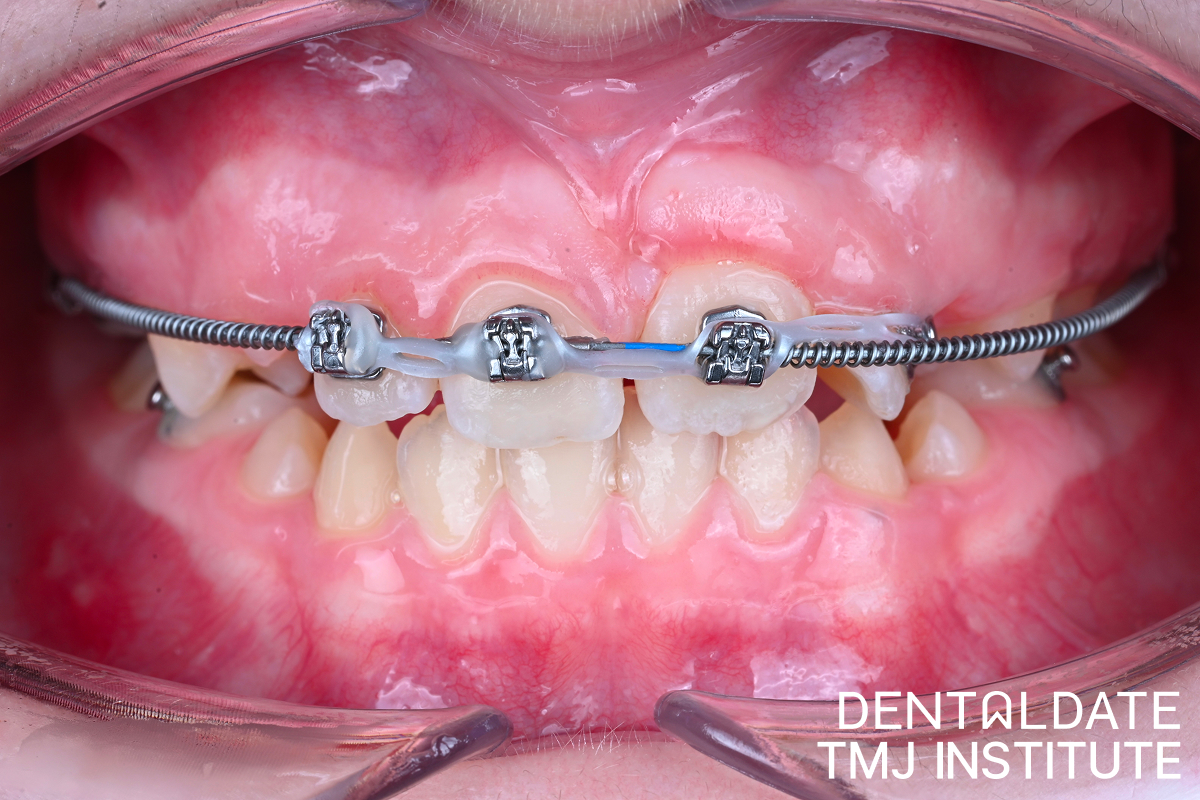
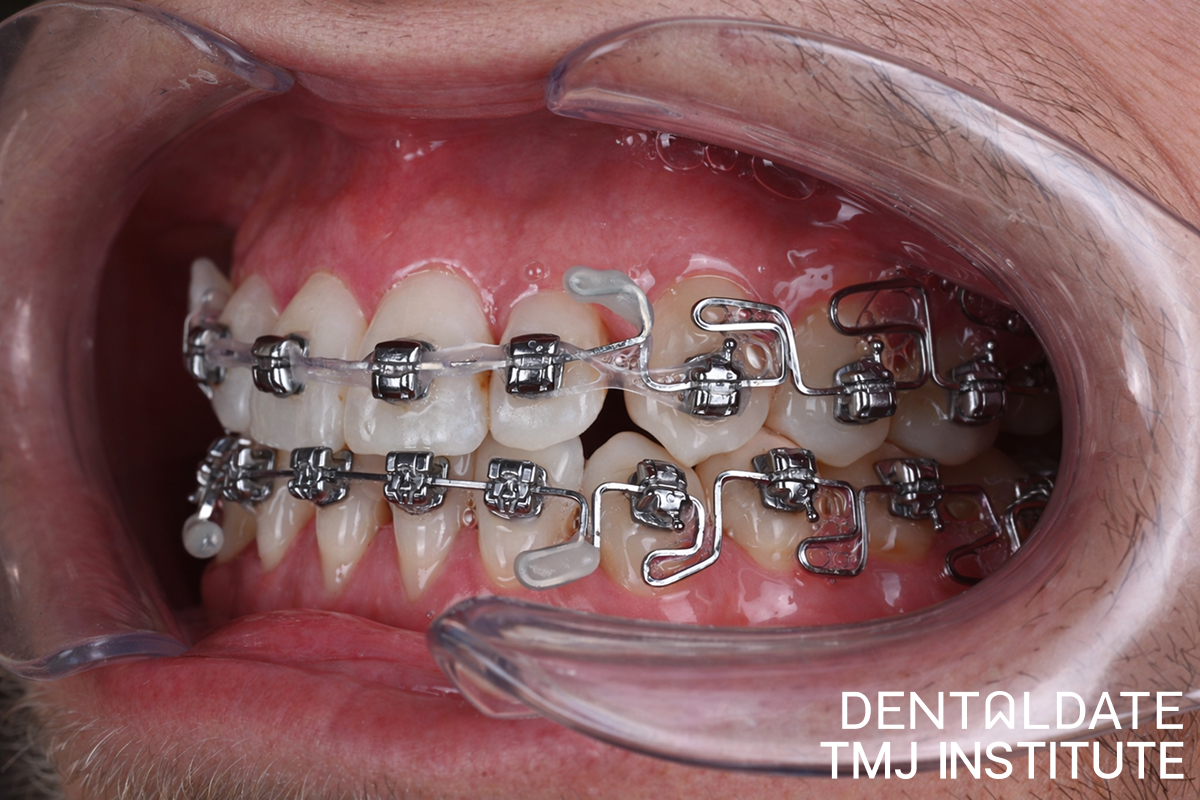
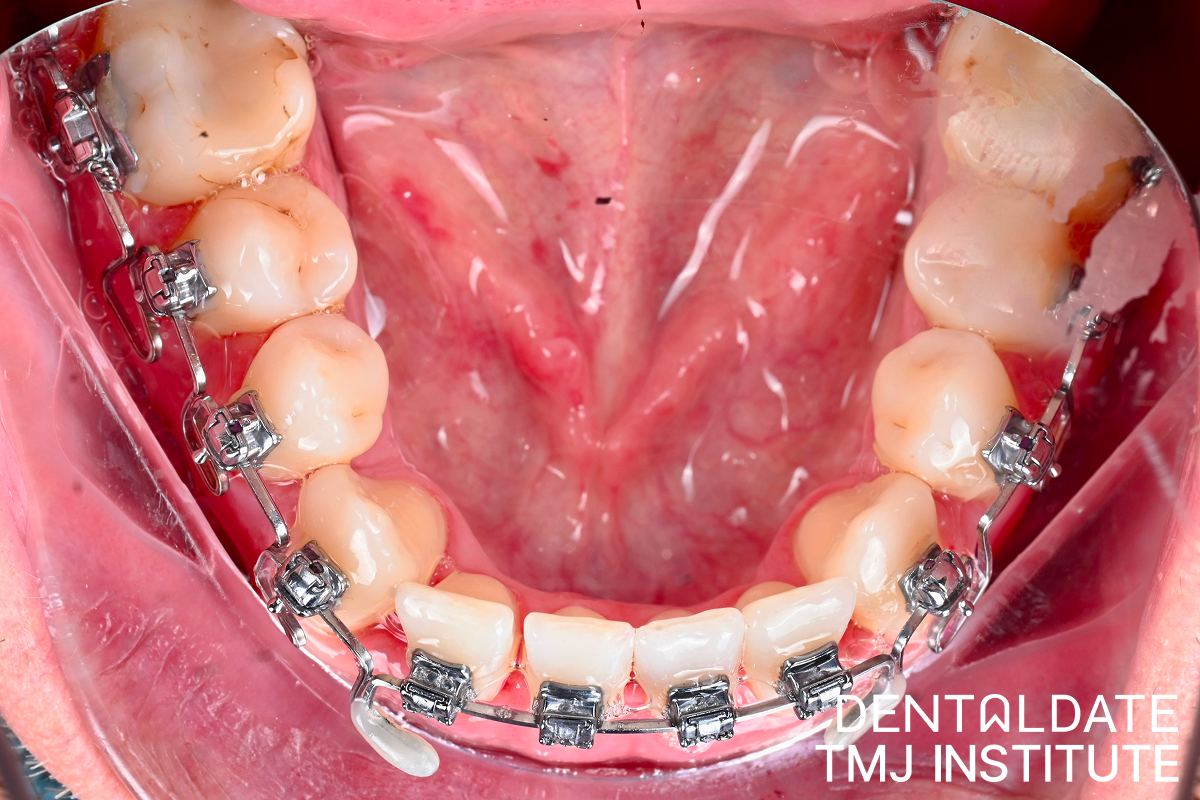
Multiloop Archwire Technique
A multiloop orthodontic archwire technique is being used during treatment.
The archwire configuration provides additional control over the direction and sequence of tooth movement.
In this clinical case, the technique is used to support:
- correction of dentoalveolar relationships;
- elimination of crossbite;
- controlled positioning of anterior and posterior teeth;
- gradual improvement of upper arch form and width;
- development of a more appropriate occlusal relationship.
Correction is performed progressively because complex occlusal discrepancies require controlled tooth movement throughout different stages of orthodontic treatment.
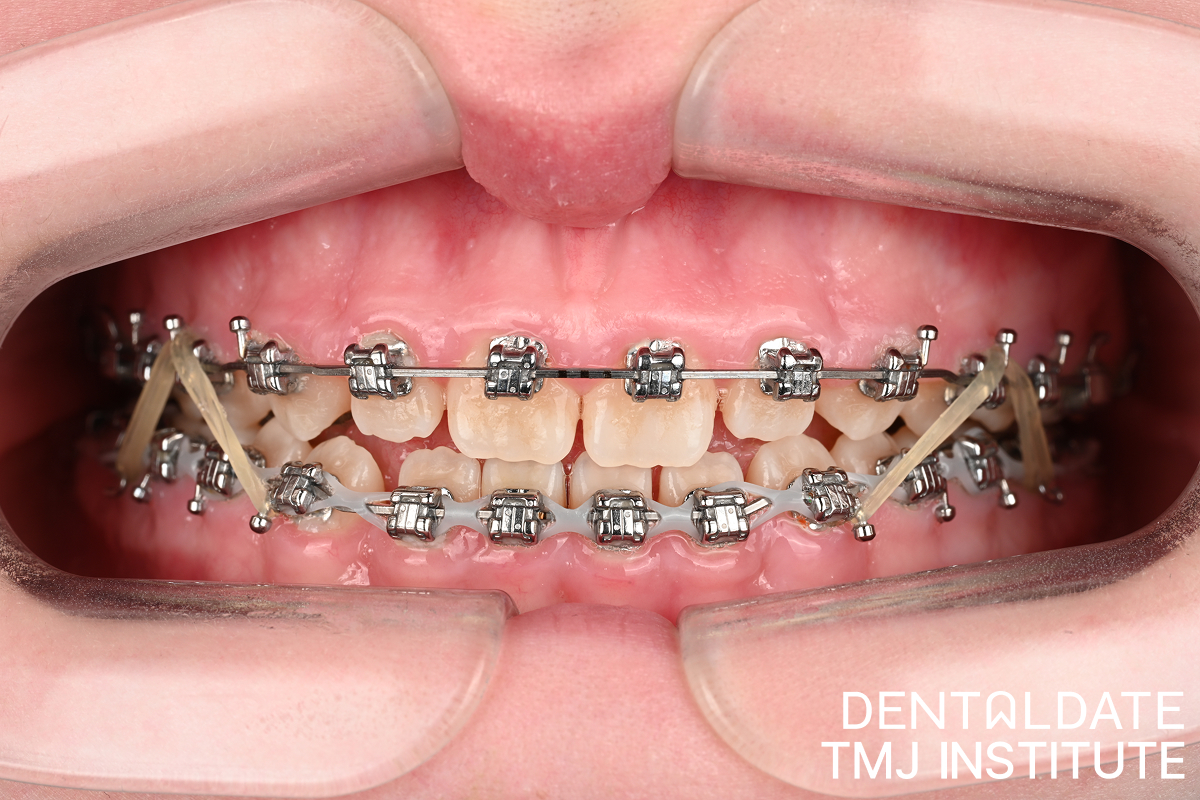
Current Treatment Progress
Significant improvement has already been achieved compared with the initial clinical situation.
At the current stage:
- the crossbite has been corrected;
- the relationship between the upper and lower teeth has substantially improved;
- dental arch relationships are more favorable;
- occlusal contacts have improved;
- smile aesthetics have noticeably improved.
This represents an intermediate treatment result rather than the completion of orthodontic therapy.
The changes achieved so far provide more favorable functional and anatomical conditions for continued correction and development of a physiological occlusion.

Why Treatment Continues After Crossbite Correction
Correction of the most visible occlusal discrepancy does not necessarily mean that orthodontic treatment is complete.
Further treatment is required to refine:
- individual tooth positions;
- dental arch form;
- interarch contacts;
- the relationship between the upper and lower dentition;
- final functional and aesthetic stability.
The patient is therefore assessed throughout treatment, and the orthodontic mechanics are adjusted according to the changes achieved at each stage.
Complex Bite Correction at DentalDate Dubai
When mesial occlusion and crossbite occur together, orthodontic assessment should consider not only individual tooth positions but also the relationship between both dental arches.
At DentalDate Dubai, orthodontic treatment is planned individually following diagnostic assessment. In complex malocclusions, fixed appliances and different archwire mechanics may be used to control tooth movement and progressively improve occlusion.
Book an orthodontic consultation to assess the bite and determine an appropriate treatment strategy.