Chief Concern and Previous Orthodontic History
The patient’s primary concerns were dental misalignment and dissatisfaction with the appearance of her smile.
Before attending DentalDate, she had received clear aligner treatment at another clinic. During the course of treatment, she developed:
- pain in the temporomandibular joint area;
- clicking during mandibular movement;
- persistent dental misalignment and occlusal discrepancies.
The onset of joint-related symptoms required a reassessment of not only tooth position, but also the functional condition of the dentofacial system.


Initial Clinical Findings
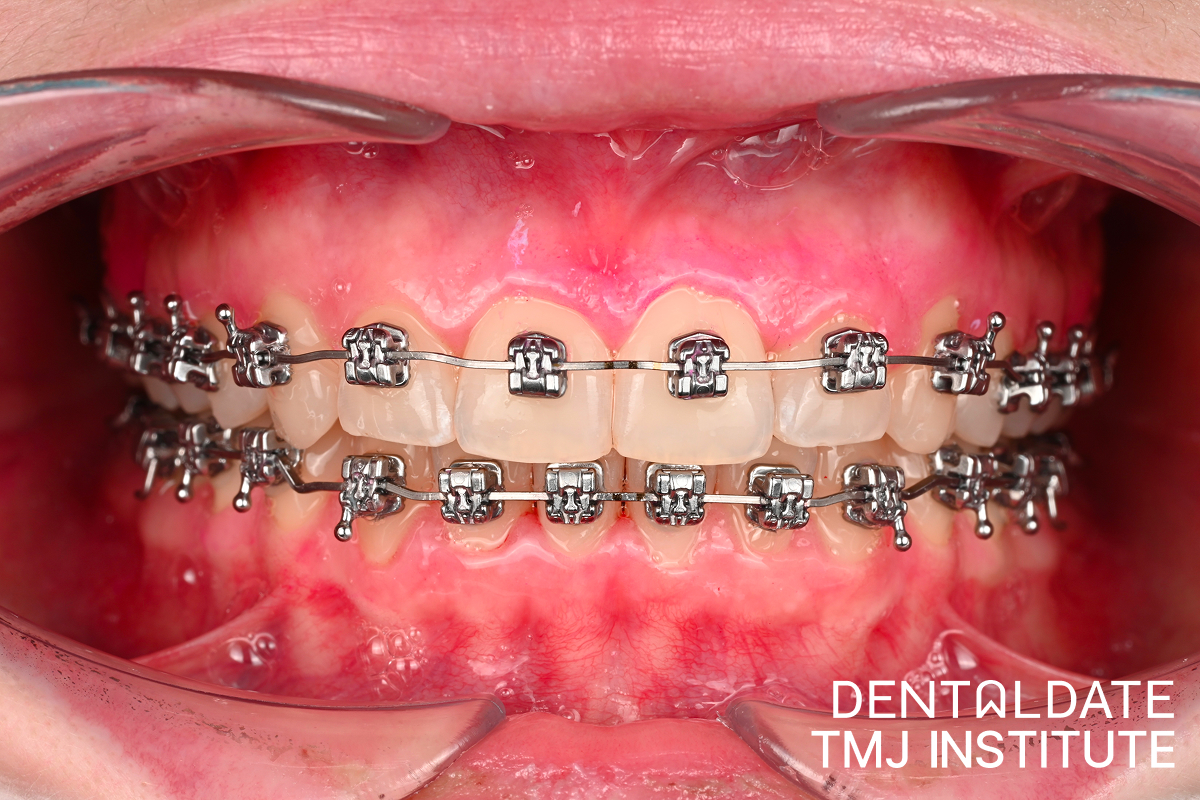
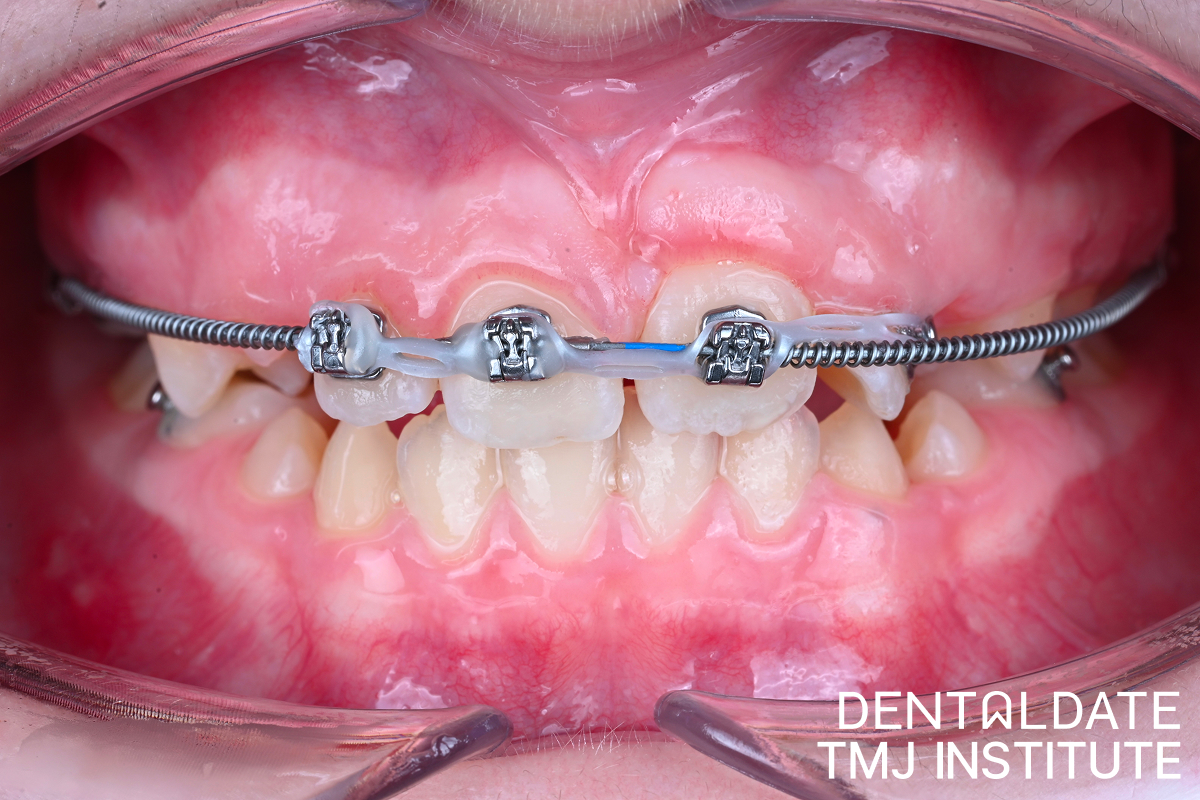
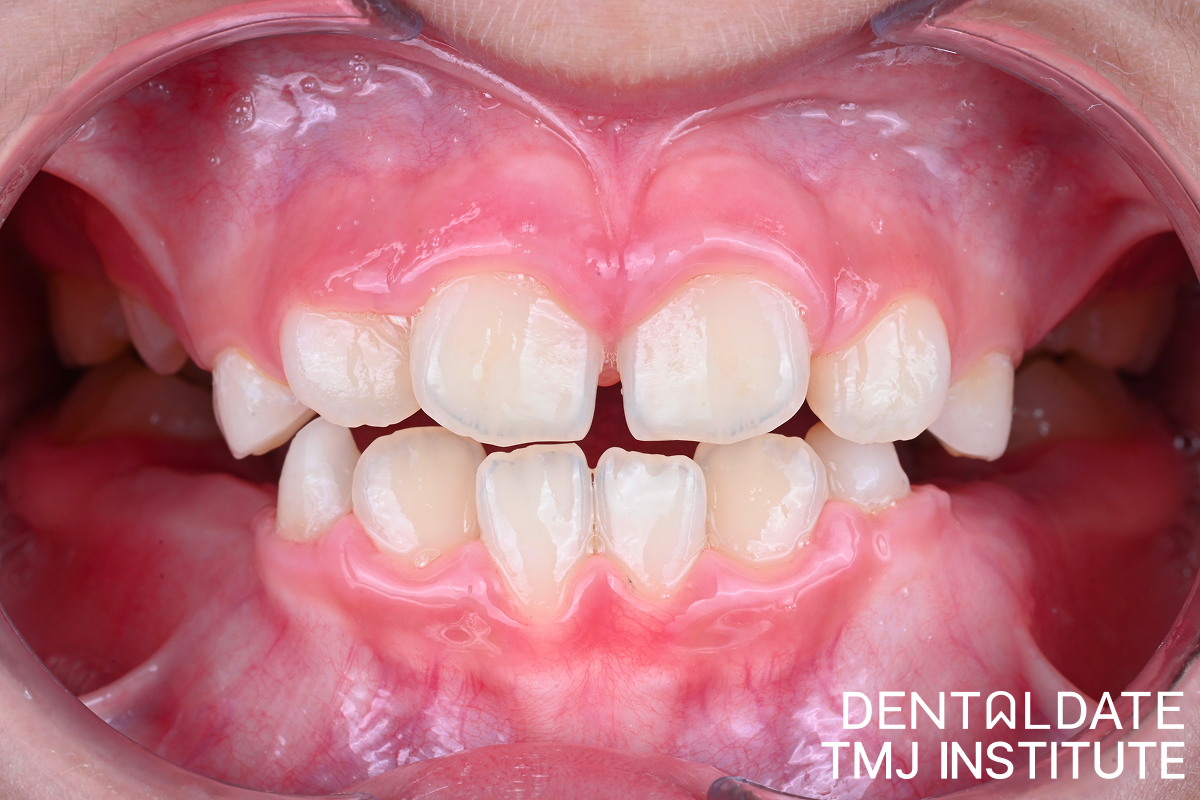
Clinical assessment identified:
- distal occlusion;
- crowding in the upper dental arch;
- crowding in the lower dental arch;
- cusp-to-cusp contacts;
- bilateral Angle Class II relationships;
TMJ pain and clicking that had developed during previous orthodontic treatment. The clinical situation required a comprehensive approach. Treatment planning had to consider dental alignment, mandibular position, upper-to-lower tooth contacts and temporomandibular joint function.
Functional TMJ Assessment
A comprehensive functional assessment, including condylography, was performed before active orthodontic treatment was continued.
Condylography records and analyses mandibular movements. The findings provided additional information about functional movement patterns and helped identify a therapeutic mandibular position that could be used as a reference for further bite correction.
Continuing treatment without reassessment would not have been appropriate because the patient was already experiencing pain and clicking. The initial priority was to establish a functionally acceptable mandibular reference before planning further tooth movement.
Determination of the Therapeutic Mandibular Position
Based on the functional assessment, a therapeutic position of the mandible was identified.
Further planning considered:
- the relationship of the mandible to the maxilla;
- mandibular movement patterns;
- the condition of the temporomandibular joints;
- contacts between the upper and lower teeth;
- the need to correct the bilateral Angle Class II relationship.
This approach connected the aesthetic objectives of orthodontic treatment with the need to establish a more coordinated functional occlusion.
Revision of the Orthodontic Treatment Strategy
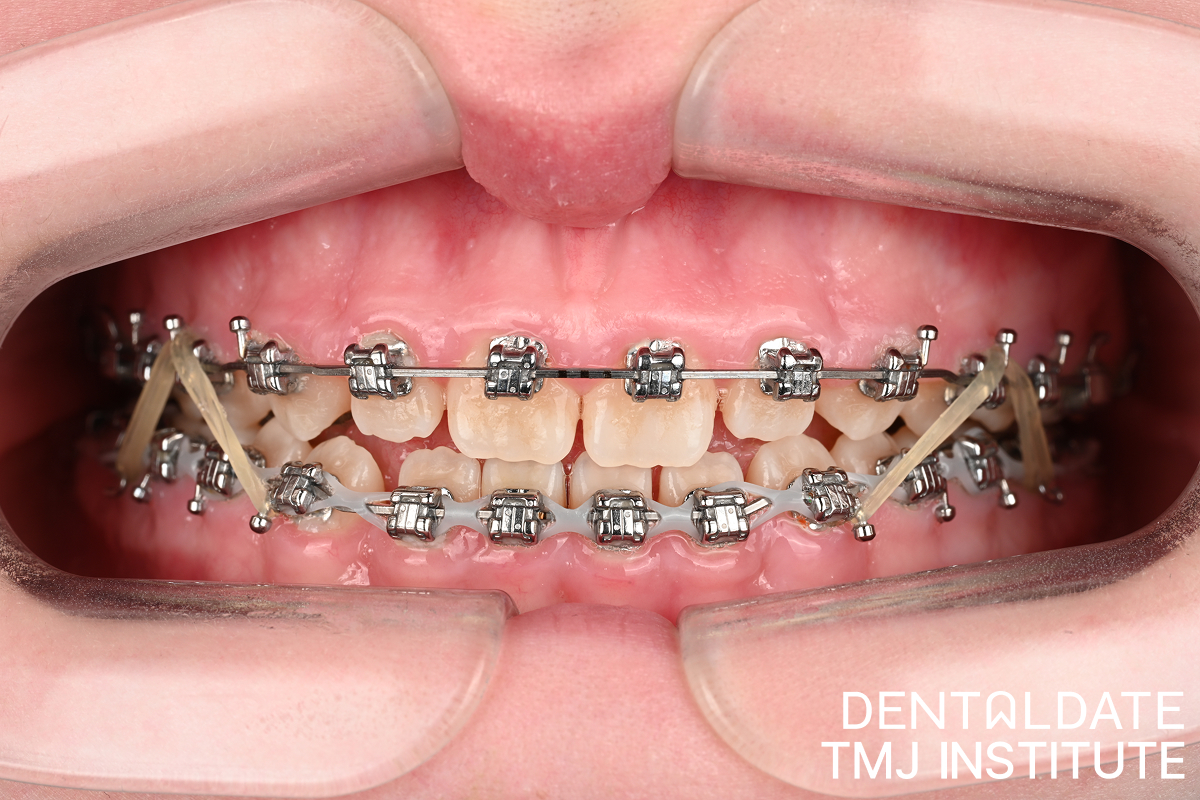
Following the diagnostic phase, the previous orthodontic plan was revised. Treatment was continued using fixed braces.
The main objectives were to:
- resolve crowding in both arches;
- align the dental arches;
- correct the distal occlusion;
- establish appropriate upper-to-lower tooth contacts;
- achieve bilateral Angle Class I relationships;
- improve smile aesthetics;
- maintain the therapeutic mandibular position during bite correction.
The treatment was therefore aimed not only at straightening the teeth, but also at creating a more stable and predictable occlusal relationship.
Rationale for Transitioning from Aligners to Fixed Braces
The transition to braces does not mean that clear aligners are generally ineffective. Appliance selection depends on the individual clinical situation, the required tooth movements and the degree of occlusal control needed.
In this case, the development of pain and clicking required renewed diagnostic assessment and revision of the original treatment strategy. Fixed braces were selected to provide detailed control over:
- individual tooth positions;
- dental arch form;
- upper-to-lower arch relationships;
- occlusal contacts;
- bite correction in relation to the therapeutic mandibular position.
The change of appliance was therefore part of an individually revised treatment plan.
Functional and Aesthetic Outcome
At the current stage, the patient no longer experiences pain or clicking in the temporomandibular joints.
The following improvements have been achieved:
- alignment of the dental arches;
- reduction of dental crowding;
- a broader and more harmonious smile;
- correction of the distal relationship;
- bilateral Angle Class I occlusion;
- improved alternating intercuspation between the upper and lower teeth;
- more stable occlusal contacts.
The outcome was assessed not only by the appearance of the teeth, but also by the absence of the previous joint symptoms and the quality of the resulting occlusion.


Planned Restorative Phase
Following orthodontic correction, the patient is expected to undergo restorative treatment of the posterior teeth.
Several teeth contain extensive failing amalgam restorations. These are planned to be replaced with ceramic overlays designed according to the corrected tooth positions and established occlusion.
The ceramic restorations will be used to restore:
- the anatomical form of the chewing surfaces;
- proximal and occlusal contacts;
- posterior tooth function;
- teeth with extensive existing restorations;
- the appearance of the posterior dentition.
Sequence of Orthodontic and Restorative Treatment
Definitive ceramic restorations should be planned after a stable tooth position and occlusal relationship have been established.
If extensive restorations are completed before orthodontic tooth movement is finished, their shape and contacts may no longer correspond to the corrected bite.
The sequence in this case includes:
- functional TMJ assessment;
- determination of a therapeutic mandibular position;
- orthodontic correction with fixed braces;
- establishment of an appropriate occlusion;
- restoration of the posterior teeth with ceramic overlays.
This sequence allows the restorative phase to be performed according to the corrected bite.
Function-Oriented Orthodontic Treatment at DentalDate
Pain, clicking, muscle tension or restricted mandibular movement during orthodontic treatment requires further assessment. These symptoms should not automatically be attributed solely to aligners or braces, as several factors may be involved.
At DentalDate, orthodontic planning considers:
- tooth position;
- the type of malocclusion;
- occlusal contacts;
- mandibular movements;
- temporomandibular joint function;
- the need for subsequent restorative treatment.
When clinically indicated, the diagnostic process may include functional assessment and condylography. The findings help determine an appropriate treatment sequence and select an orthodontic appliance according to the individual clinical situation.
Book a consultation at DentalDate for an individual assessment of your bite, TMJ function and available orthodontic treatment options.