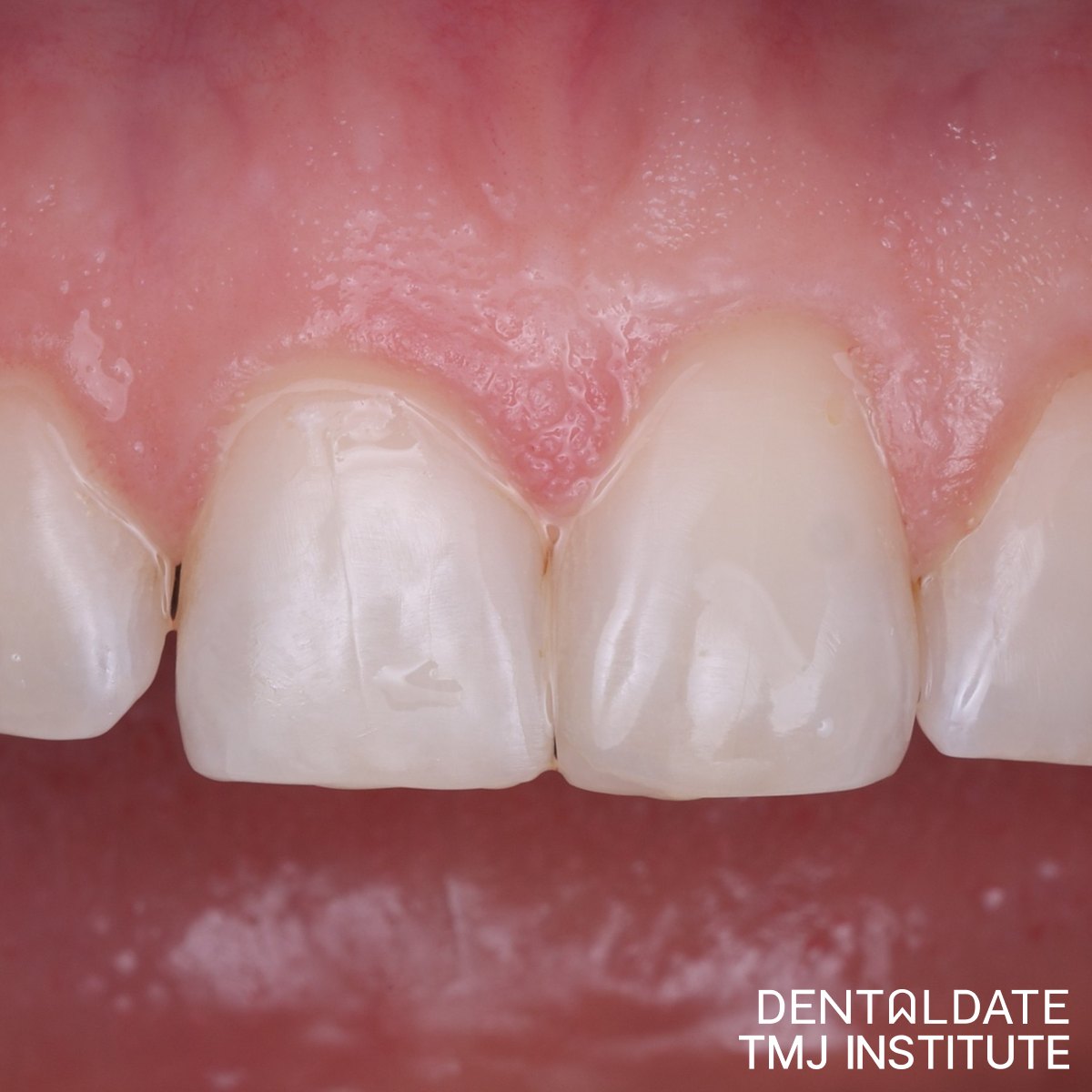
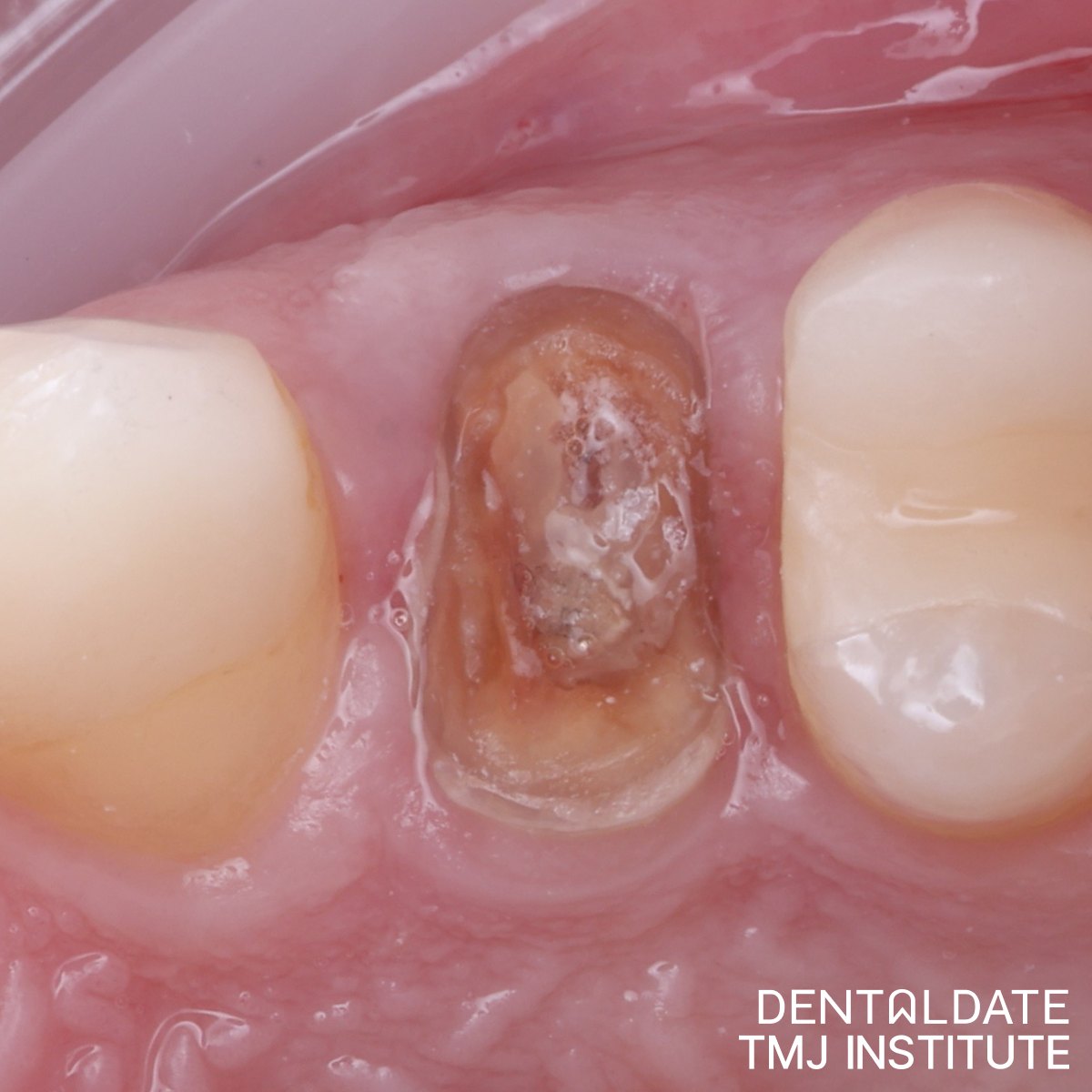
First Visit: A Painful Crowned Tooth
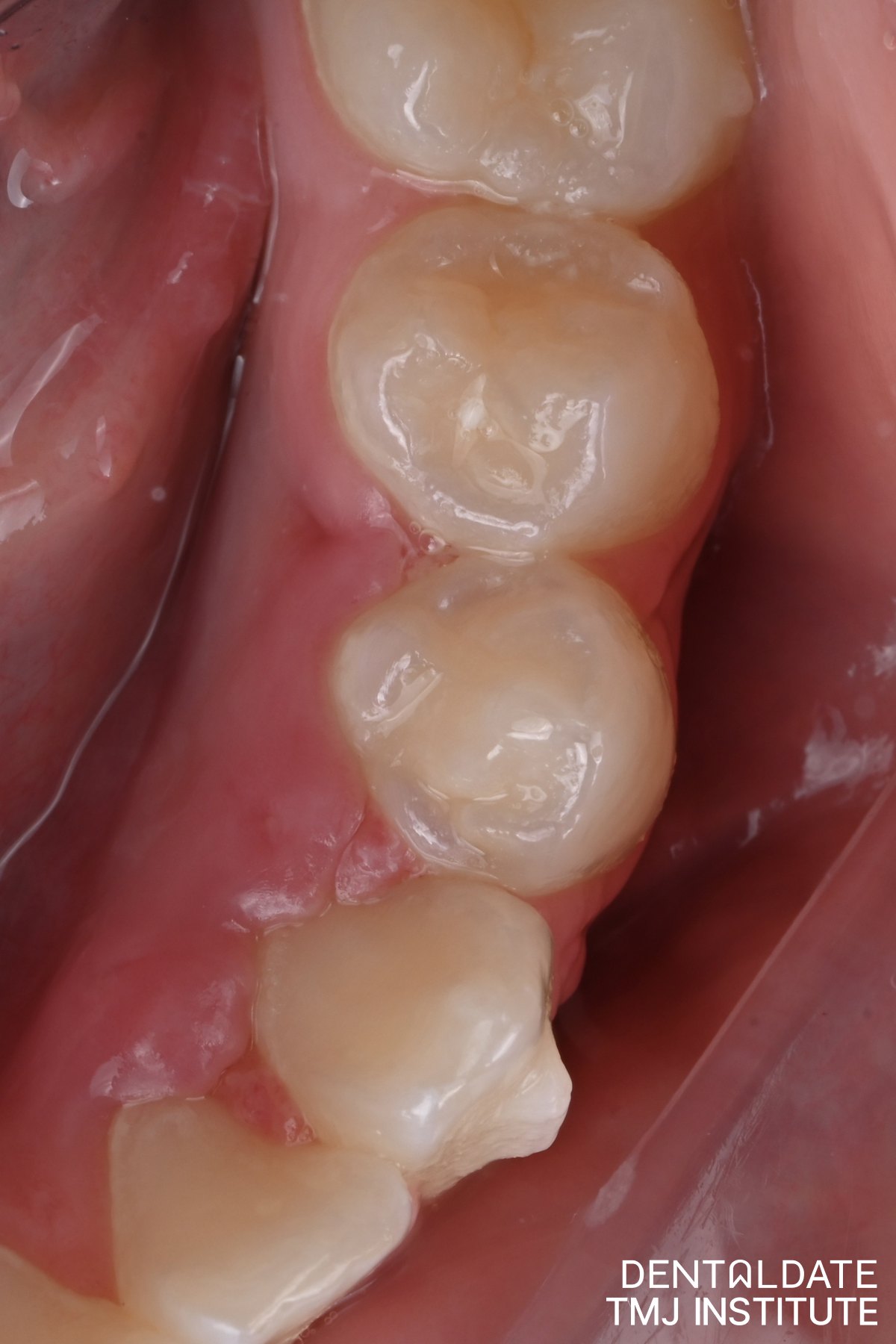
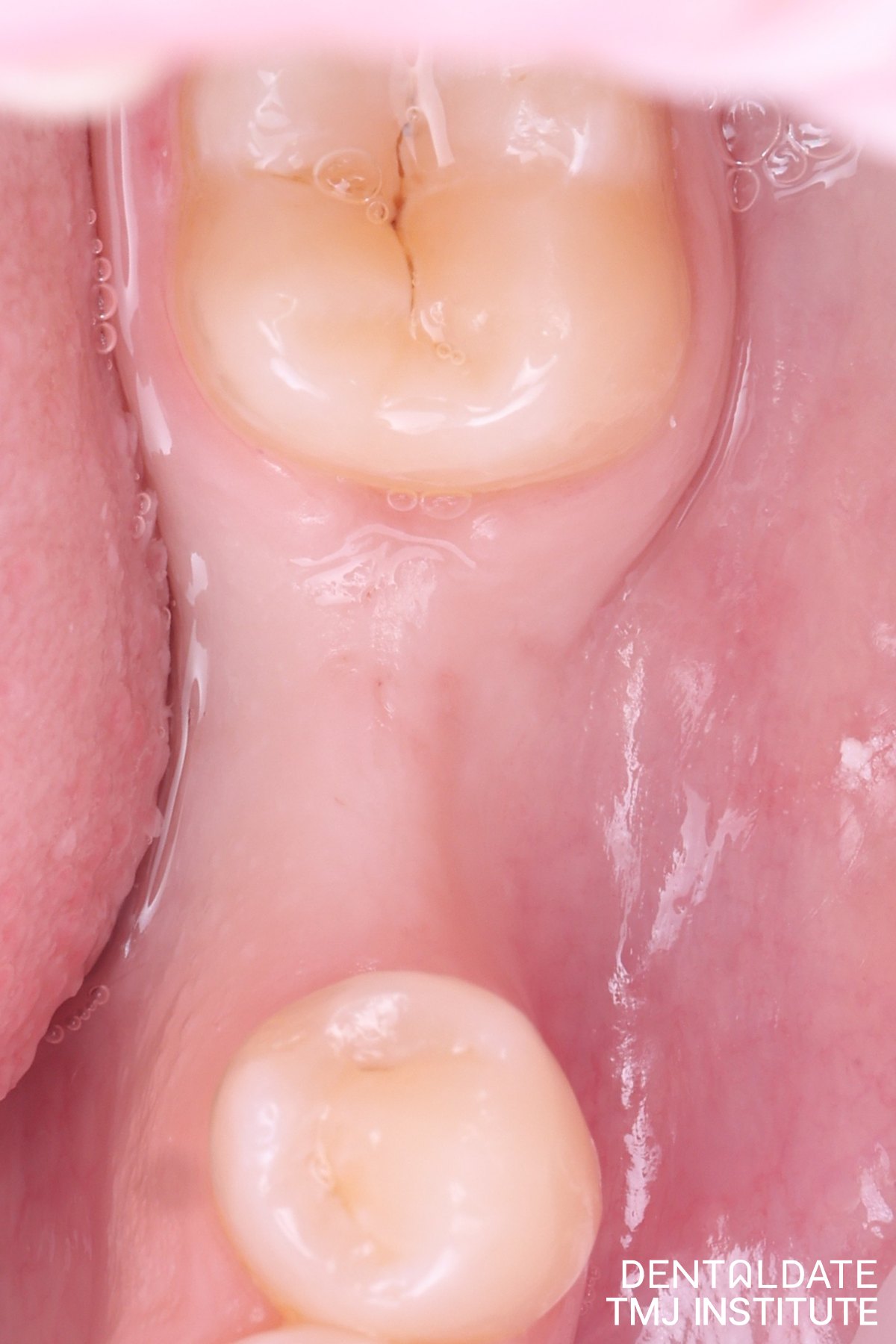
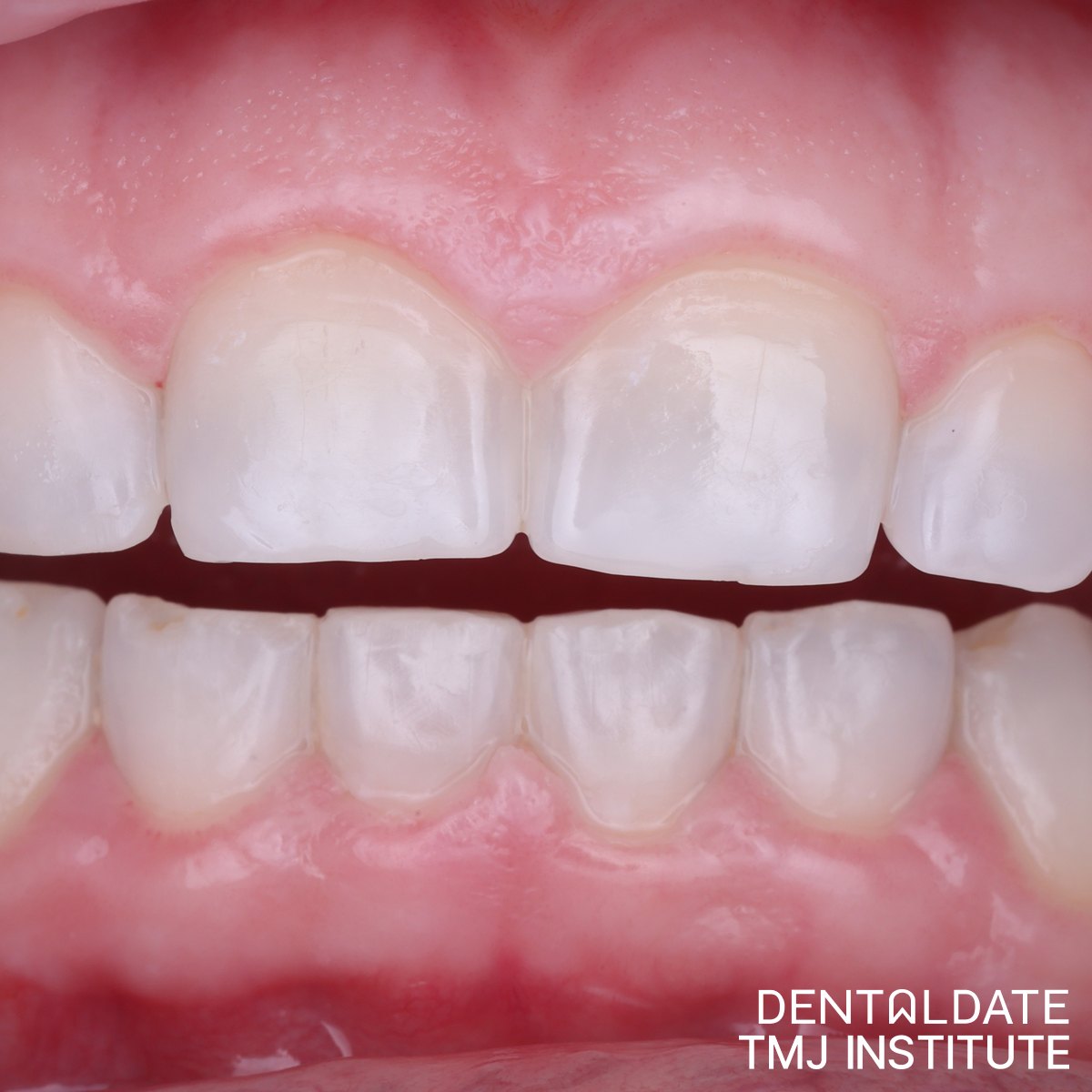
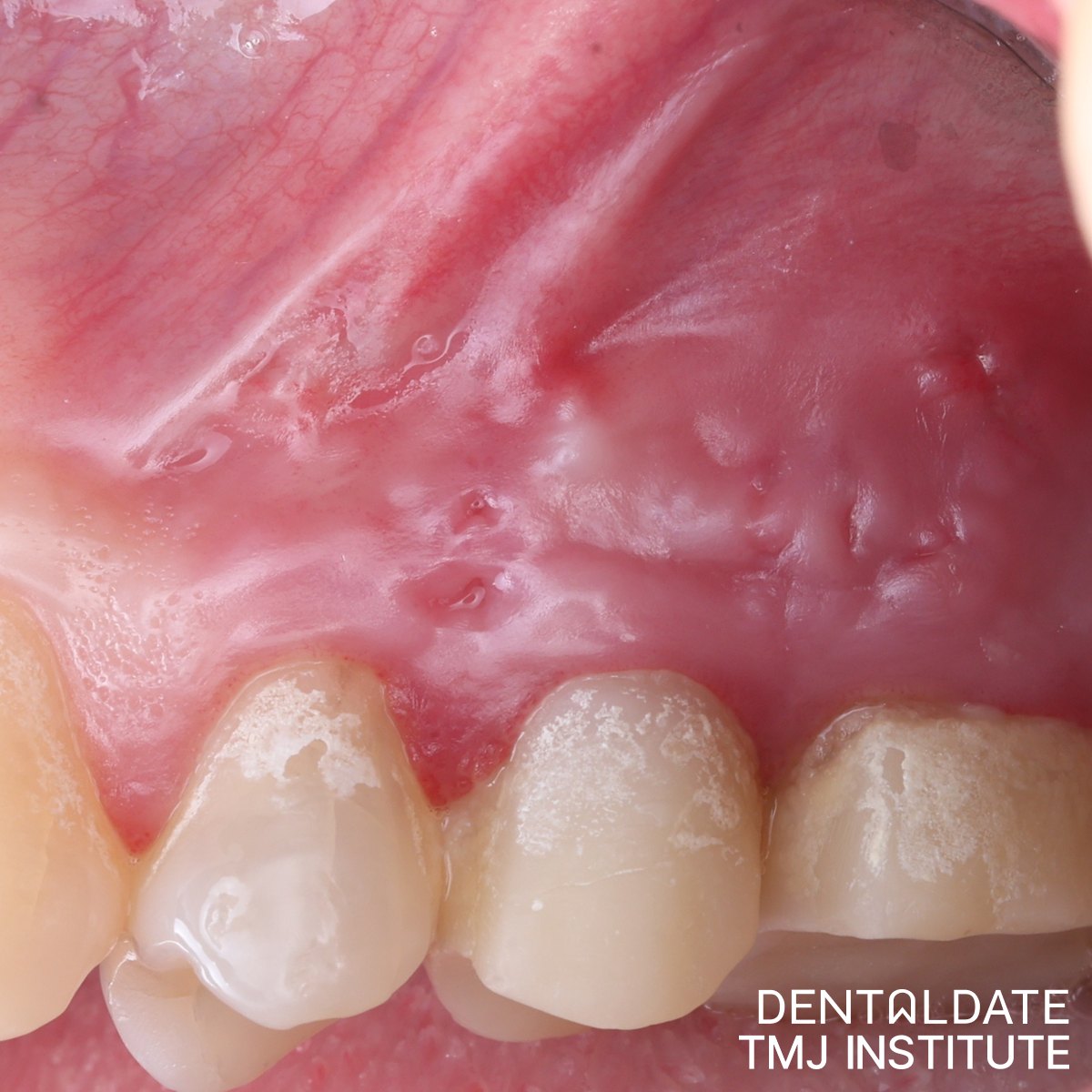
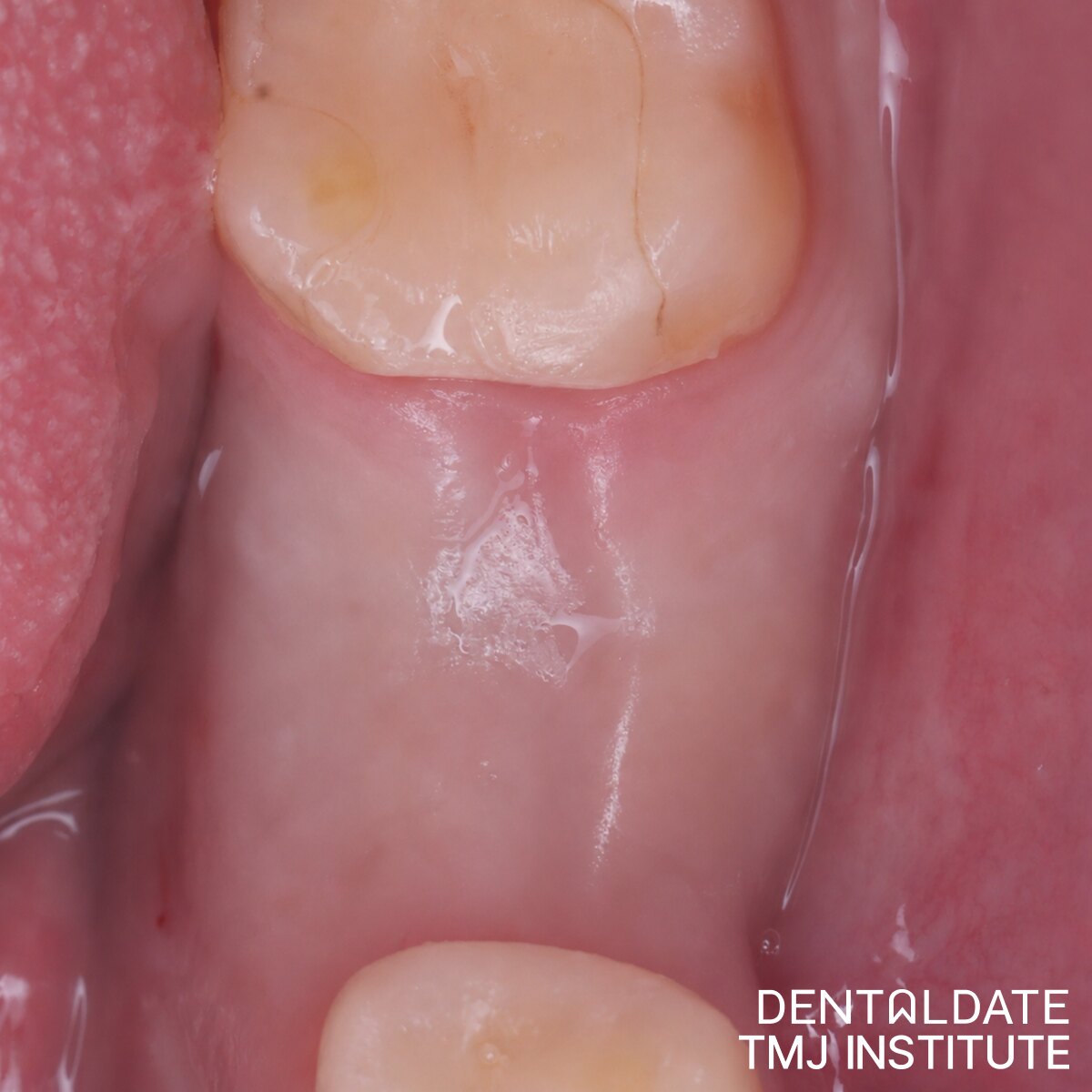
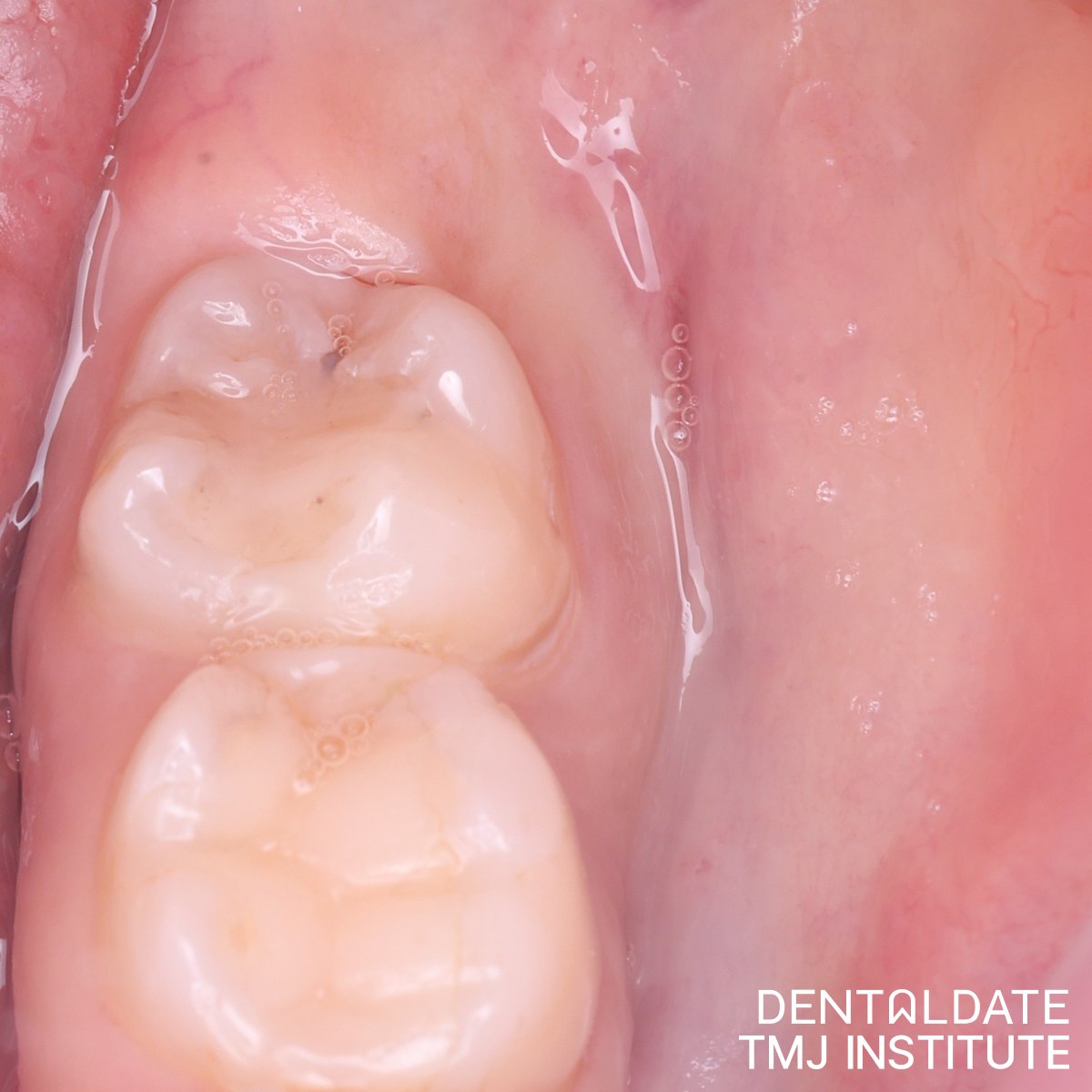
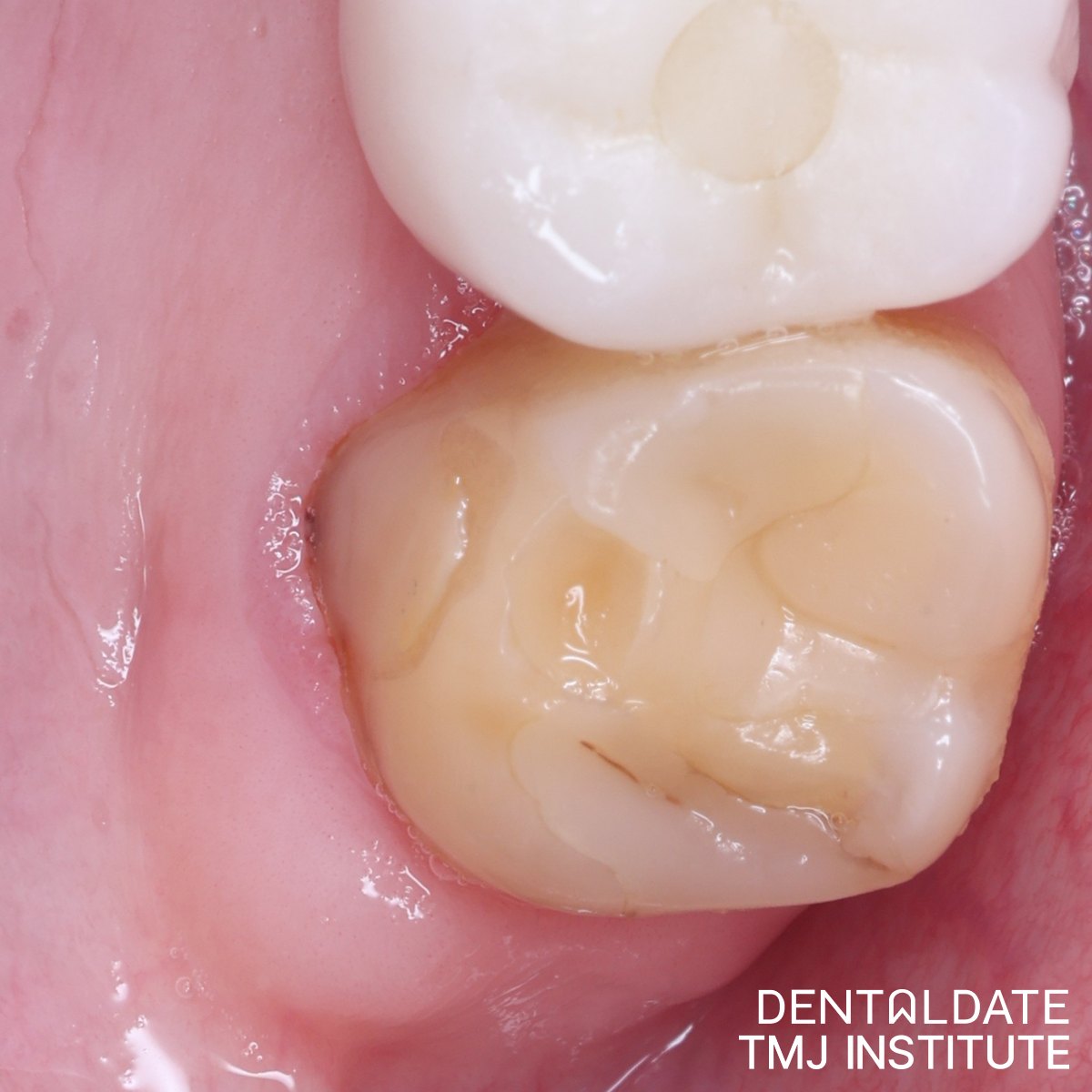
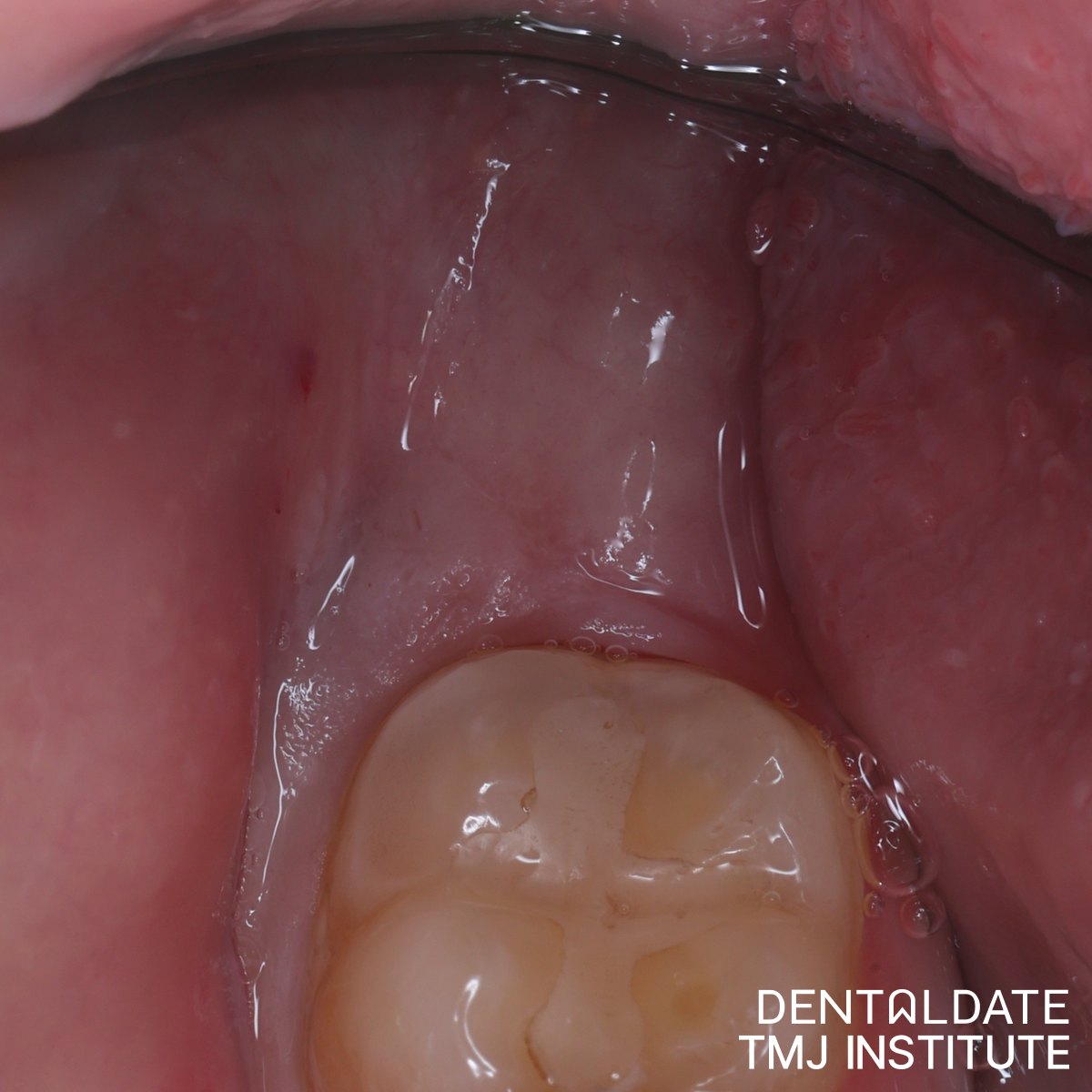
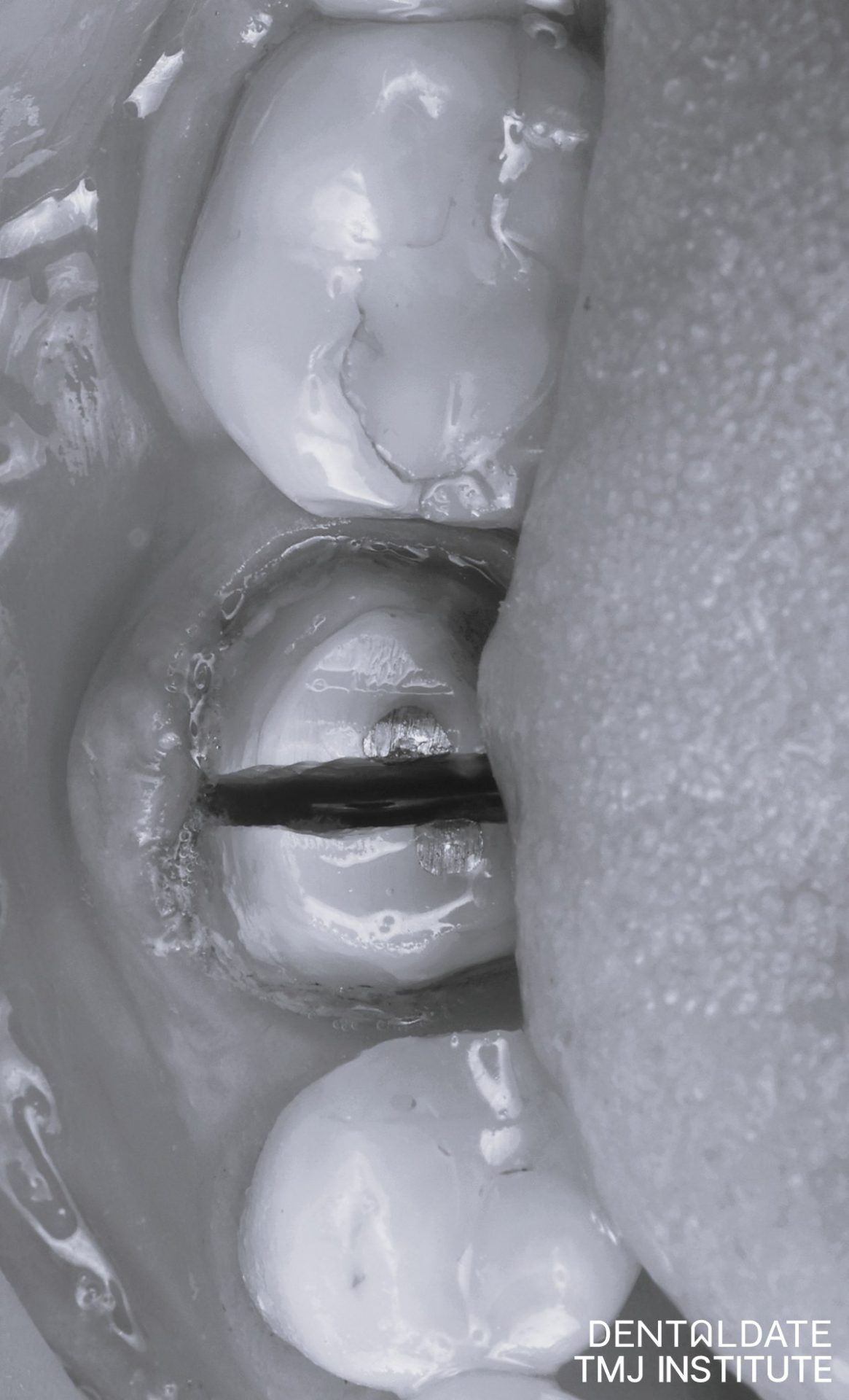
The painful tooth had a ceramic crown placed many years ago. From the outside, a crowned tooth can look perfectly intact even when something is wrong beneath it, so the examination relied on imaging. The photos show the initial situation and the tooth after the crown was removed.
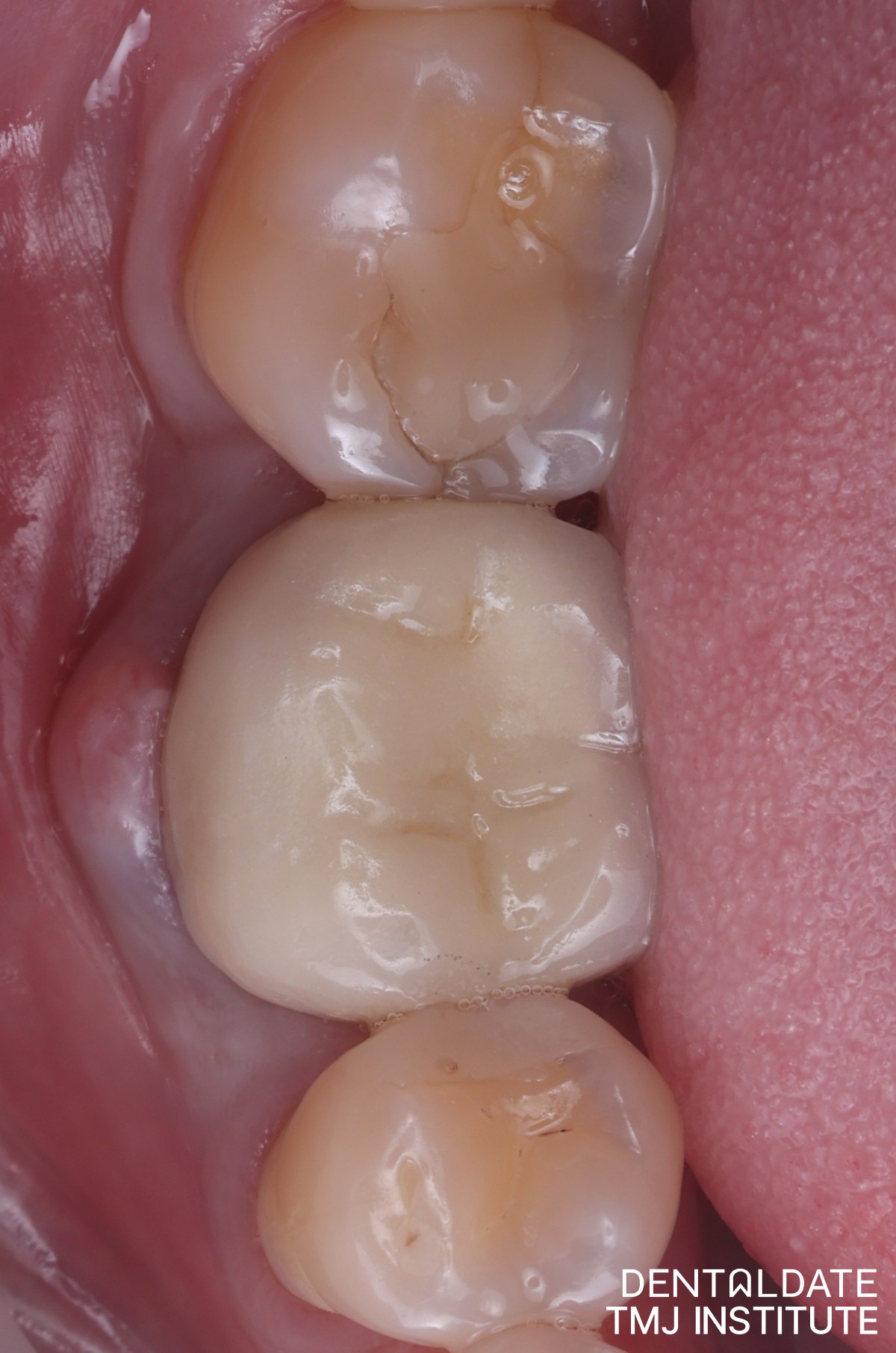
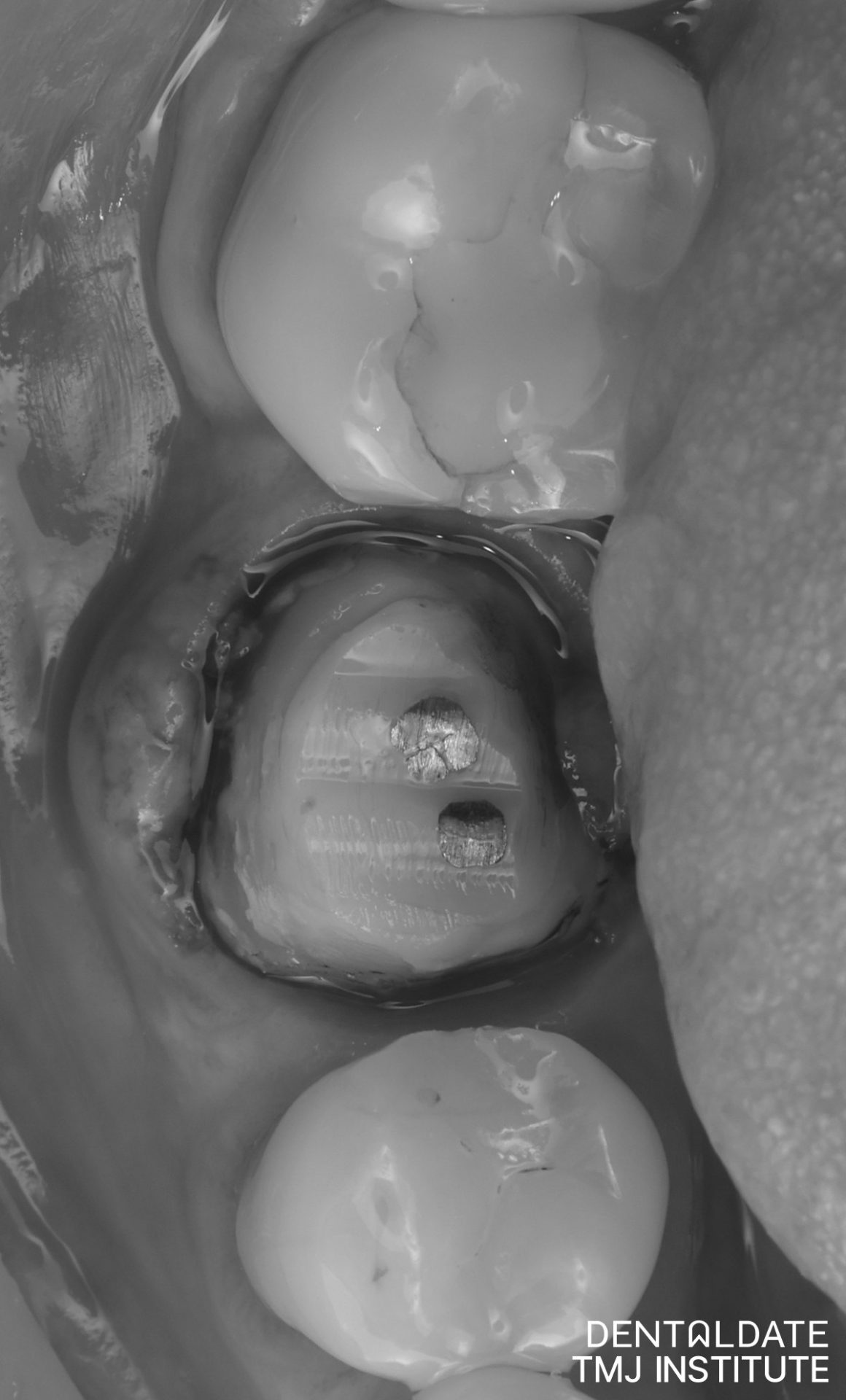
Confirming the Crack with Two Types of Imaging
The root crack was seen both on the periapical X-ray and on the CBCT scan. A periapical X-ray is a small, detailed two-dimensional image of one or two teeth, including the root tips and the bone around them. A CBCT scan adds the third dimension, showing the tooth from every side and helping to reveal cracks a flat image can miss. With both images pointing to the same finding, the decision was made to remove the tooth.
Ways to Replace a Tooth with a Cracked Root
Once a root crack is confirmed, the question moves from saving the tooth to replacing it. In general, the options include:
- an implant placed in the same visit as the extraction (immediate implantation);
- an implant placed after the socket has healed, sometimes with bone grafting first;
- a bridge, which uses the neighbouring teeth as supports and requires them to be prepared;
- a removable partial denture, usually considered when other options are not suitable.
Each of these has its place, and the choice depends on the bone, the gum, the neighbouring teeth and the patient's wishes.
Why Immediate Placement Is Preferred When Possible
Whenever possible, we aim to place the implant right after the tooth is removed. This shortens the rehabilitation time almost by half and helps achieve a more natural and esthetic result. Whether it is possible depends on the bone, which is assessed after the extraction. If the walls of the socket are damaged or the bone is too thin, the surgeon may prefer to let the area heal first and place the implant later.
The Treatment Sequence
The appointment followed these steps:
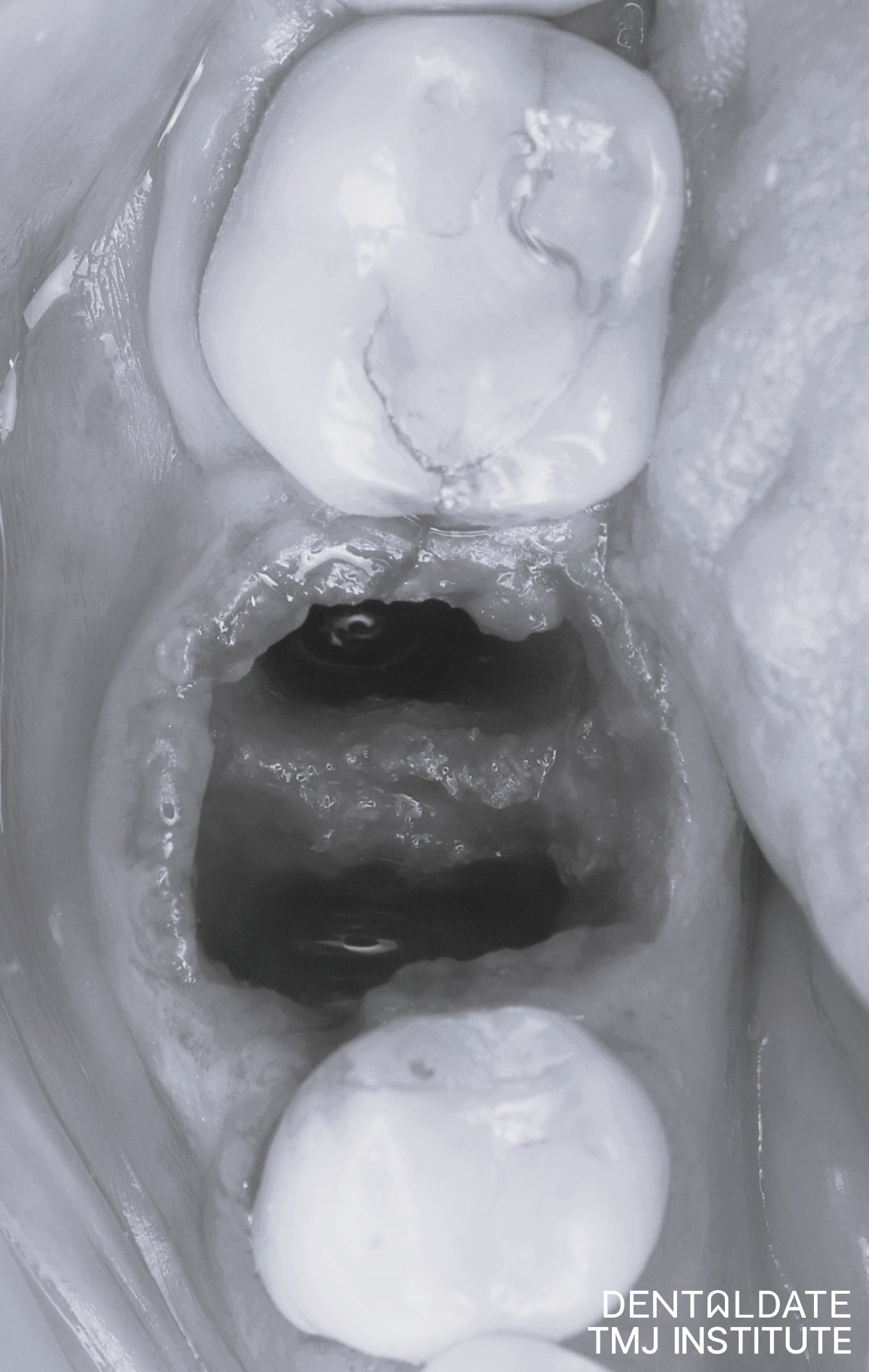
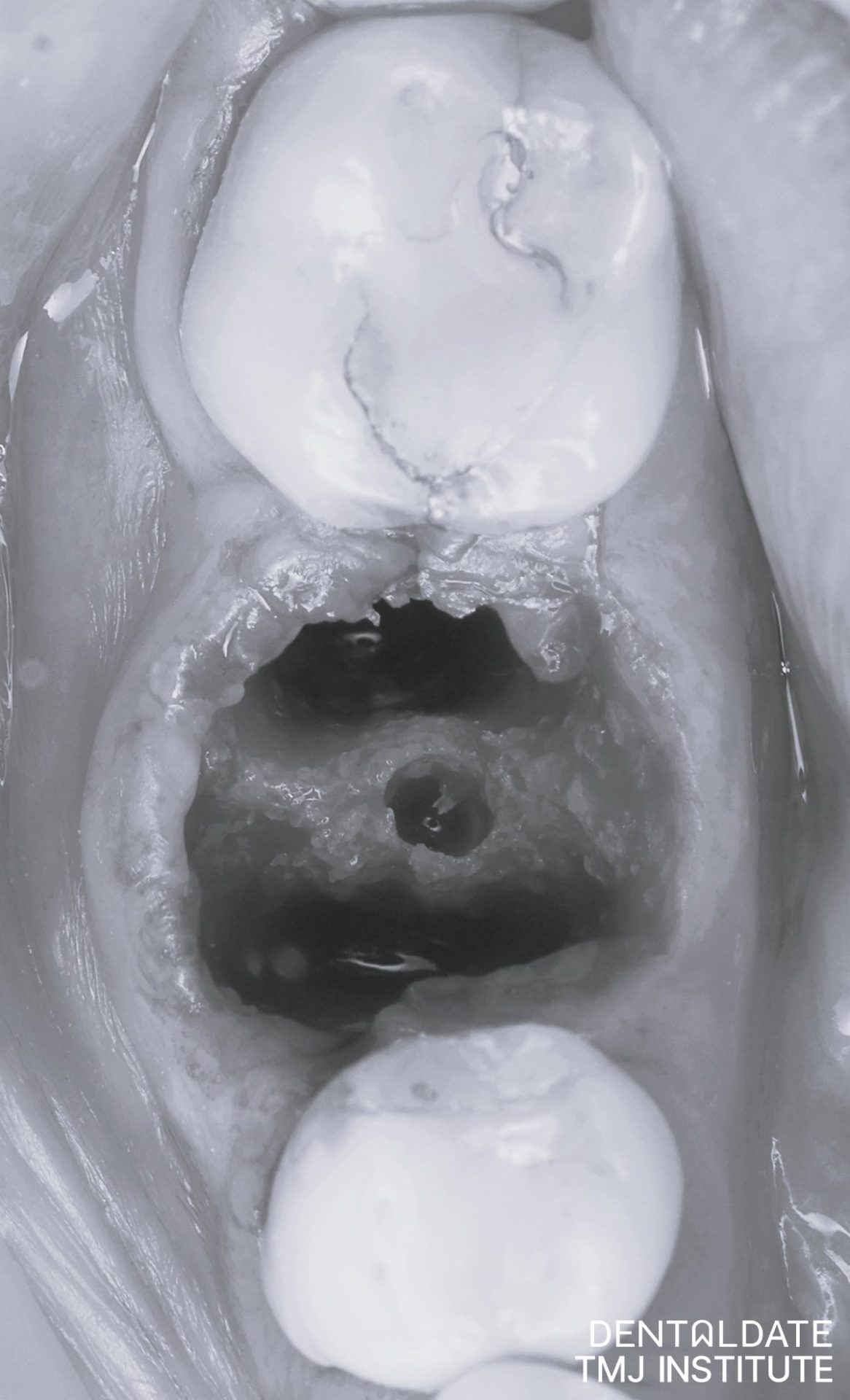
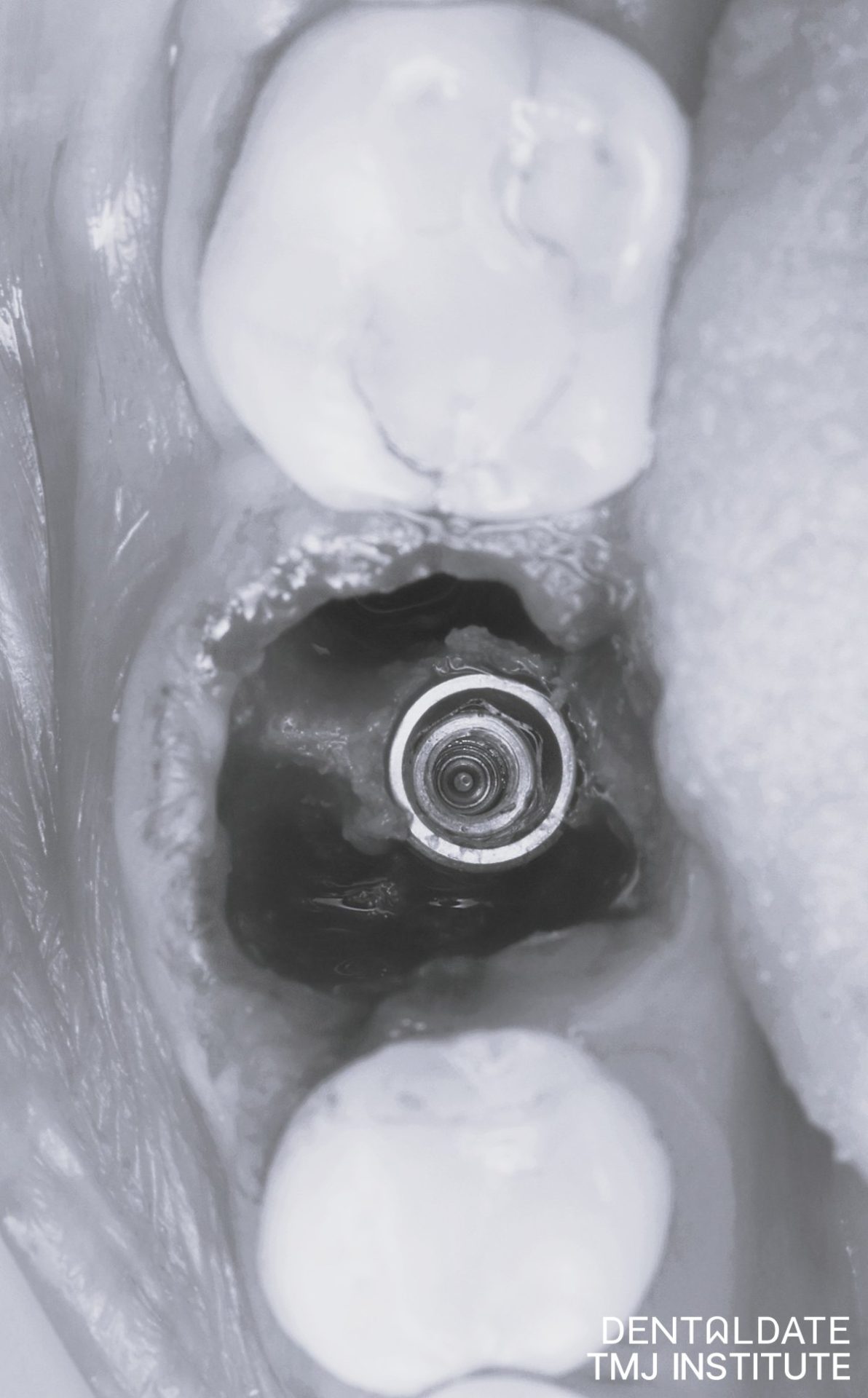
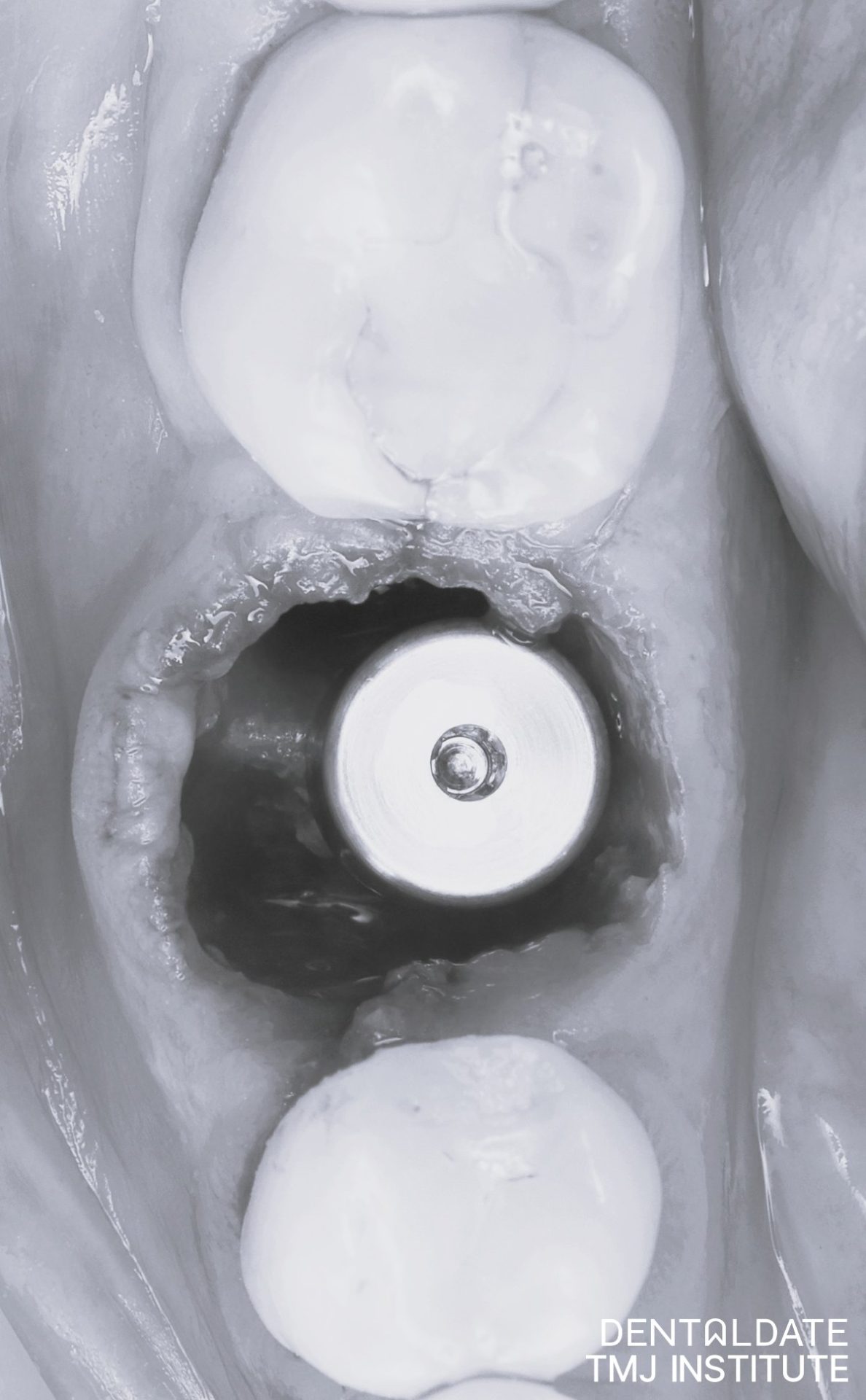
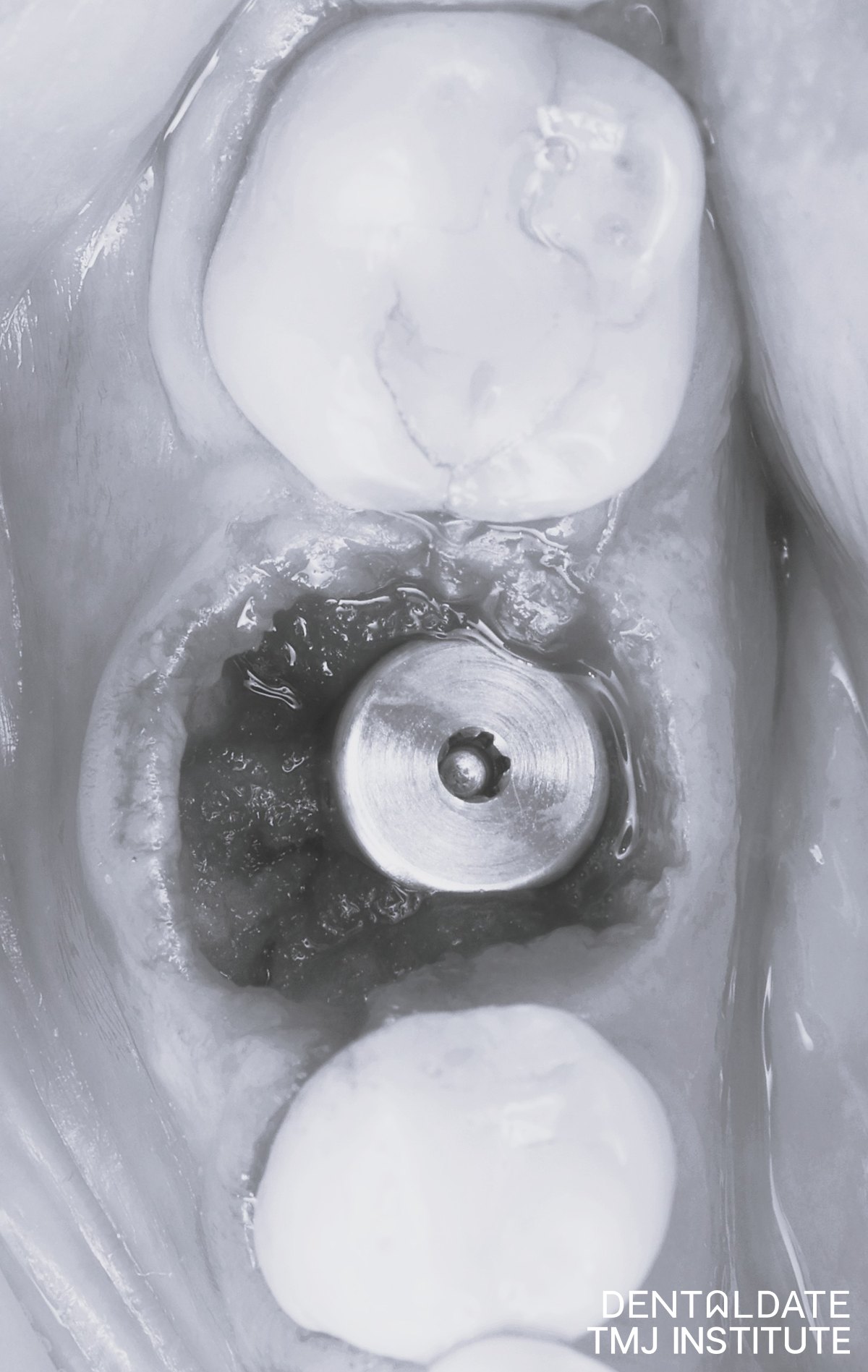
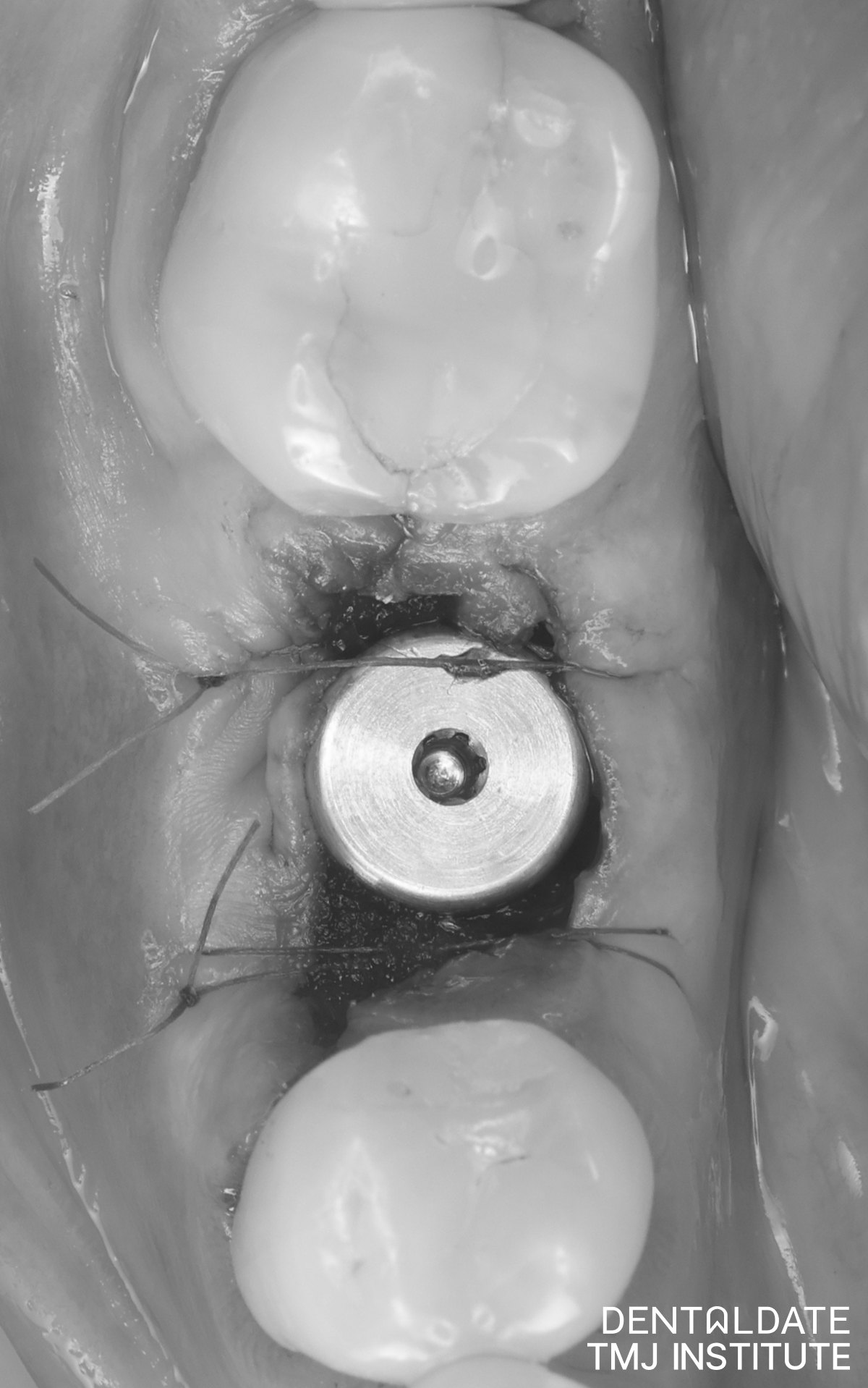
- The tooth was removed atraumatically, which means with care to preserve the surrounding bone and gum.
- The bone was assessed: its volume was sufficient and its quality excellent.
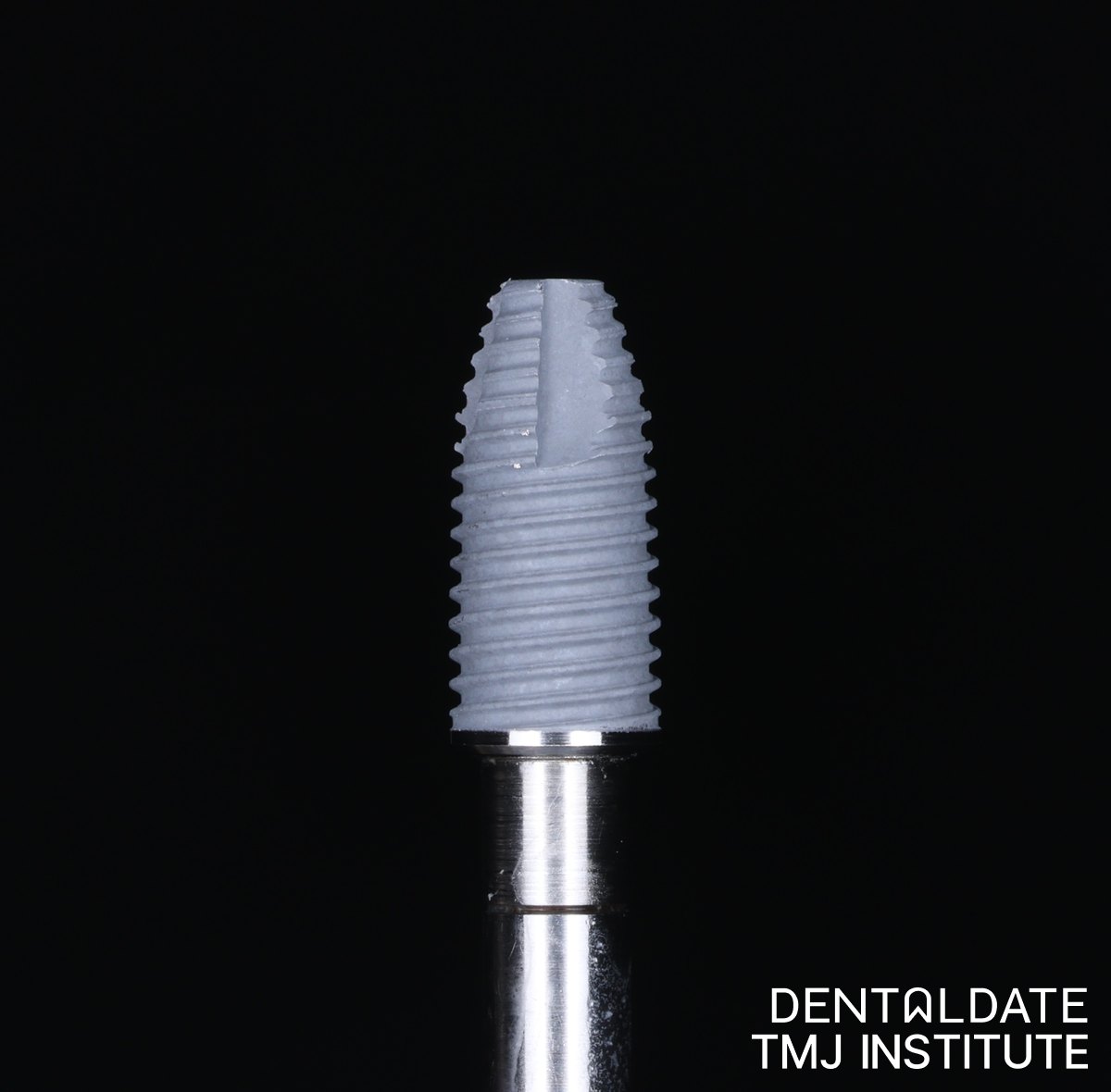
- The implant was placed immediately into the socket.
- The area was closed with sutures.
The whole procedure, including the extraction and the implant placement, took no more than one hour.
Signs a Crowned Tooth Needs Attention
A crown protects a tooth, but it does not make the root underneath immune to problems. It is worth seeing a dentist if a crowned tooth shows any of the following:
- pain or tenderness when biting or chewing;
- sensitivity that lingers after hot or cold food and drinks;
- swelling, redness or a small bump on the gum next to the tooth;
- a bad taste or smell around the crown;
- a crown that feels loose or a change in how the teeth meet.
These signs have many possible causes, from gum problems to a crack in the root, and imaging is usually needed to tell them apart.
The Next Three Months
One week later, the sutures were removed, and the implant entered the 3-month integration period. After that, a permanent zirconia crown is made. The surgery is Dr. Tikhon's part of the treatment, and the zirconia crown is then made by a prosthodontist.
During integration, the usual advice is to keep the area very clean, avoid heavy chewing on that side and not to smoke. Brushing and cleaning between the teeth remain important throughout, because healthy gums matter around an implant just as much as around natural teeth.
Talk to Us About a Painful Crowned Tooth
Pain in a tooth that has worn a crown for years should not be ignored, even if the crown itself looks fine. At DentalDate, a painful crowned tooth is examined with X-ray and 3D imaging, and if it cannot be kept, the implant and the crown are planned step by step. Book a consultation to find out what is causing the pain and which protocol fits your situation.