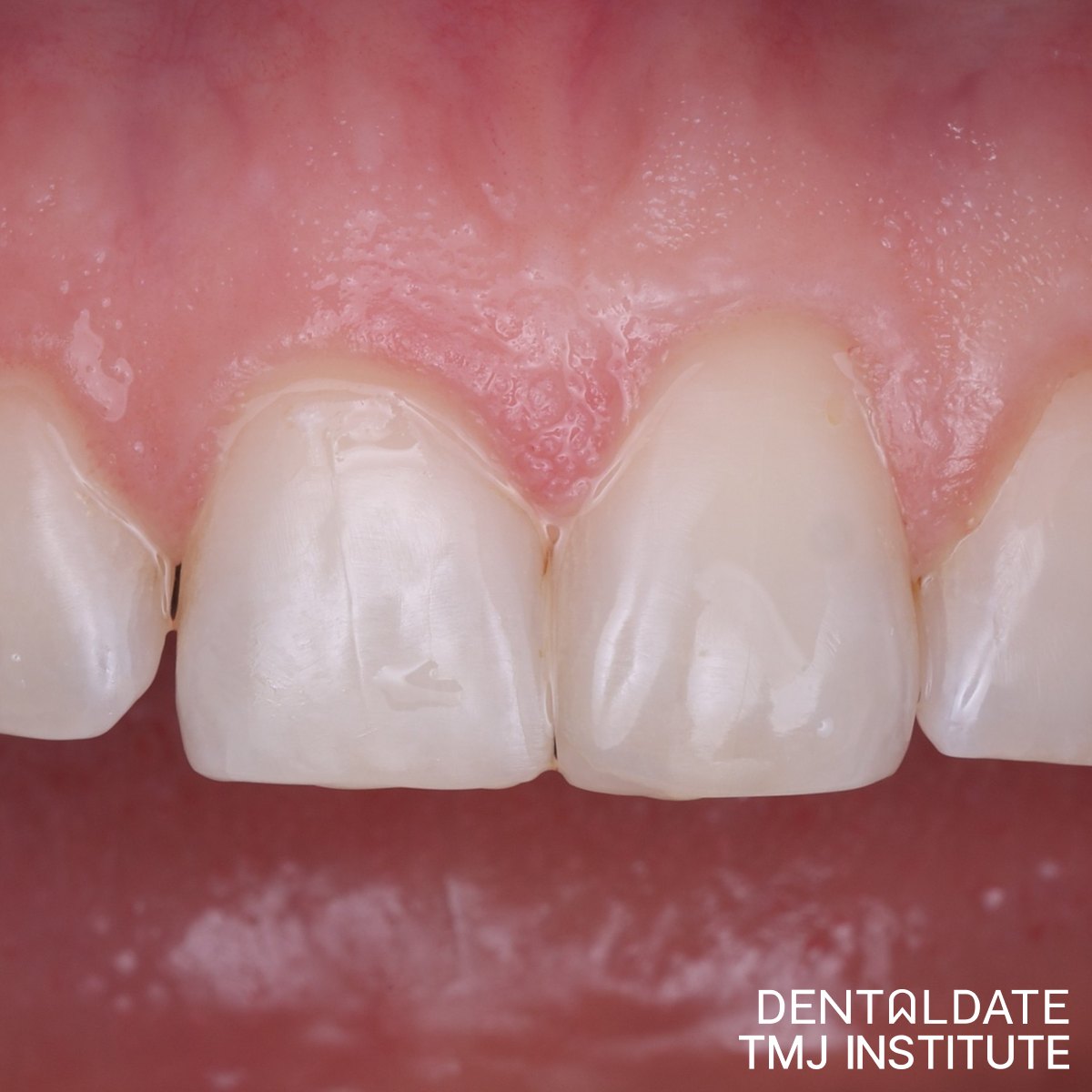
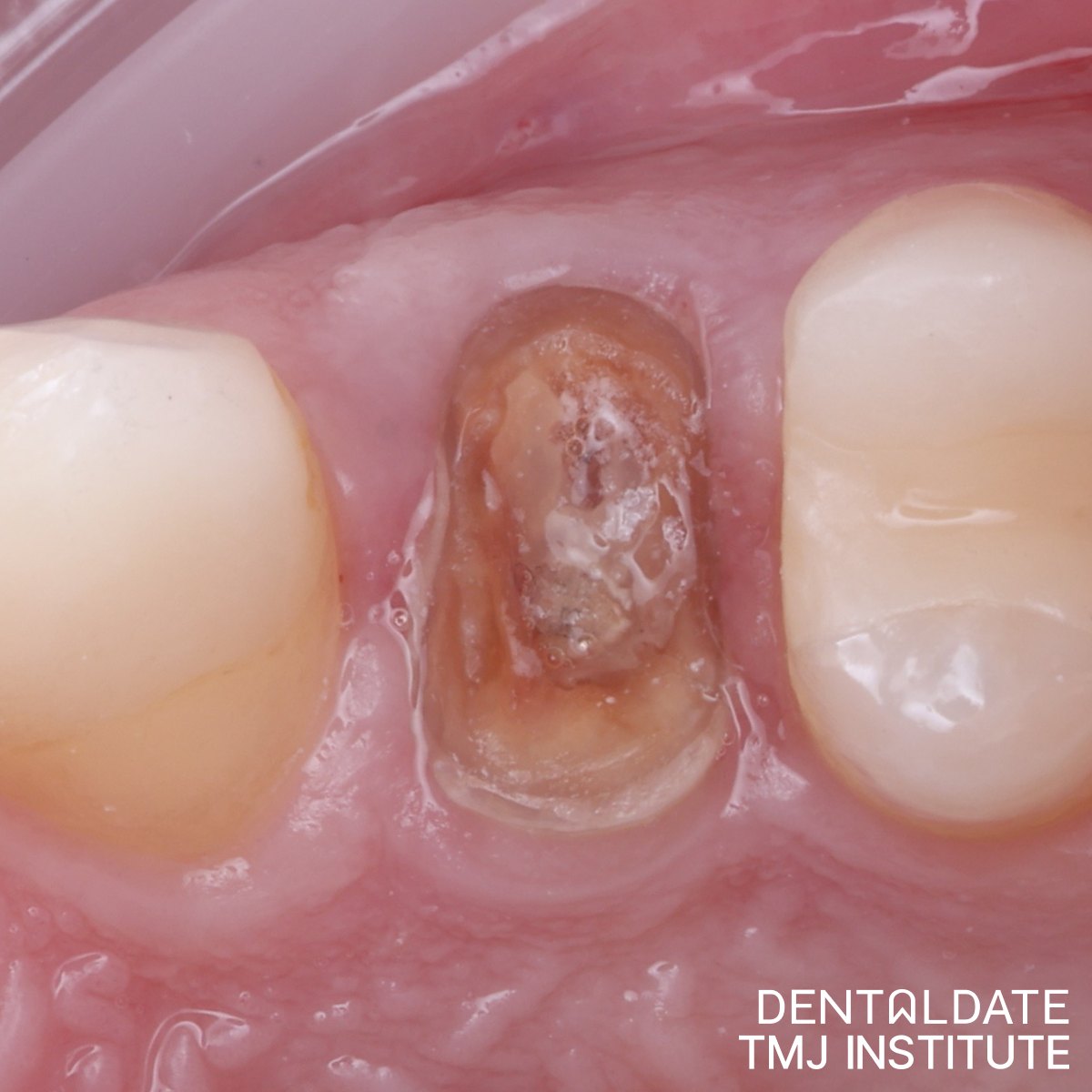
Orthodontics First, Implant Second
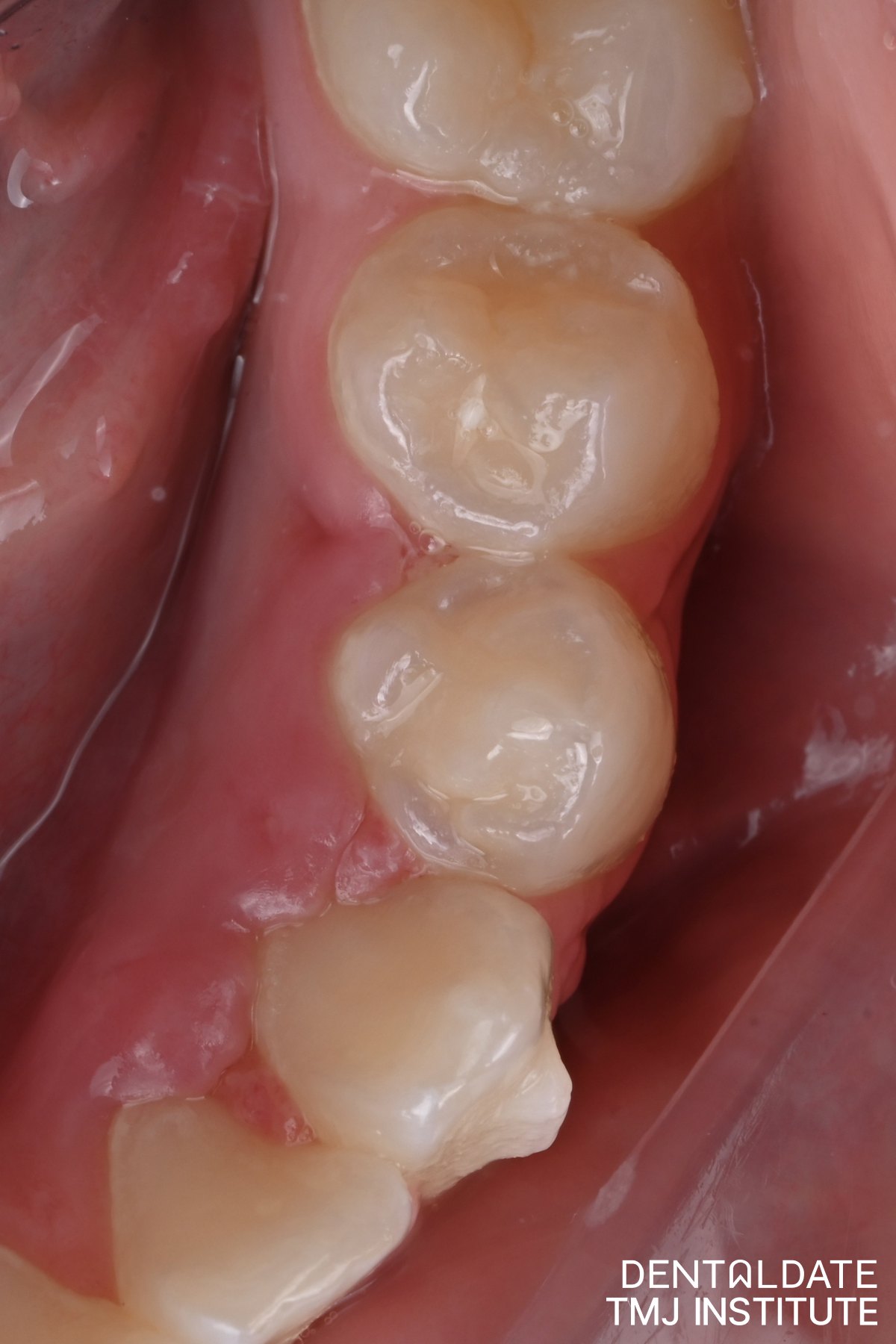
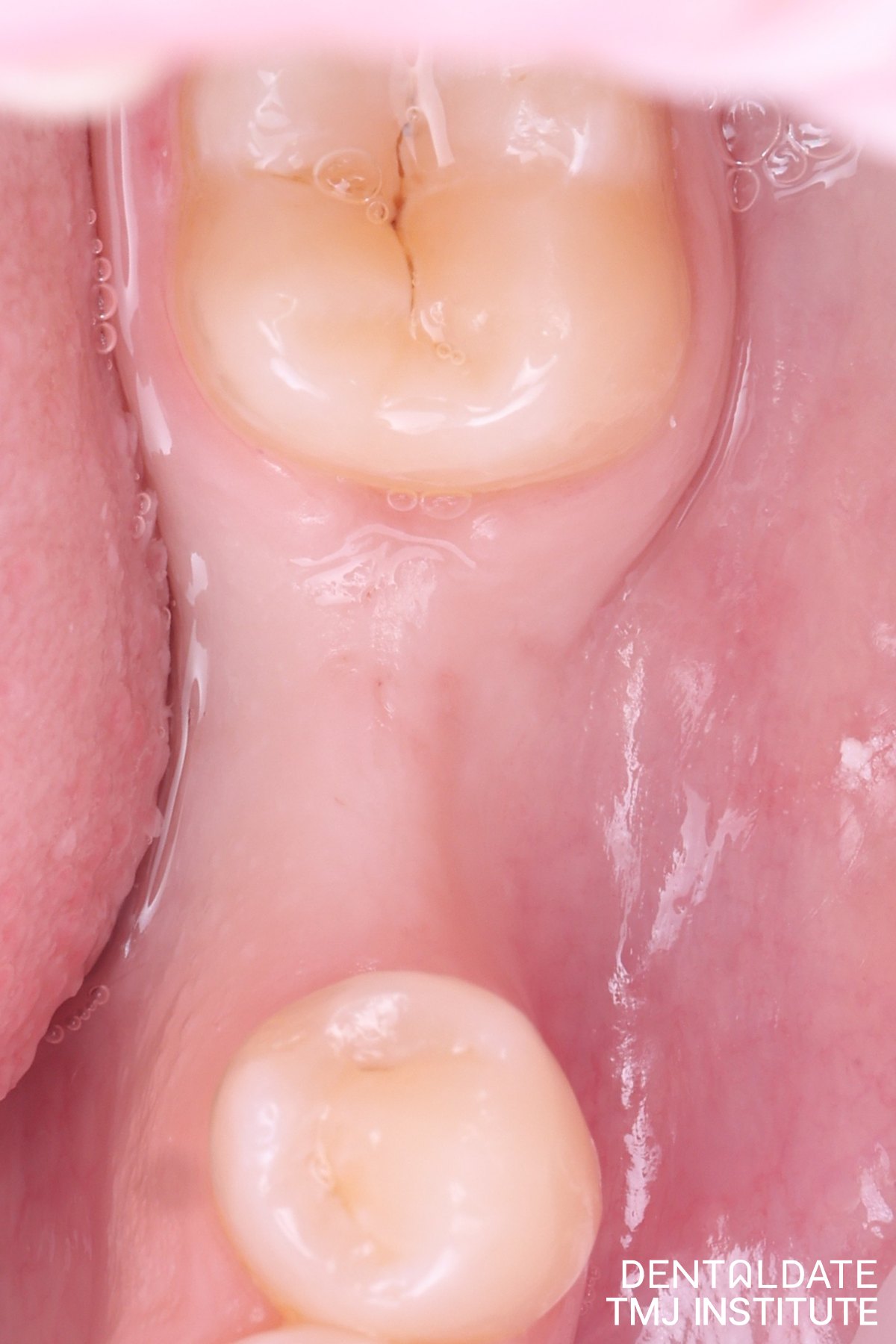
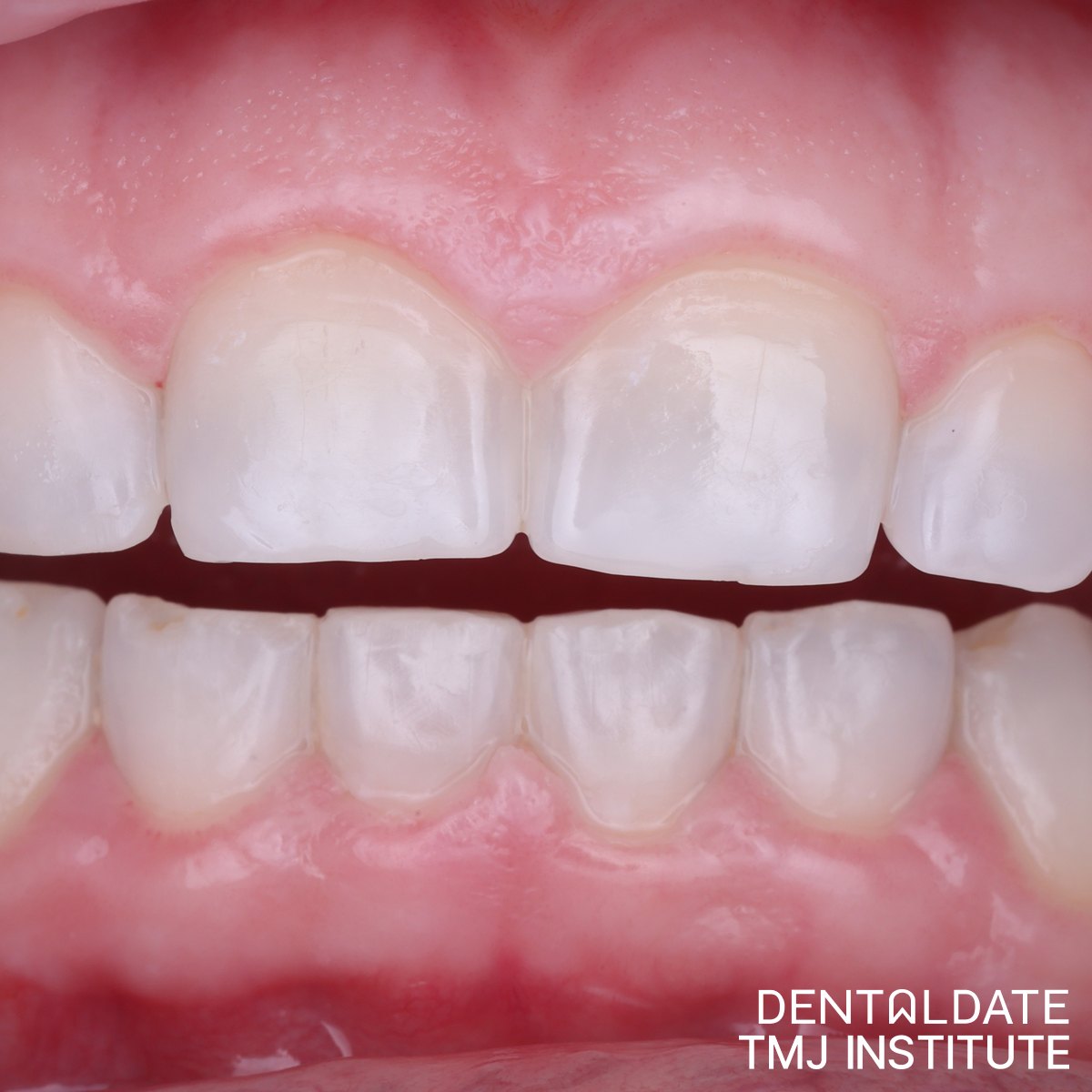
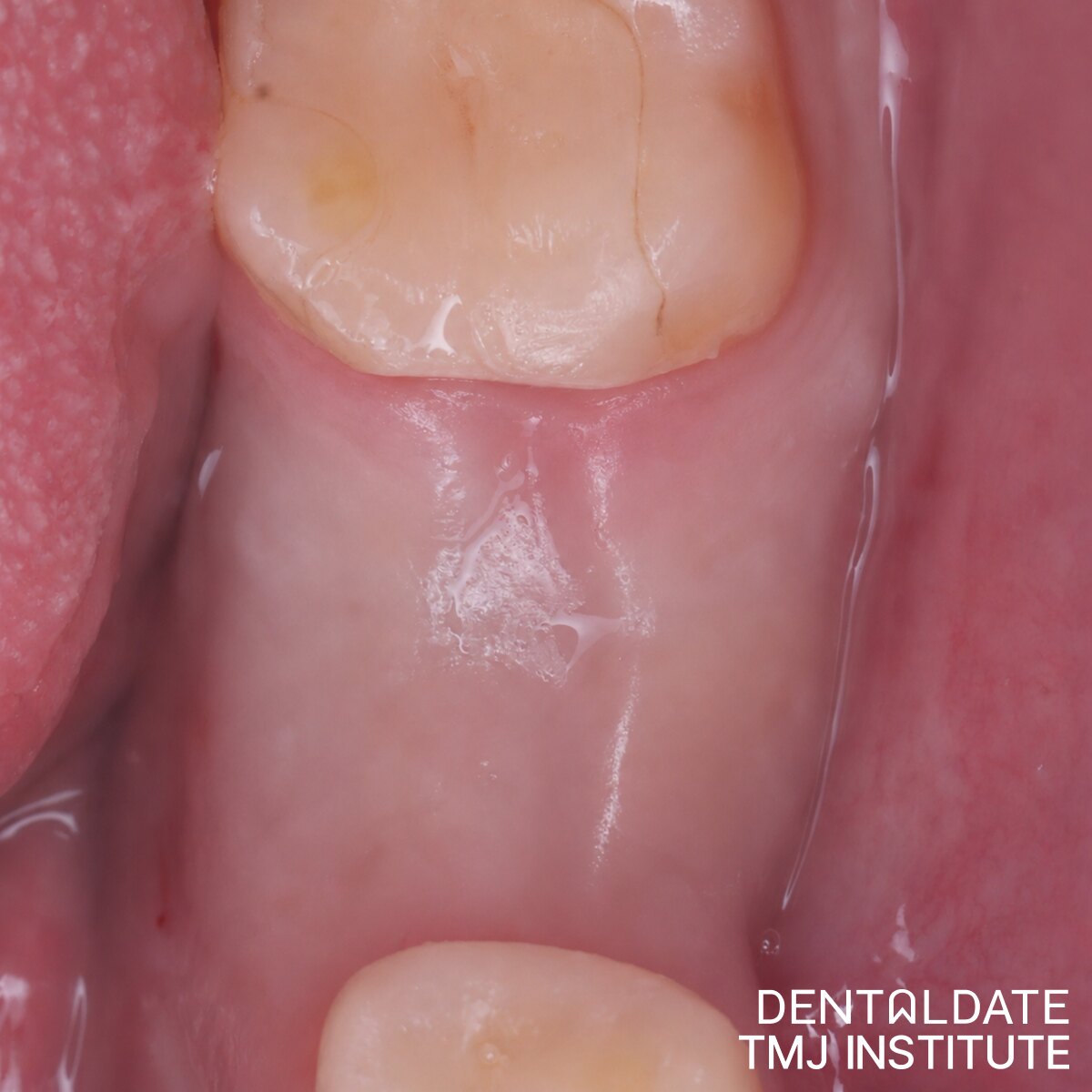
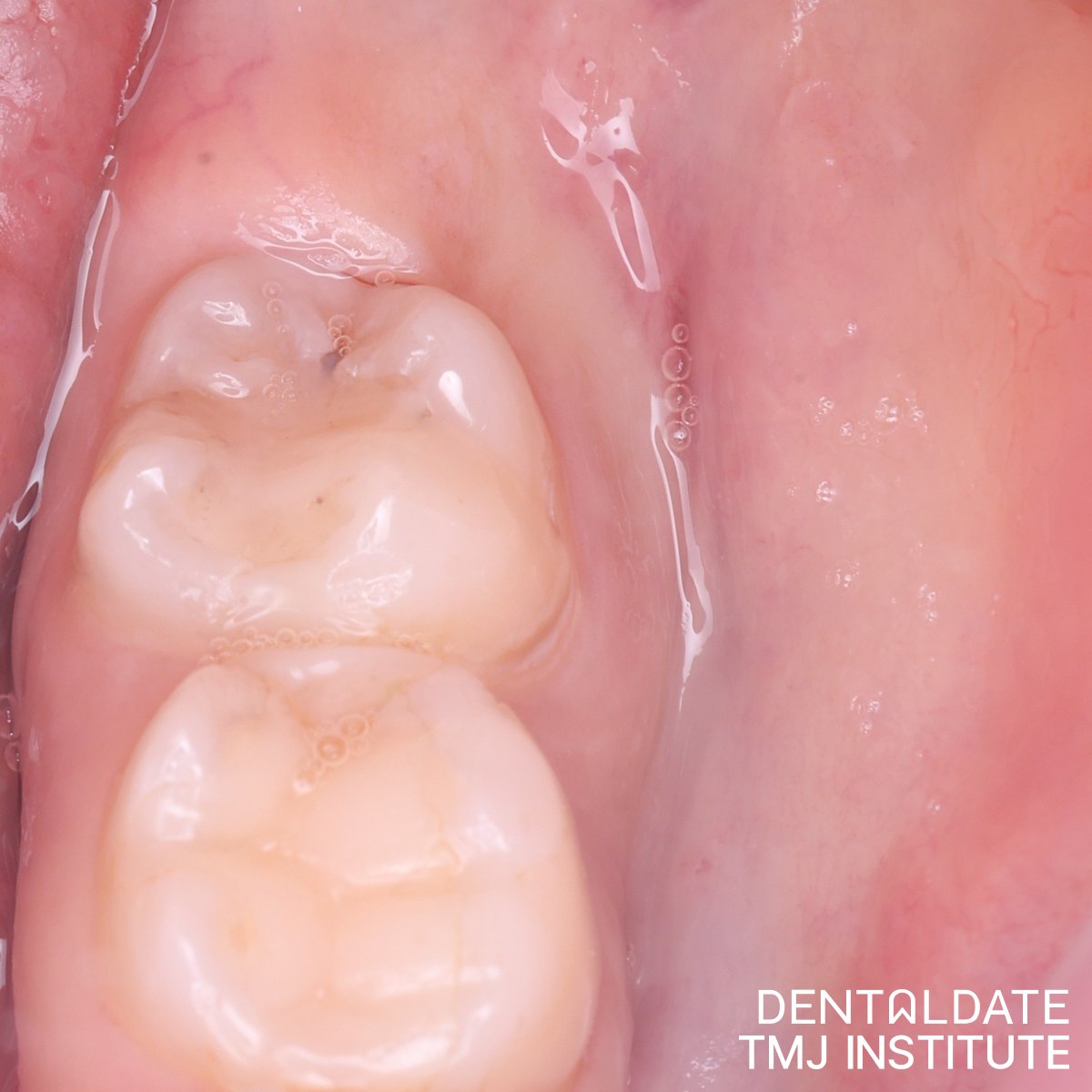
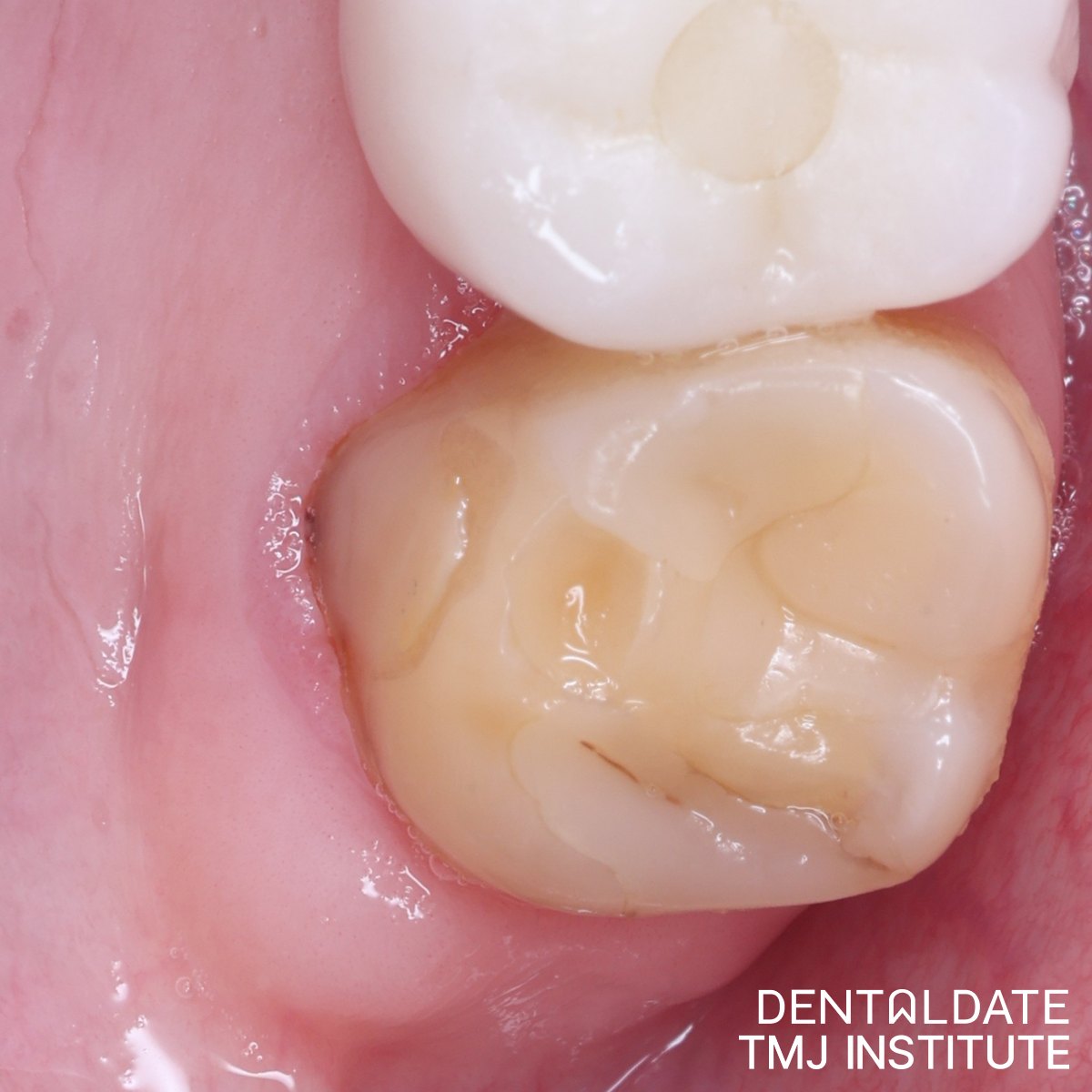
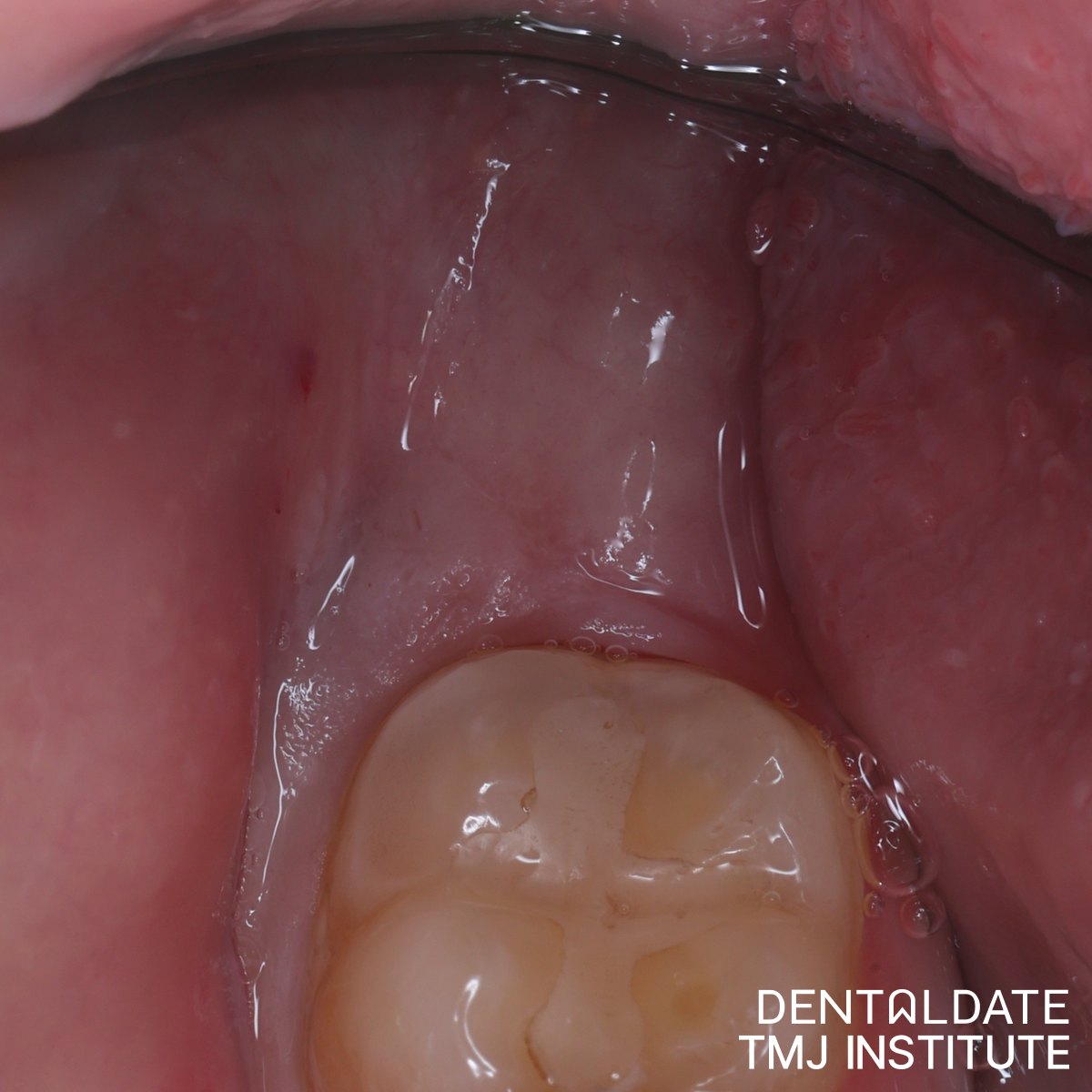
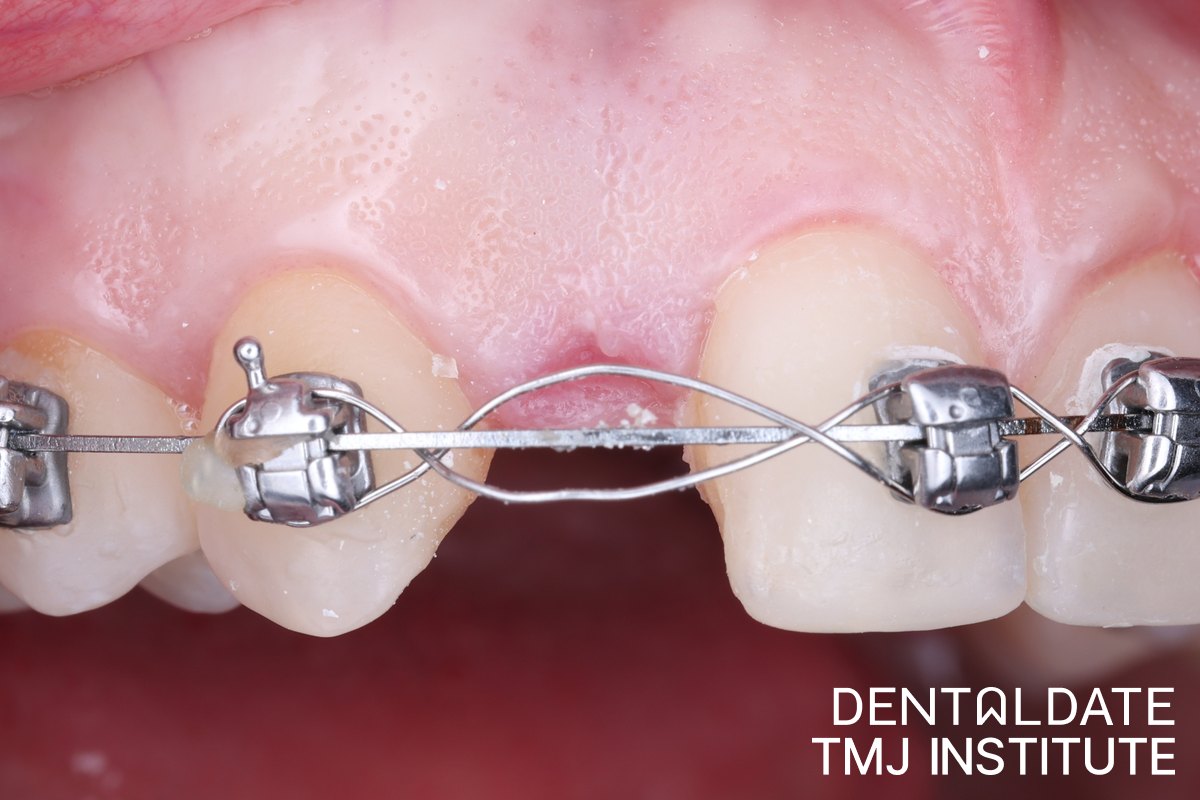
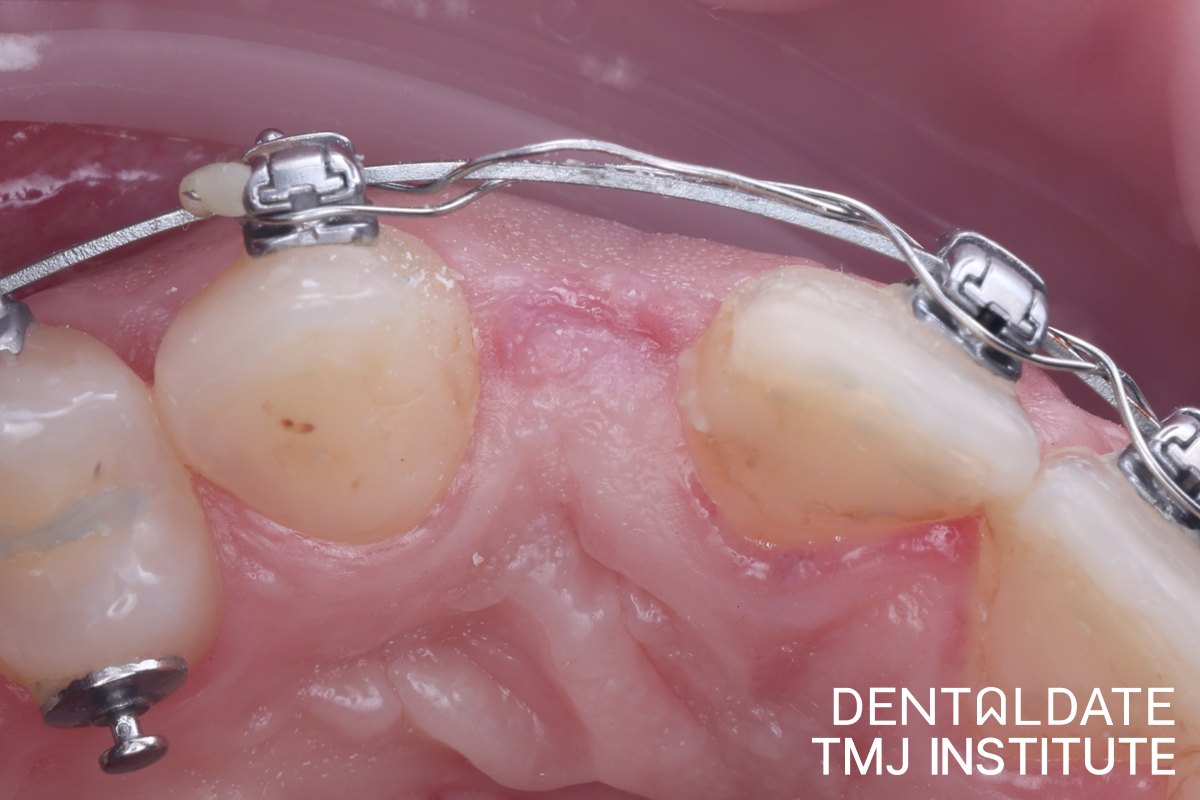
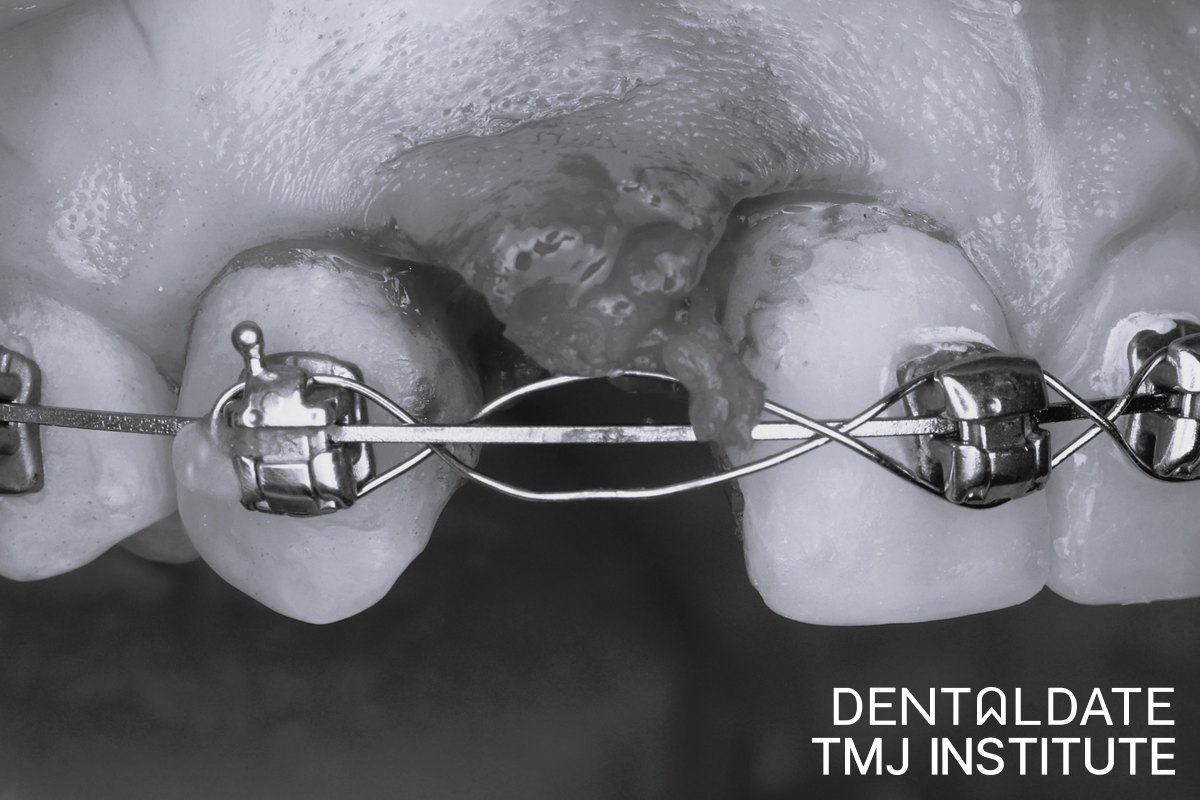
The upper front tooth was missing from the very beginning of orthodontic treatment. The implant was not placed straight away; it was planned for the later stage, once the braces had done their main work. In the meantime, a temporary crown attached to the braces kept the smile complete.
Why Timing Matters
The implant is usually planned for the final stage of orthodontic treatment, several months before the braces are removed. By then the teeth are already in their planned positions, and the space for the implant is set. This is exactly how it was done in this case.
Unlike a natural tooth, an implant cannot be moved by braces once it has integrated with the bone. If it were placed too early, the neighbouring teeth might still shift into positions that no longer suit it. Coordinating the orthodontic and surgical plans avoids this problem.
Filling a Gap While Wearing Braces
A missing front tooth during orthodontic treatment is a common concern for patients. In general, the gap can be managed in several ways:
- a temporary tooth attached to the braces, as in this case;
- a tooth-shaped filler built into clear aligners;
- a removable retainer-style appliance carrying a false tooth;
- leaving the space open for a short period, if appearance is not a concern.
The choice depends on the type of orthodontic appliance, the stage of treatment and the patient's priorities.
Surgery Day
The visit followed a clear sequence:
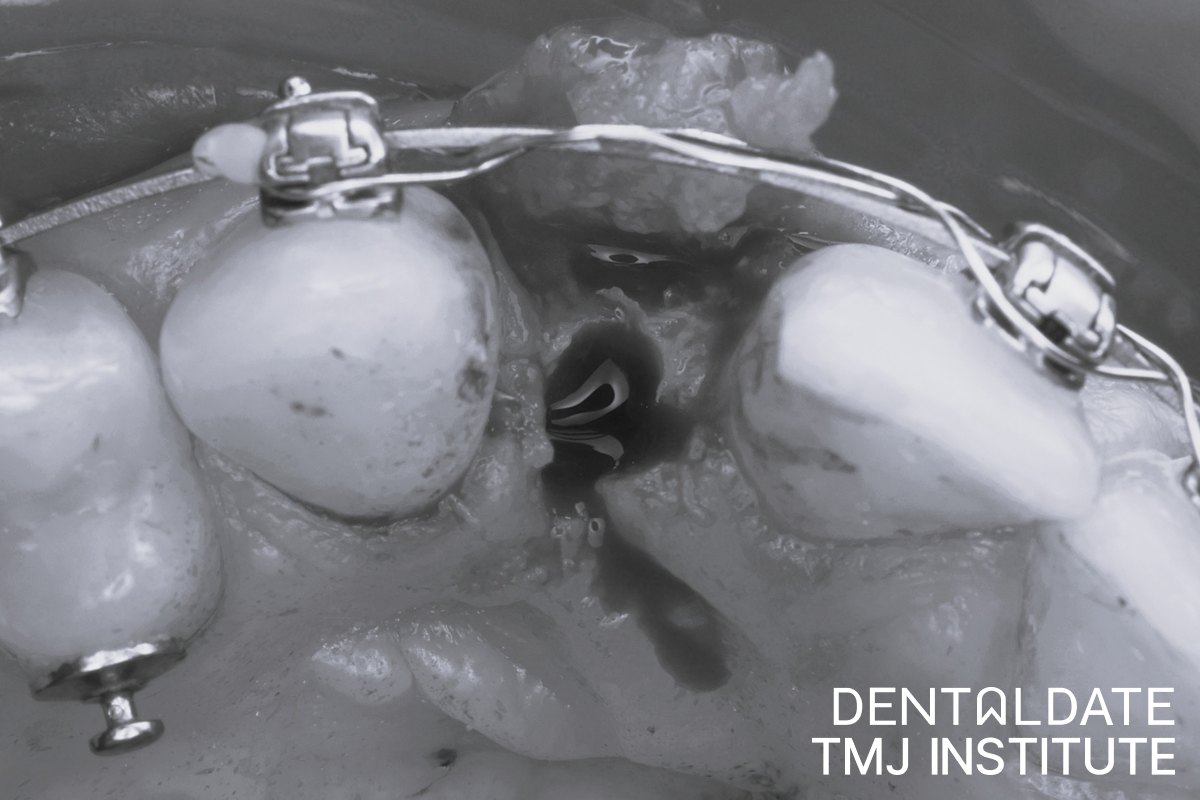
- The temporary crown attached to the braces was removed.
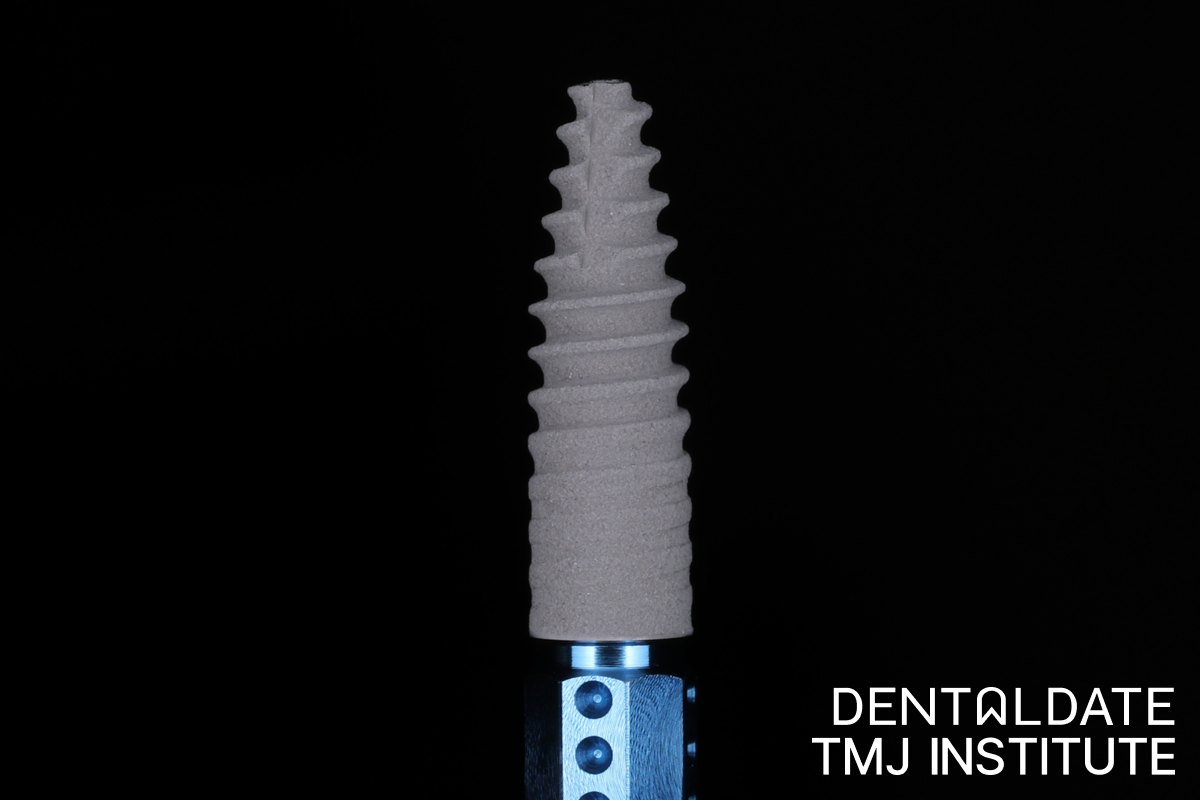
- The implant was placed.
- A new provisional tooth, prepared in advance, was fixed onto the implant (immediate loading).
- The patient left the clinic with a complete smile on the same day.
The whole procedure, from anesthesia to fixing the temporary crown on the implant, took no more than one hour.
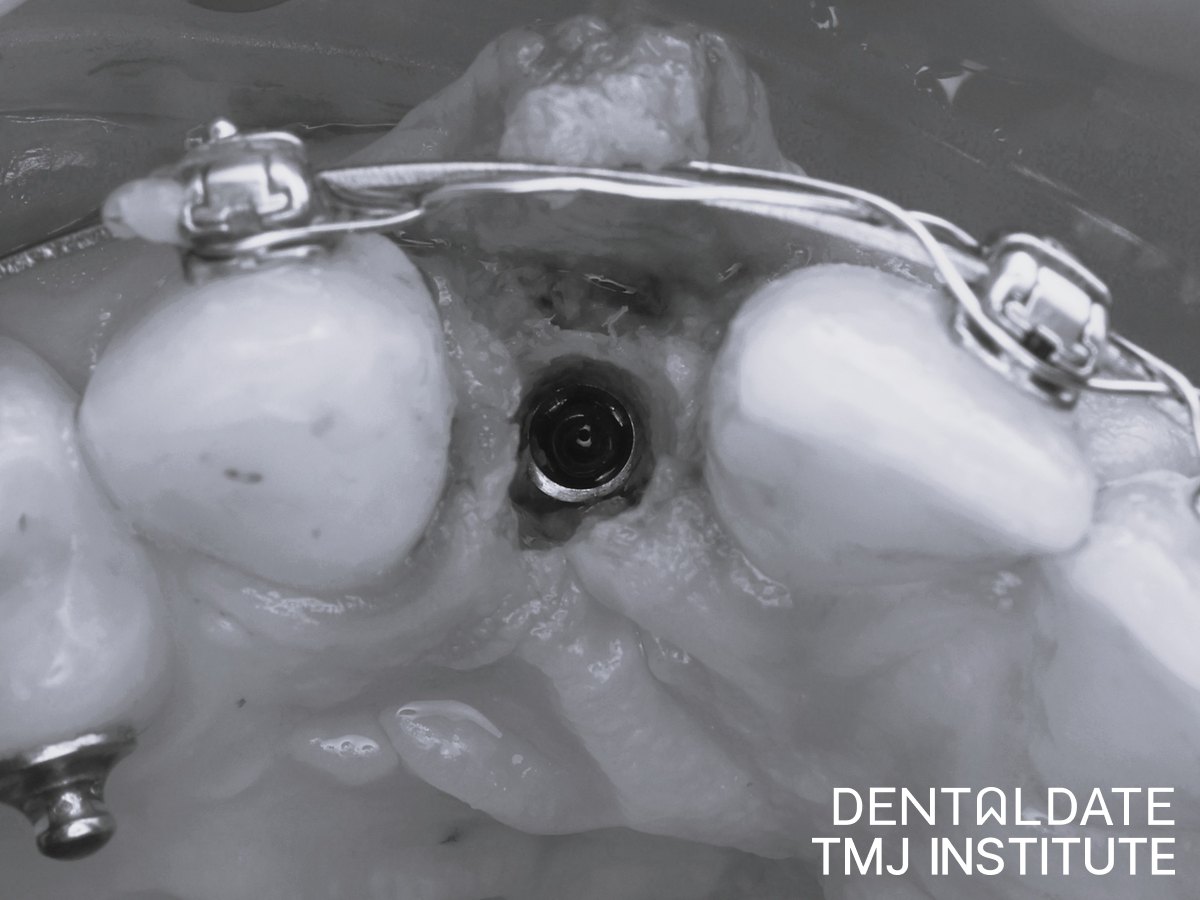
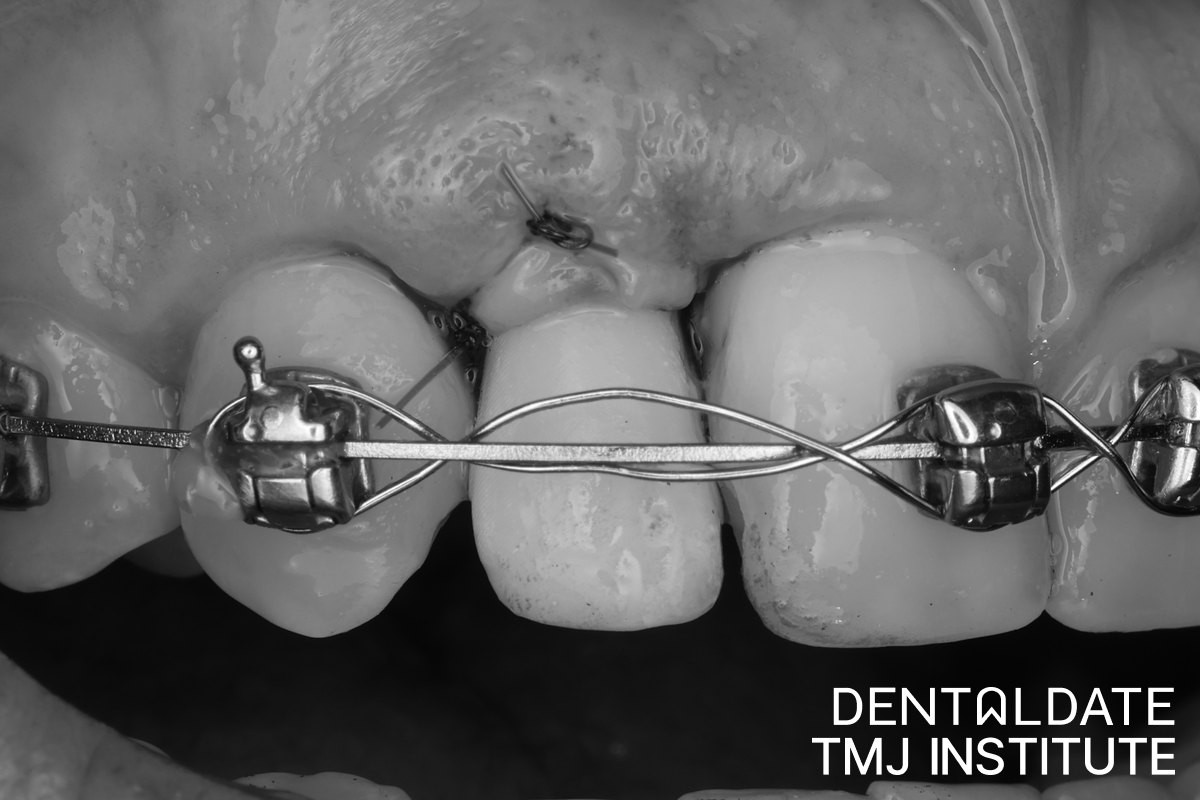
What Immediate Loading Means
Immediate loading means that a crown, usually a temporary one, is attached to the implant shortly after placement rather than months later. It is only possible when the implant is stable enough at the time of surgery, which the surgeon checks during the operation. A provisional crown in such cases is generally shaped so that it does not take the full force of biting while the implant integrates. For the patient, the main benefit is not having to live through a period without a tooth.
Healing and the Next Stage
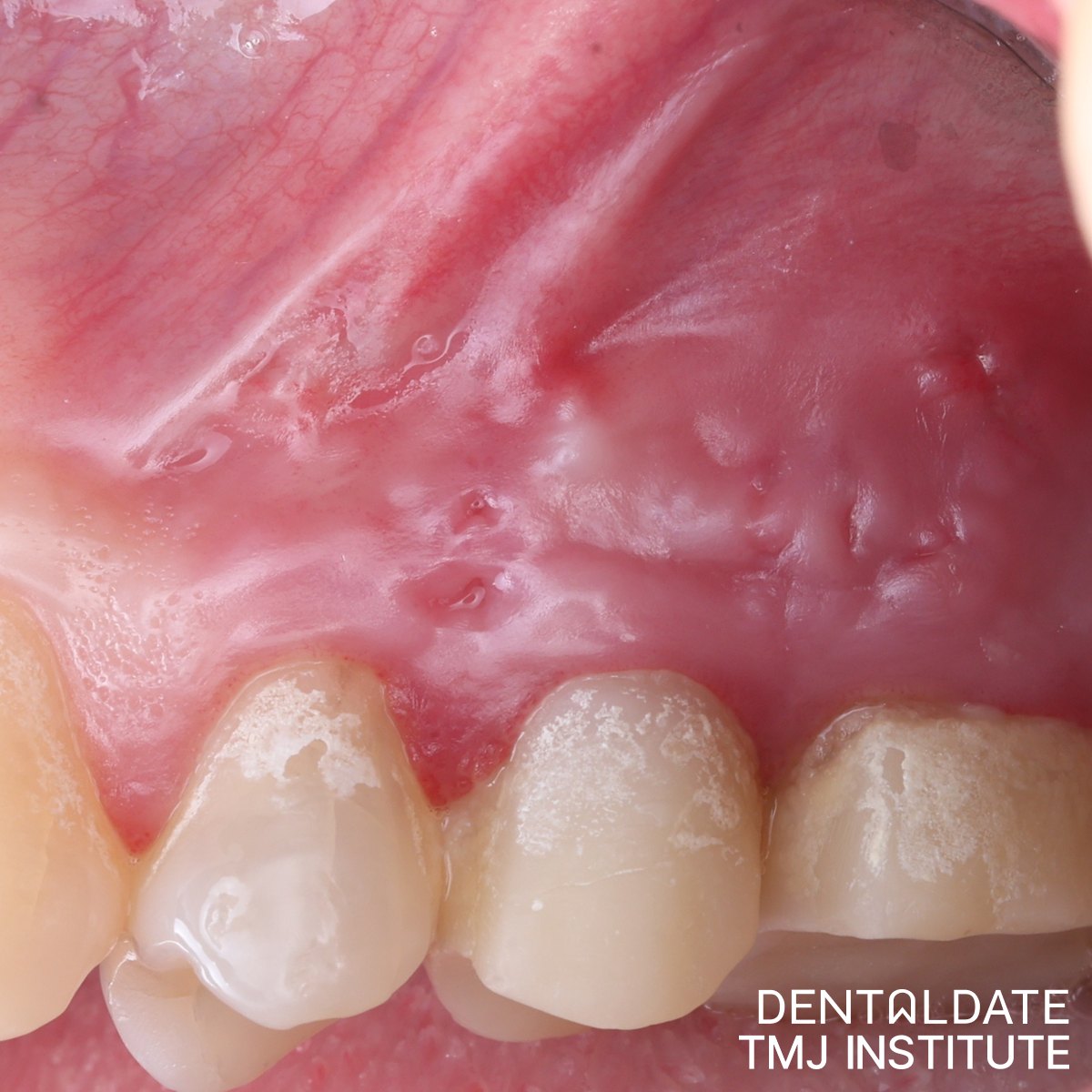
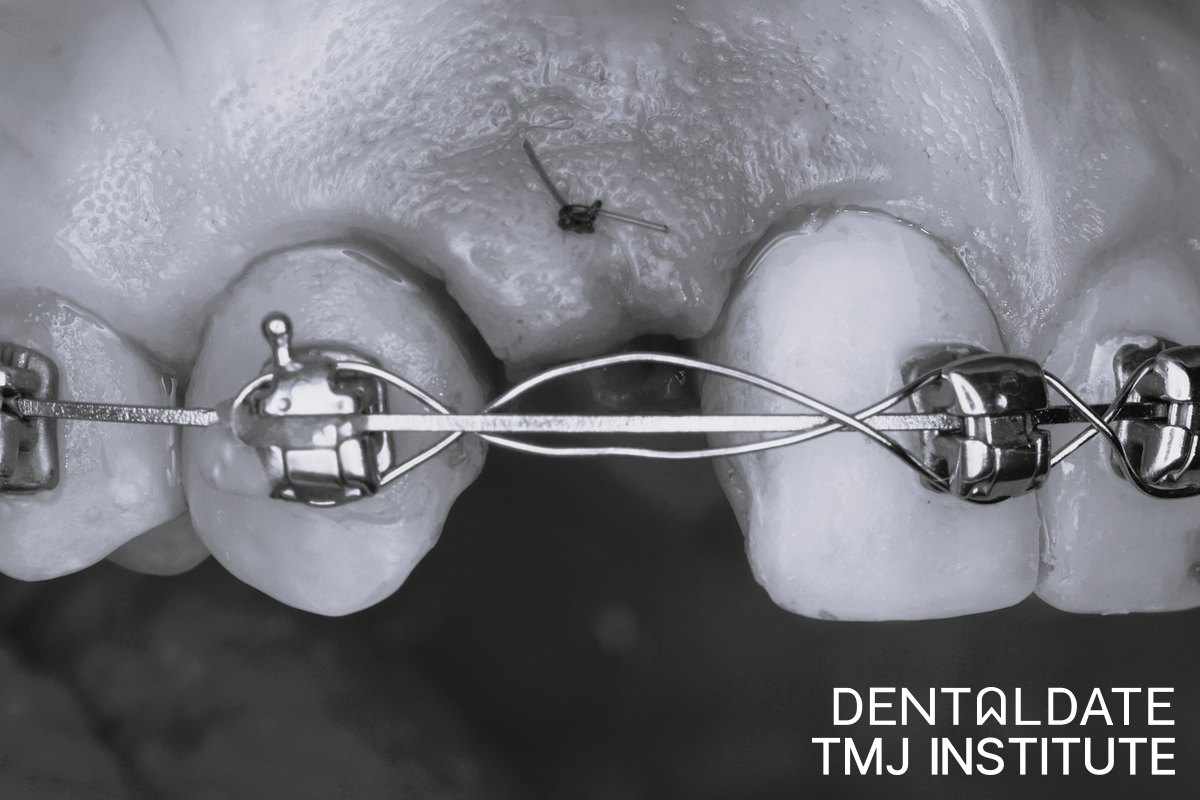
One week later, the sutures were removed. Healing was uneventful, and the patient reported no discomfort.
After about three months, the temporary crown is replaced with a permanent ceramic crown. Dr. Tikhon's work ends with the surgical stage, and a prosthodontist takes over to make the permanent crown when integration is complete.
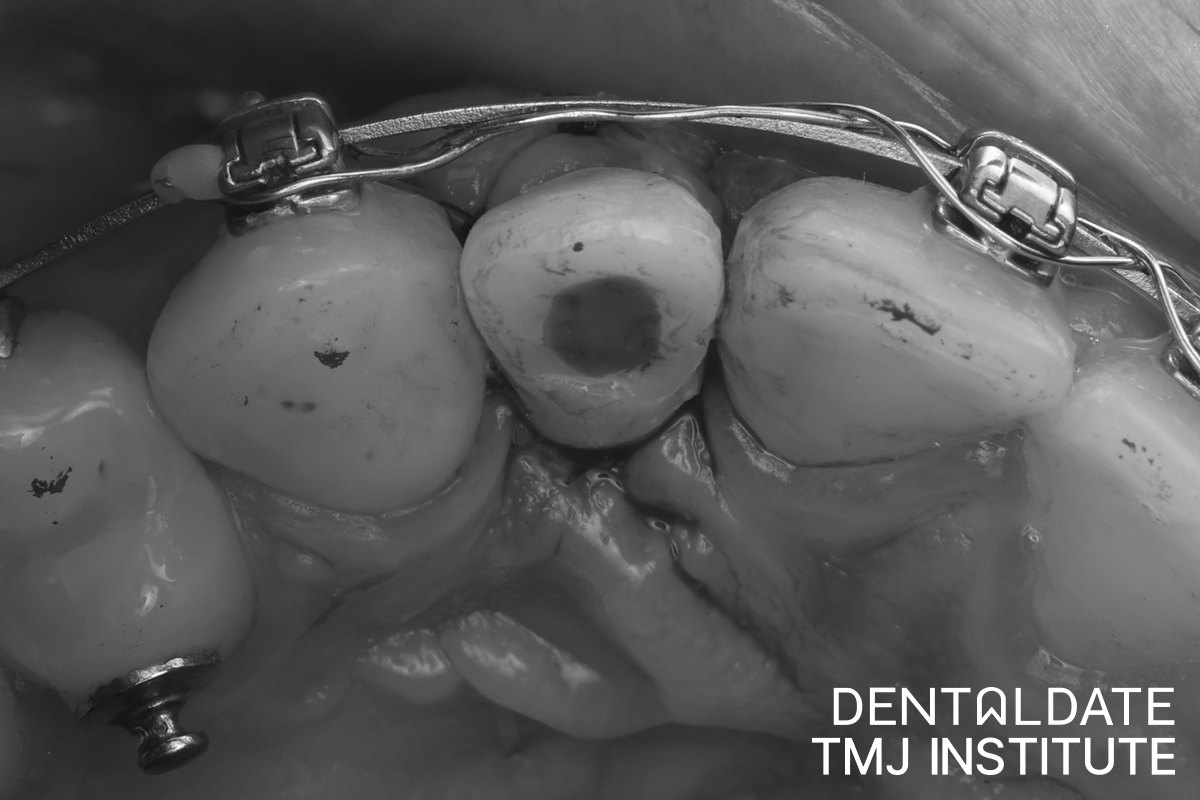
Frequently Asked Questions
Can an implant be placed while I am still wearing braces?
Yes, in suitable cases, and usually towards the end of orthodontic treatment, when the teeth are in their planned positions. The timing is agreed between the orthodontist and the surgeon.
Will the provisional tooth on the implant look natural?
A provisional crown is designed to fill the gap and keep the smile complete. It is not the final restoration, and the permanent crown is made later by a prosthodontist.
Is immediate loading possible for everyone?
No. It depends on how stable the implant is at placement, the quality of the bone and the bite. If immediate loading is not suitable, the implant is left to heal before a crown is attached.
Planning Braces and Implants Together at DentalDate
At DentalDate, orthodontists and implant surgeons plan treatment together, so a missing tooth can be replaced at the right moment of orthodontic treatment. If you are wearing braces, or thinking about them, and have a missing tooth, ask about combined planning. Book a consultation to discuss your case.