Why the Patient Came In
This time the symptoms did not settle by themselves, and that is what brought the patient to the clinic. The complaints were:
- pain in the area of the lower wisdom tooth;
- swelling of the gum;
- food getting stuck around the tooth;
- earlier episodes of pain that had gone away on their own, followed by a flare-up that kept getting worse.
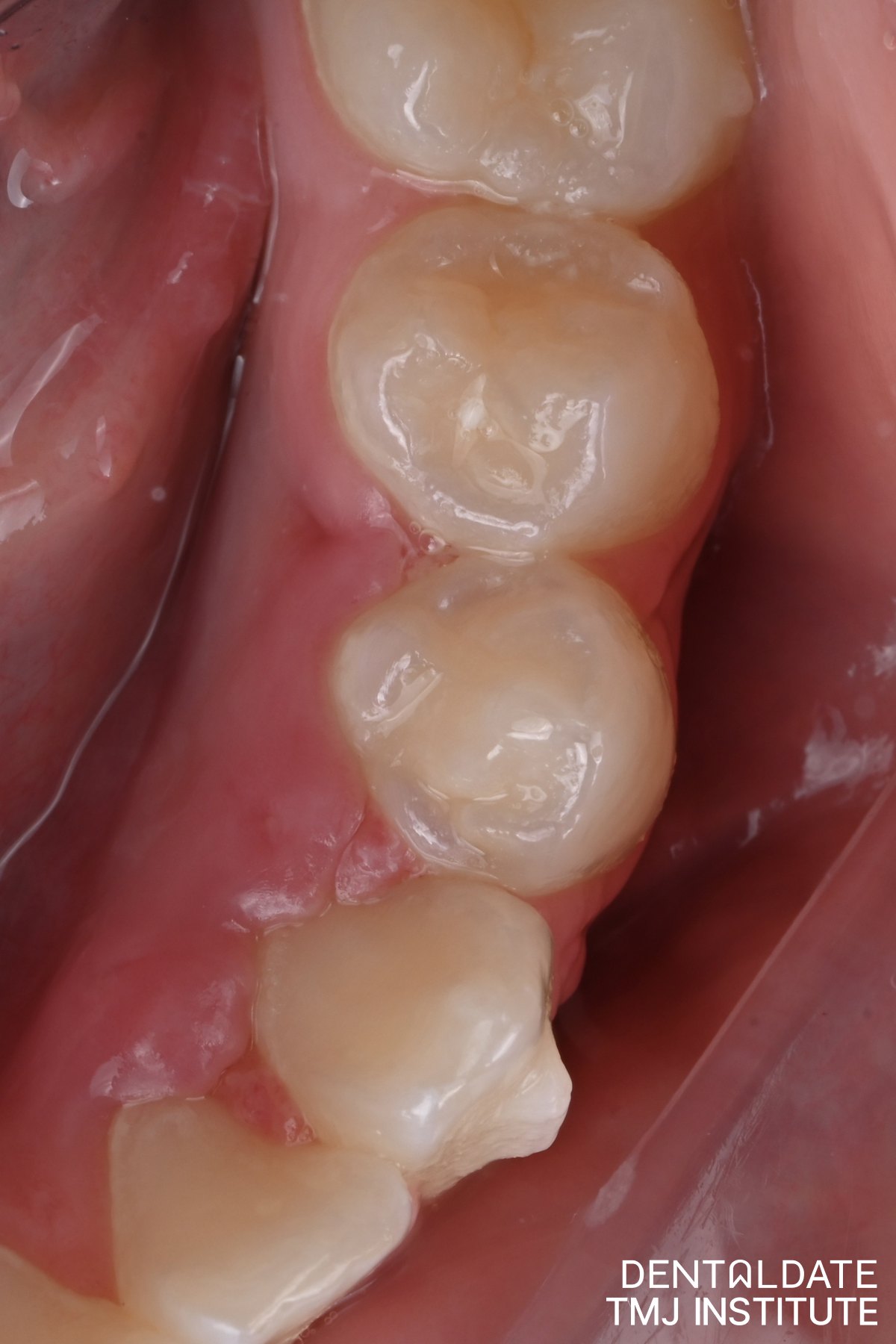
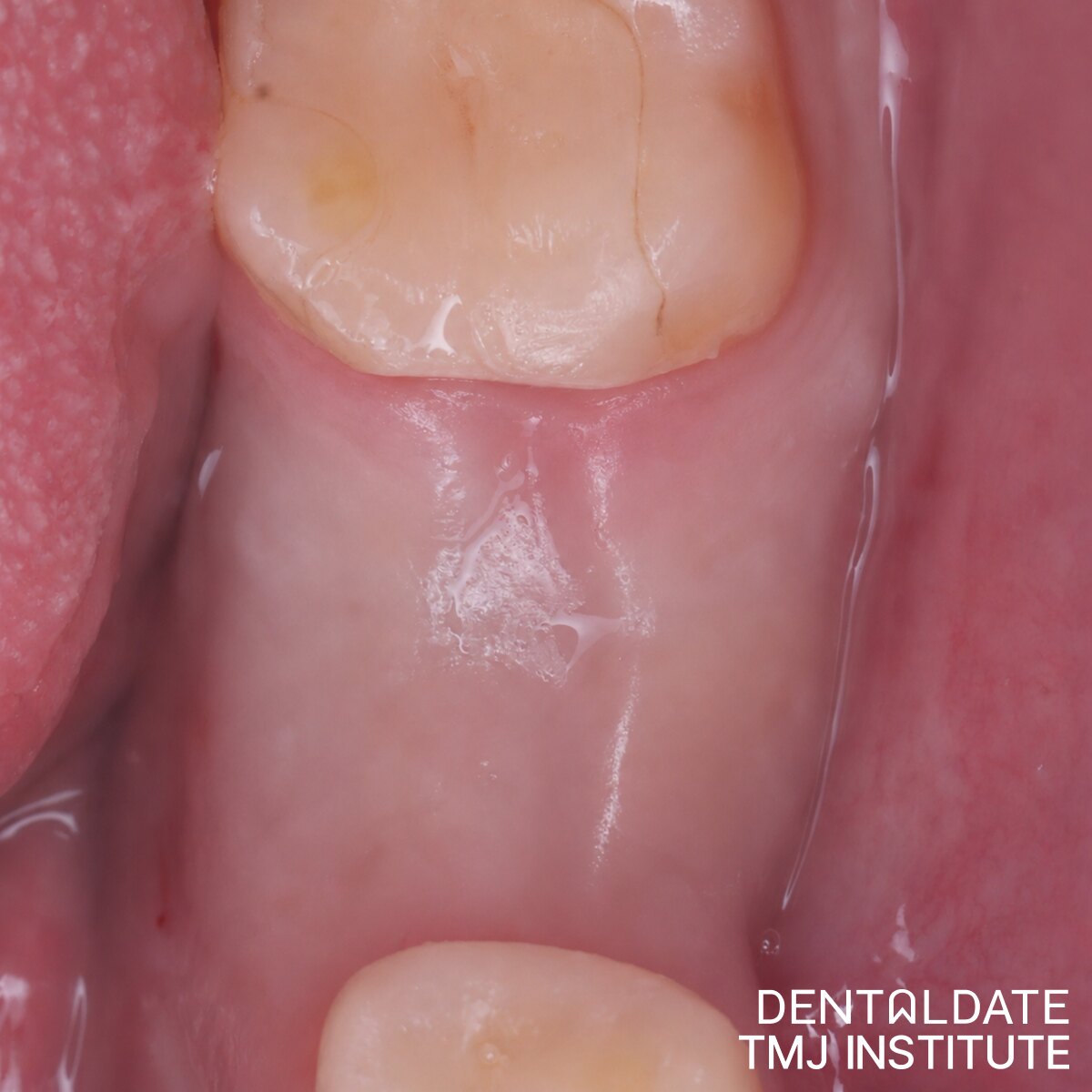
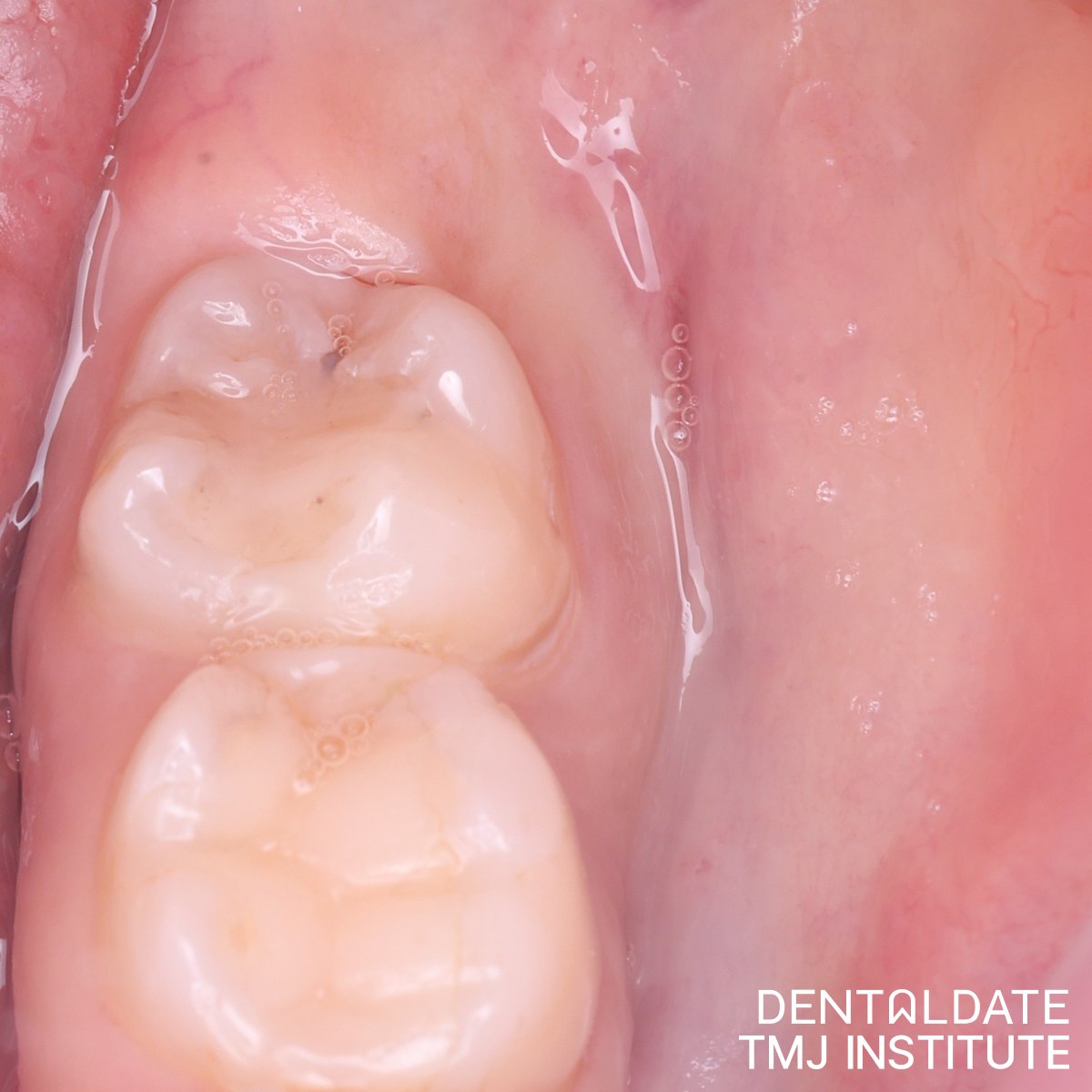
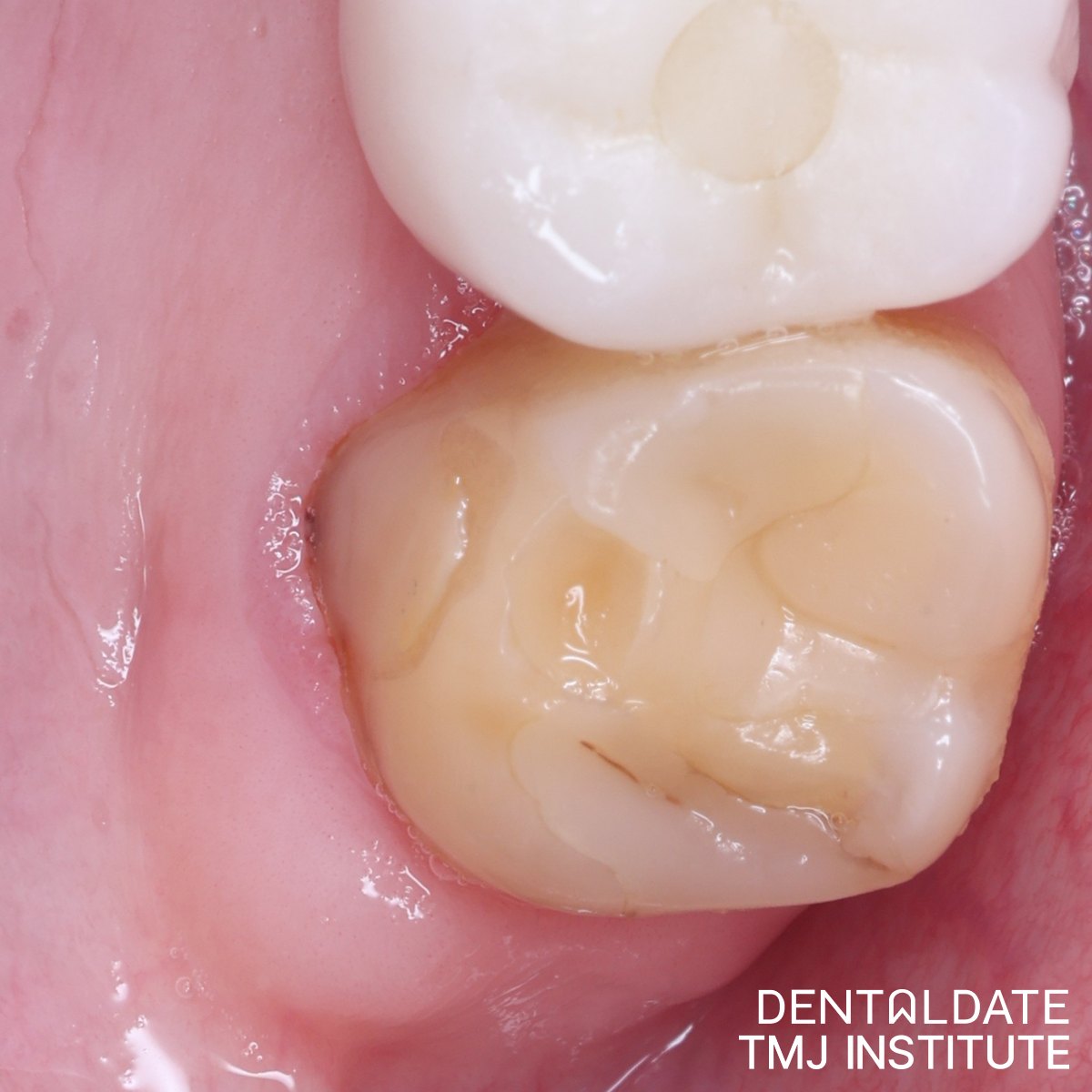
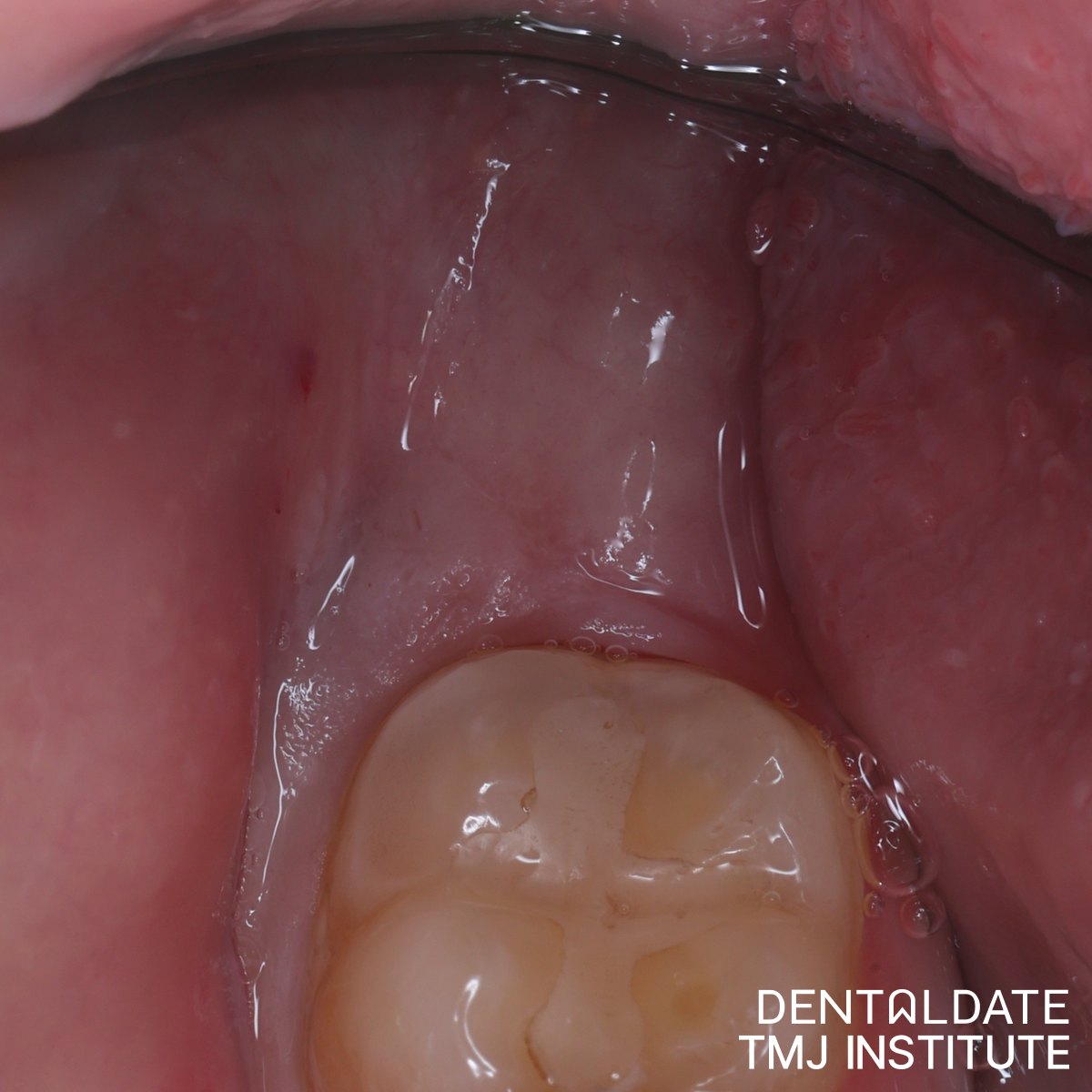
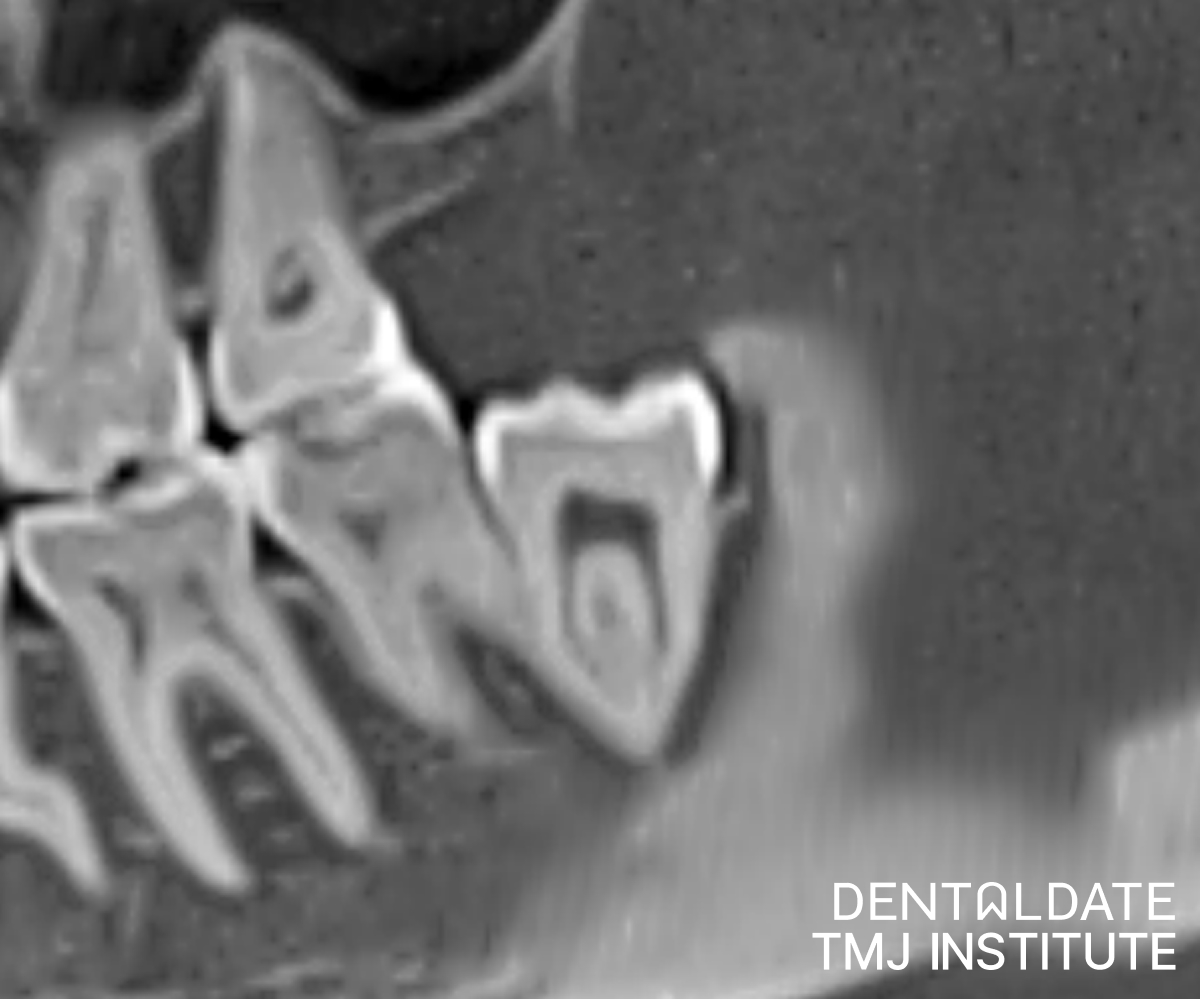
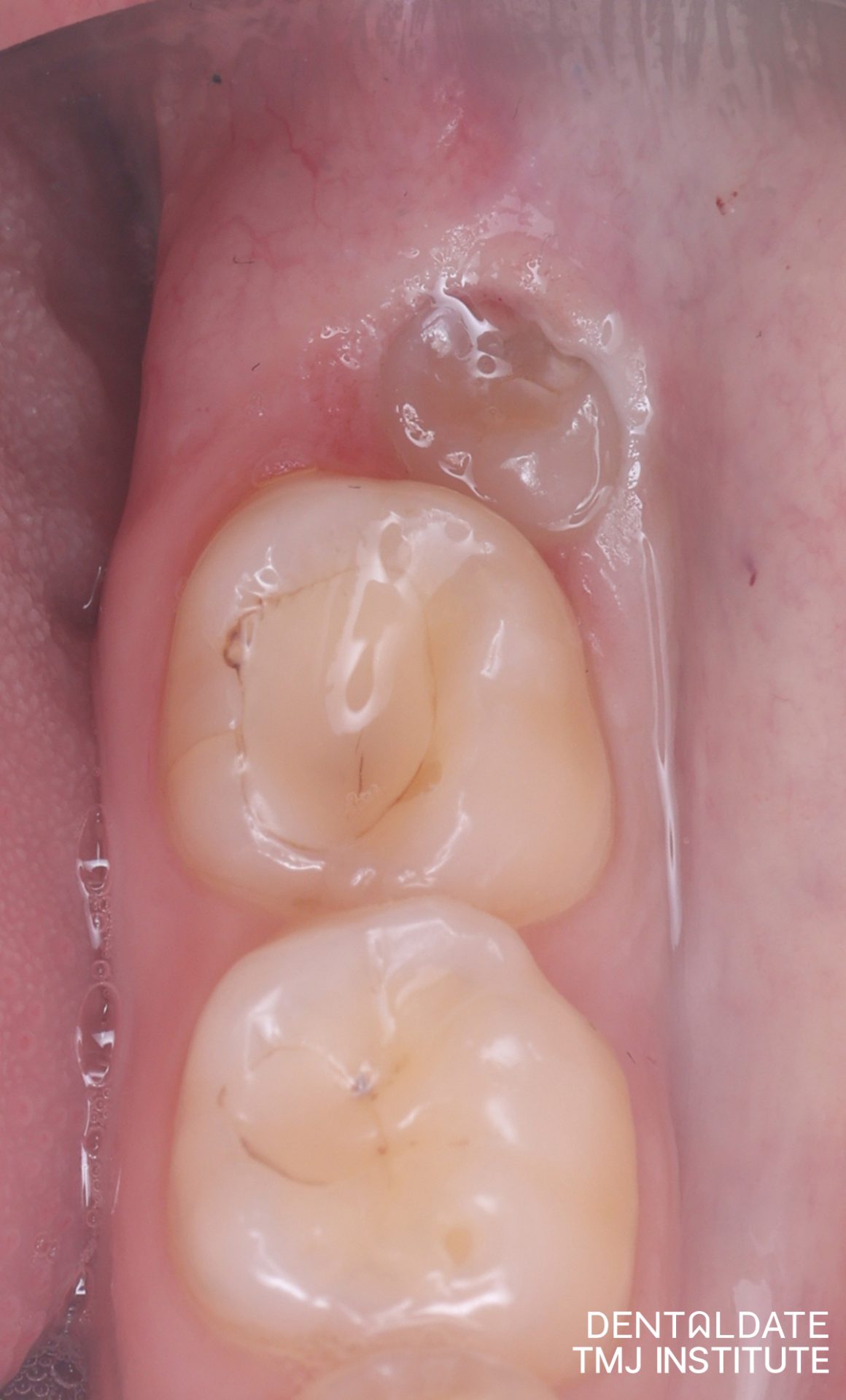
On examination, the lower wisdom tooth (38) was semi-impacted, only partly erupted through the gum. The CT image and the initial photo below show the situation before treatment.
Why a Partly Erupted Wisdom Tooth Keeps Flaring Up
When a wisdom tooth comes through only partly, a flap of gum often remains over part of its crown. Food and bacteria collect under this flap, and it is very hard to reach with a toothbrush. The gum then becomes inflamed, a condition known as pericoronitis. Symptoms may calm down for a while, but because the cause is still there, they tend to return. Repeated episodes of pain around a wisdom tooth are a very common problem for exactly this reason.
Elective Removal Versus Waiting
We recommend removing such teeth electively, before symptoms appear. When there is no active inflammation, both the extraction and the healing are much easier. During a flare-up the tissues are swollen and sore, opening the mouth can be harder, and the procedure sometimes has to be postponed until the inflammation is under control.
Not every wisdom tooth needs to come out, however. One that is fully erupted, well positioned and easy to keep clean can often stay. The decision depends on the position of the tooth, the condition of the gum and the neighbouring molar, and the history of symptoms.
How the Position of the Tooth Is Assessed
Before a lower wisdom tooth is removed, the surgeon usually studies its position on imaging. The key points are the angle of the tooth, how deep it sits in the bone, the shape and number of its roots and how close they are to the nerve canal. Together, these details show whether the tooth can be lifted out in one piece or will need to be sectioned. In this case, a CT image was part of the initial assessment.
A Short, Straightforward Extraction
The tooth was removed without sectioning. In some extractions the surgeon divides a wisdom tooth into parts so it can be taken out through a smaller opening, but here that was not necessary. The whole procedure, from anesthesia to sutures, took no more than 15 minutes.
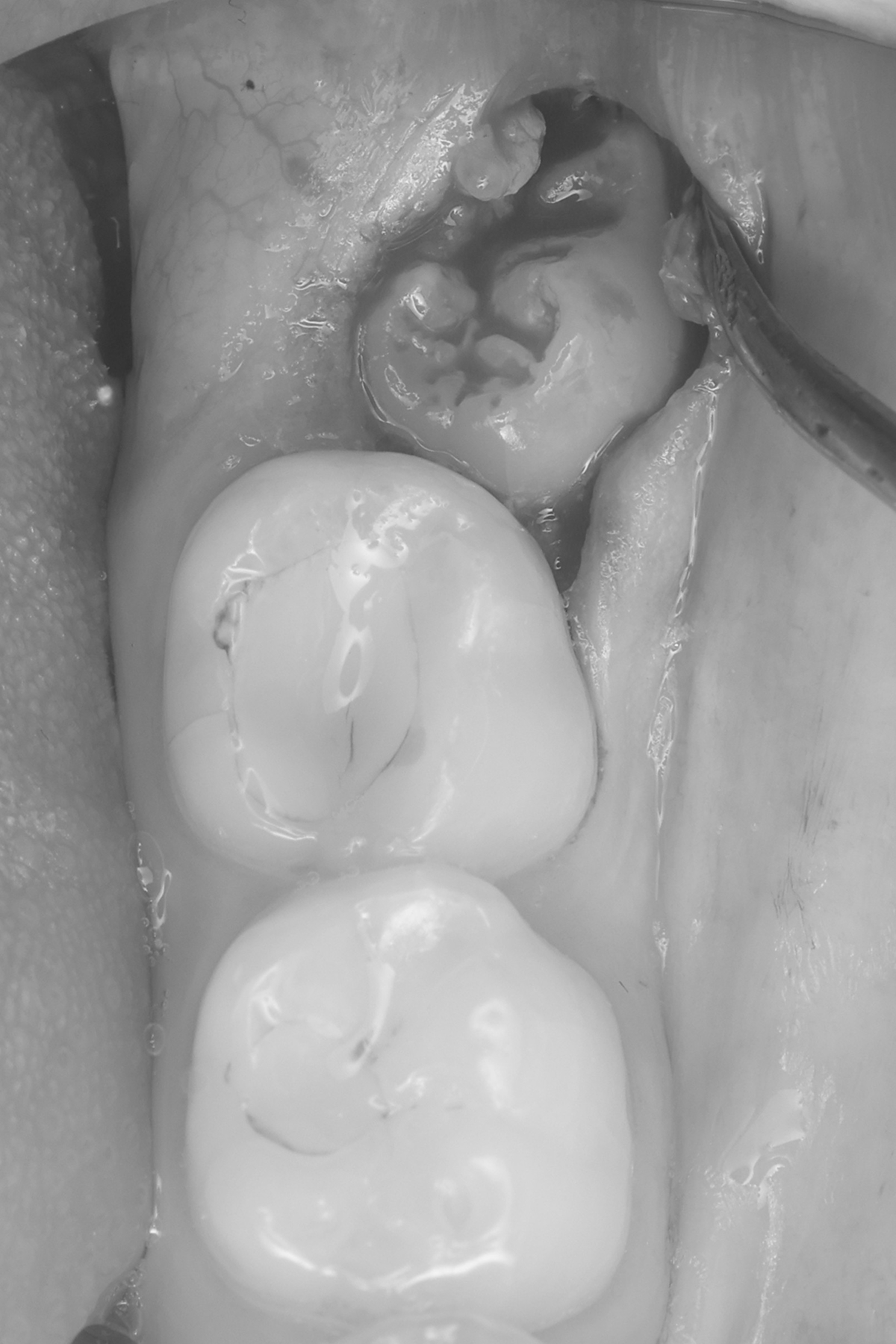
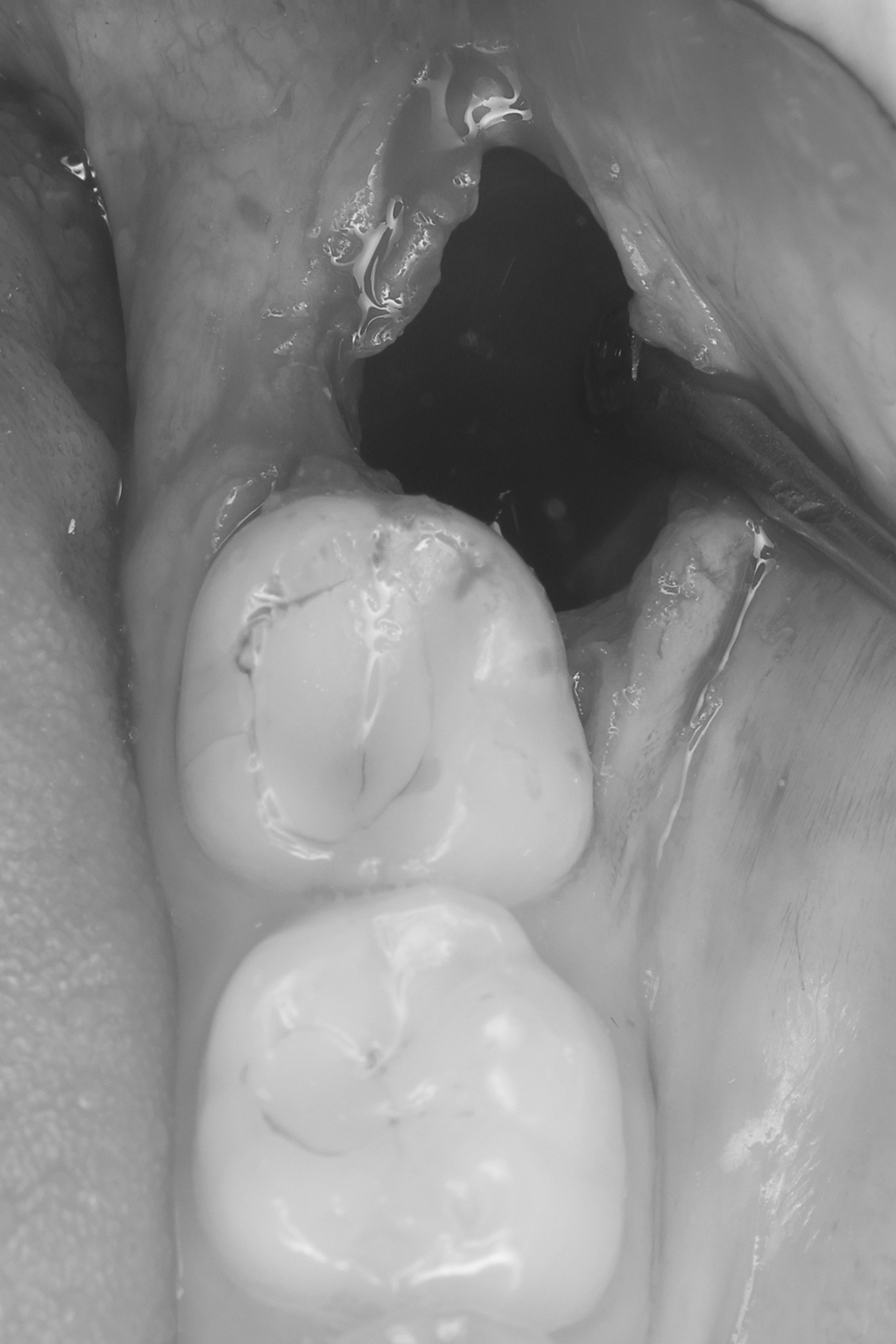
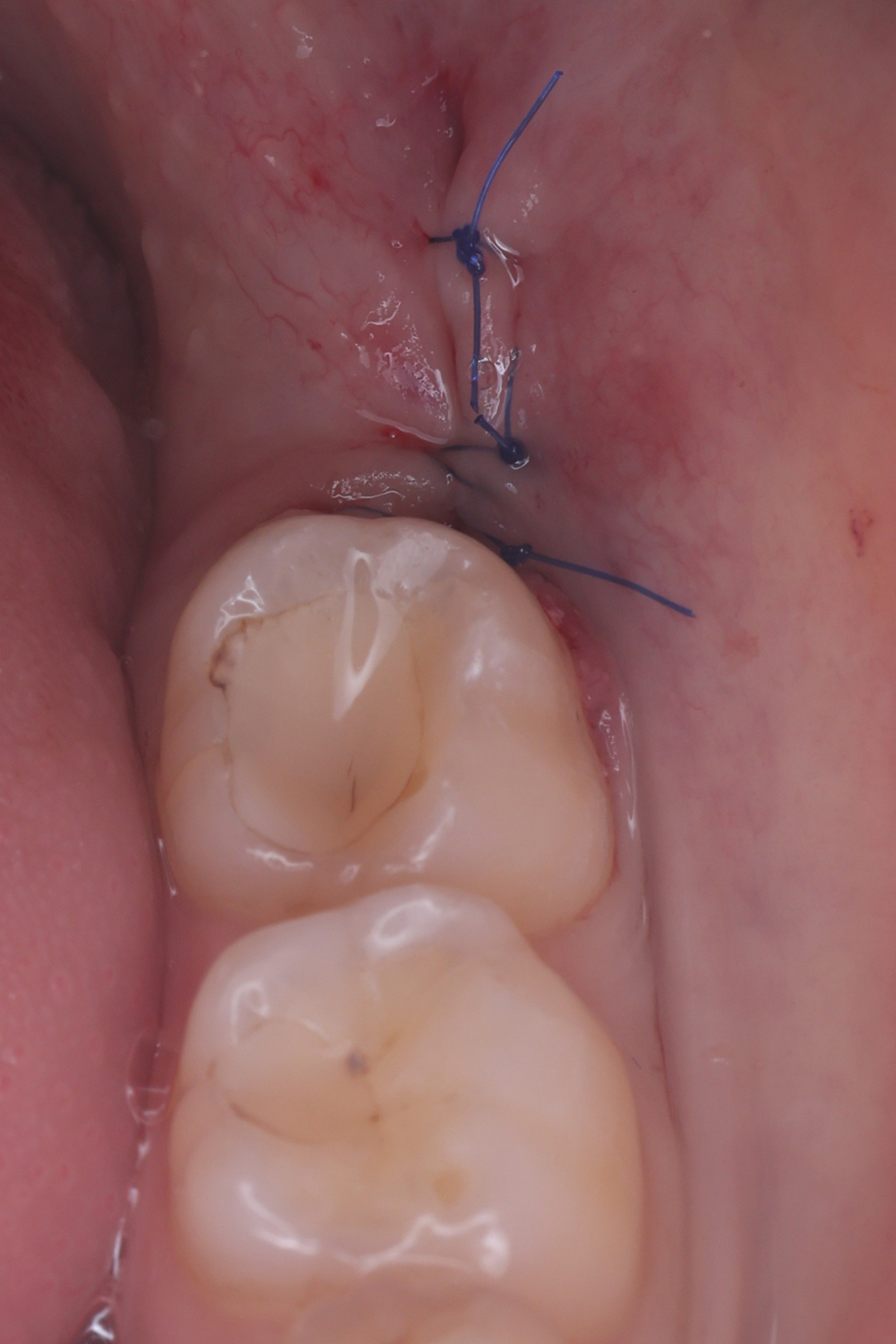
Before and After
A side-by-side summary of the case:
- Before: pain around tooth 38 that had come and gone in the past and was now getting worse.
- Before: swelling of the gum and food getting stuck around a semi-impacted tooth.
- Treatment: removal without sectioning, no more than 15 minutes from anesthesia to sutures.
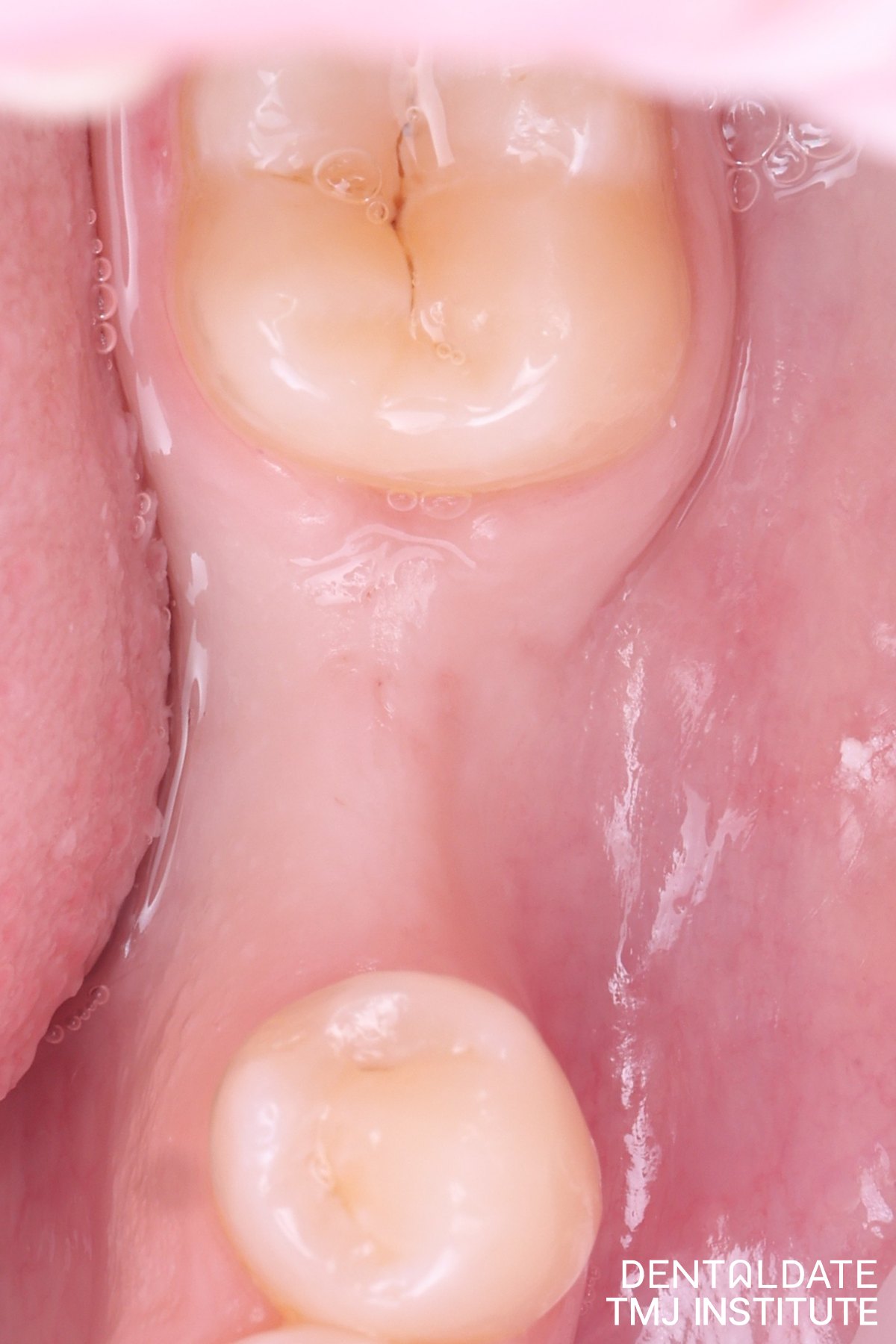
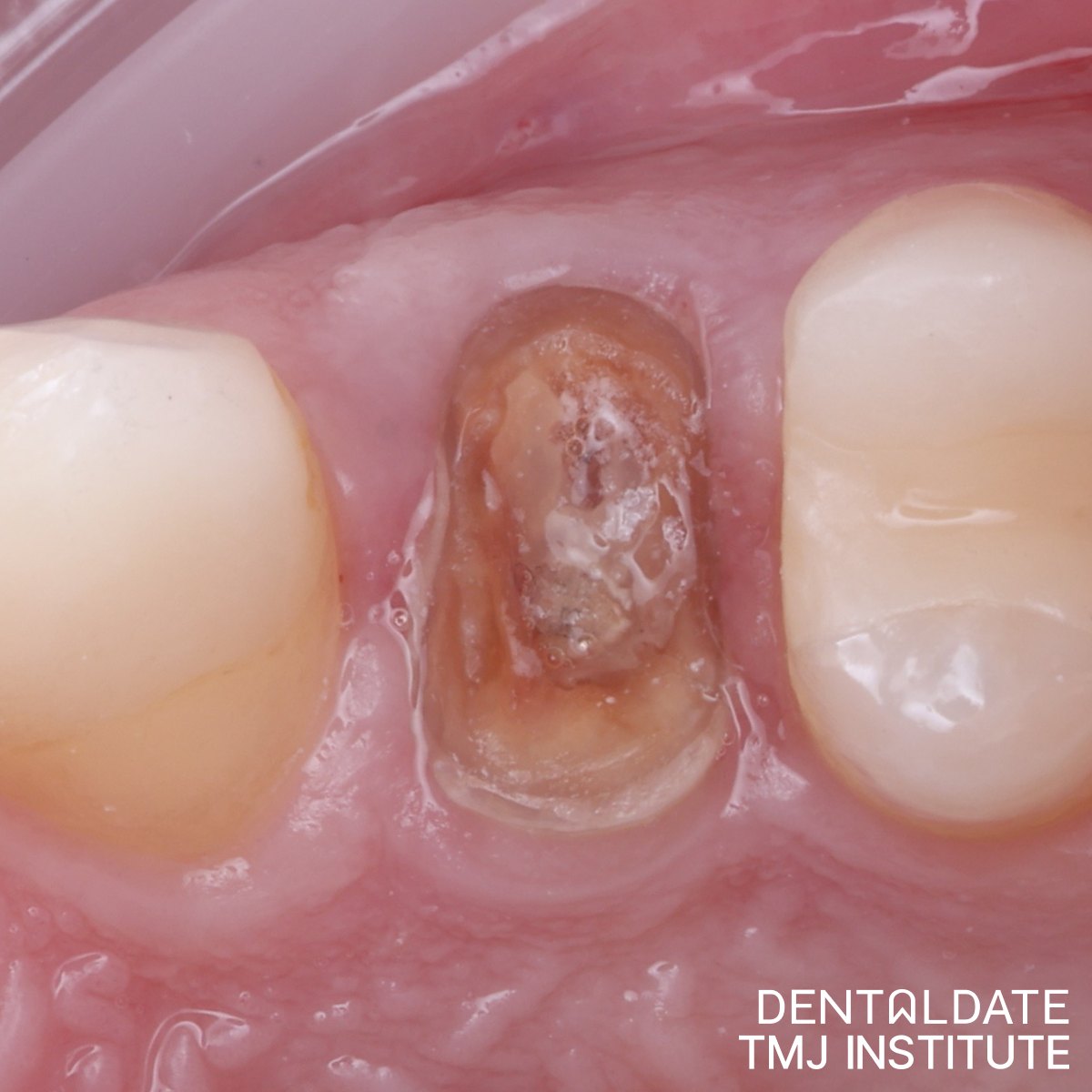
- After one week: no discomfort reported, and the sutures were removed.
Looking After the Socket at Home
General aftercare advice following the removal of a lower wisdom tooth includes:
- biting on the gauze for as long as the surgeon recommends;
- not rinsing vigorously or spitting hard on the first day, so the blood clot stays in place;
- eating soft, lukewarm food and chewing on the other side;
- avoiding smoking and drinking through a straw in the first days;
- using cold compresses and taking any prescribed medication exactly as directed;
- brushing the other teeth as usual and cleaning near the socket gently.
Pain that gets worse after the first few days, an unpleasant taste or smell, a fever or swelling that keeps growing are all signs to contact the clinic.
Has Your Wisdom Tooth Been Bothering You?
If a wisdom tooth keeps coming back with pain or swelling, it is worth having it assessed before the next flare-up.
At DentalDate, the oral surgeon will review the imaging, explain how the tooth is positioned and tell you whether removal is advisable.
Book a consultation so the extraction can be planned calmly rather than in the middle of an attack.